In this Article
Every major golf cart brand in one place: who makes each one, where it's built, price tier, lithium vs lead-acid options and dealer support, plus a simple checklist for choosing the right brand.
There are more golf cart brands on the market right now than at any point in the sport’s history, and that makes shopping confusing. A few years ago you picked between Club Car, E-Z-GO and Yamaha. Today a dealer lot might hold Evolution, ICON, Denago, Advanced EV, Epic, Bintelli and STAR EV carts parked right beside them.
Quick answer: The most established golf cart brands are Club Car, E-Z-GO and Yamaha, all with decades of history, U.S. factories and the biggest dealer networks. Newer brands like Evolution, ICON, Denago, Advanced EV and Epic are mostly built in China, cost less for the features, and usually ship lithium batteries standard. Parts and dealer support are the main trade-off.
I’ve taught golf around Chicago for seven years, and once students get serious about the game, the “which cart should I buy?” question comes up constantly. This guide is the reference I wish I could hand them: every brand worth knowing, who actually builds it, what it costs, and how to choose.
Table of Contents
Table of Contents
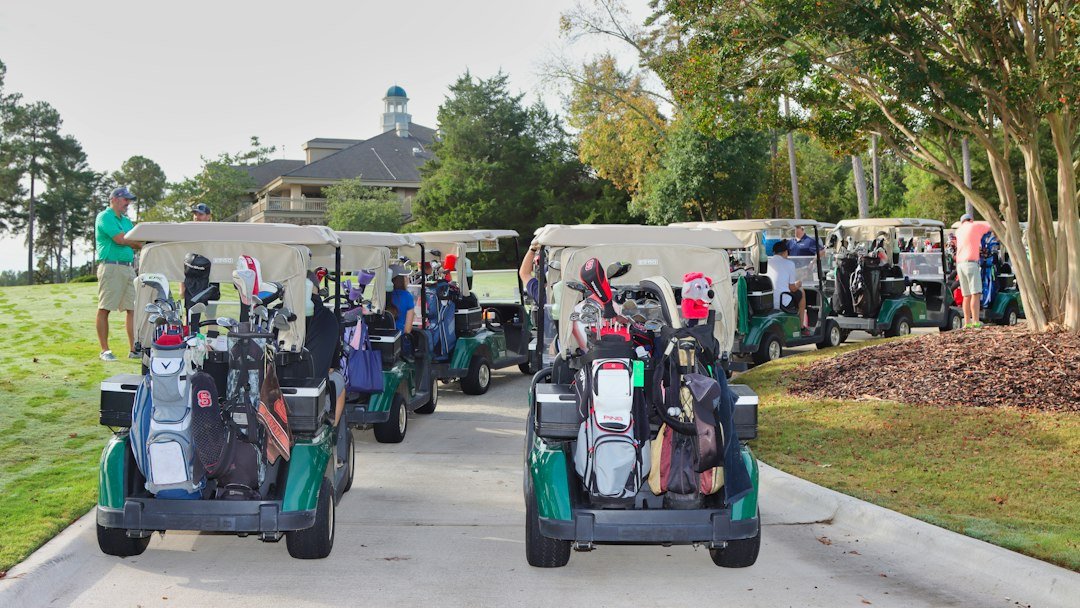
Golf Cart Brands at a Glance (Comparison Table)
Here’s the short version of every brand covered below. Prices are approximate street prices for a new four-seat personal cart as of November 2026, before taxes, freight and dealer prep. Dealer pricing varies a lot by region and season, so treat these as tiers rather than quotes.
| Brand | Who Makes It / Where | Price Tier (new 4-seat) | Battery | Street-Legal (LSV) Option | Dealer Network |
|---|---|---|---|---|---|
| Club Car | Club Car LLC (owned by Platinum Equity), Augusta, Georgia | About $11,000–$18,000 | Lithium and lead-acid | Yes (Onward LSV, Villager) | Very large |
| E-Z-GO | Textron, Augusta, Georgia | About $11,000–$18,000 | Lithium (ELiTE) and lead-acid | Yes (select LSV models) | Largest |
| Yamaha | Yamaha Motor, Newnan, Georgia plant | About $11,000–$17,000 | Lithium, lead-acid and gas | Yes (select models) | Very large |
| Evolution | Evolution Electric Vehicles; China-built parts, U.S. final assembly | About $9,000–$16,000 | Lithium standard | Yes (most models) | Large and growing |
| ICON EV | ICON EV; China-built | About $8,000–$14,000 | Lithium on current models | Yes | Large |
| Denago EV | Denago EV; China-built | About $9,000–$15,000 | Lithium standard | Yes (LSV versions) | Medium, growing |
| Advanced EV | Advanced EV; China-built | About $9,000–$15,000 | Lithium and lead-acid | Yes | Medium |
| Epic Carts | Epic; China-built | About $9,000–$15,000 | Lithium standard | Yes | Medium |
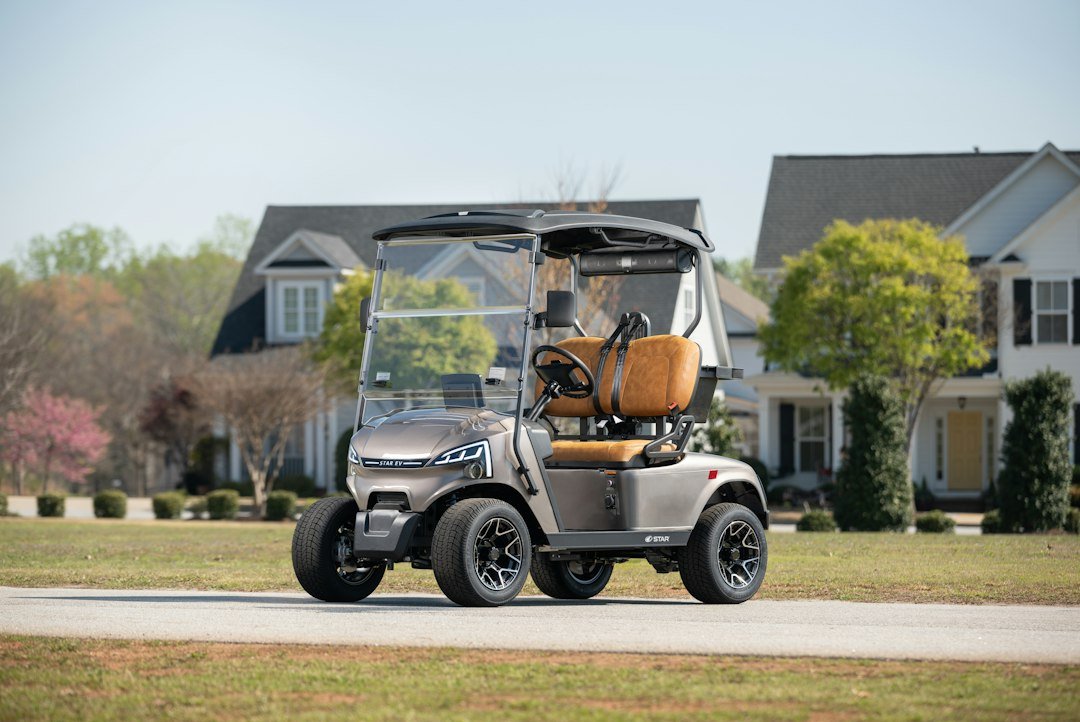
| STAR EV | STAR EV, Simpsonville, South Carolina | About $9,000–$15,000 | Lithium and lead-acid | Yes | Medium |
| Bintelli | Bintelli, Charleston, South Carolina | About $8,000–$14,000 | Lithium and lead-acid | Yes | Medium |
| MadJax | Nivel Parts & Manufacturing, Jacksonville, Florida | About $9,000–$14,000 | Lithium | Yes (select models) | Medium (Nivel dealers) |
| Kandi | Kandi Technologies, China | About $6,000–$10,000 | Lead-acid and lithium | Some models | Small |
| Coleman | Coleman Powersports; value brand sold through retailers, powersports dealers and online | About $5,000–$10,000 | Lead-acid and lithium | Limited | Small |
| Garia | Garia (Denmark), owned by Club Car since 2022 | About $20,000+ | Lithium | Yes | Small, luxury |
One thing the table can’t show: the gap between the “Big Three” and everyone else is less about the cart on day one and more about year five, when you need a controller, a seat bottom or a warranty claim handled.
The Big Three Golf Cart Brands
Club Car, E-Z-GO and Yamaha build the vast majority of fleet carts you ride at public and private courses. That fleet business is why their parts are everywhere, their used carts hold value, and almost any cart mechanic can work on them. If you want a deeper head-to-head, I wrote a full Club Car vs E-Z-GO vs Yamaha comparison.
Club Car
Club Car started in 1958 in Houston and moved to Augusta, Georgia, where it has been based ever since. Ingersoll Rand owned it from 1995 until 2021, when private equity firm Platinum Equity bought it. In 2022 Club Car bought Garia, the Danish luxury electric vehicle maker, which also brought the Melex brand into the family.
Its signature feature is the rust-proof aluminum frame. On personal carts, the current lineup centers on the Onward (two-, four- and six-seat, lifted and non-lifted, plus an LSV version) and the CRU. Fleet courses run the Tempo, and the Villager and Carryall cover utility and street-legal work.
Best for: buyers who want the strongest resale value and a cart that can realistically last 20 years with battery replacements along the way.
E-Z-GO
E-Z-GO was founded in Augusta in 1954 and has been part of Textron since 1960. Textron also owns Cushman, which builds heavier utility vehicles. E-Z-GO’s personal lineup includes the Liberty (a four-seater with forward-facing rear seats), the Express series and the RXV, and its ELiTE lithium system is one of the most widely used lithium packs in the industry.
E-Z-GO’s biggest advantage is its dealer network, which dealers commonly describe as the largest in the U.S. If you live somewhere rural, that matters more than any spec sheet.
Best for: buyers who value easy service access and a huge aftermarket for lift kits, seats and accessories.
Yamaha
Yamaha Motor builds its golf cars at a plant in Newnan, Georgia. Yamaha is especially well known for its gas carts; its QuieTech EFI engine is widely regarded by owners as one of the quietest gas cart engines on the market. The Drive2 is the core model, with PTV (personal transportation) versions and the UMAX utility line alongside it.
Best for: buyers who want a smooth, quiet ride, or who need a gas cart for a property without convenient charging.
Newer Electric Golf Cart Brands (China-Built Wave)
Since roughly 2017, a wave of new golf cart brands has arrived, almost all of them assembled from components built in China and sold through U.S. dealer networks. These carts typically come with lithium batteries, touchscreens, LED lighting, Bluetooth speakers and street-legal packages as standard, at prices below a comparably equipped Big Three cart.
The honest trade-off: these brands are young, and some have changed ownership or dealer structure quickly. Owners on forums like Talk of The Villages commonly report that the carts themselves are solid, while parts lead times and dealer quality vary a lot by location. Before you buy, find out how close the nearest authorized service dealer is.
Evolution
Evolution Electric Vehicles is one of the largest of the newer brands. Industry reporting says its components, including chassis, motor and electrical systems, come from China, with final assembly at U.S. facilities in California, Florida and Texas. The lineup includes the Classic series, the higher-end D5 series and the off-road-styled Forester, and lithium is standard across current models.
Evolution’s dealer network has grown faster than most newcomers, which is why it’s often the first “non-Big Three” brand buyers look at.
ICON EV
ICON EV launched around 2017 and built its reputation on value: lithium batteries, a touchscreen and street-legal equipment at prices noticeably below the Big Three. Its core models are the i40 (four-seat) and i60 (six-seat), with lifted versions of each. According to ICON’s own warranty documentation, 2023 and newer carts carry a three-year vehicle warranty and a two-year battery warranty.
Denago EV
Denago EV is one of the newest names, selling the Nomad (lifted, off-road look), the Rover and the City model. Lithium batteries come standard, and LSV-certified versions are offered for street use. It’s built in China and sold through a dealer network that is still filling in, so check local availability first.
Advanced EV
Advanced EV offers both lead-acid and lithium versions of its carts, which keeps entry prices down if you don’t need maximum range. Its lineup spans standard golf carts, lifted personal carts and utility models. It sits in the same price range as Evolution and Denago.
Epic Carts
Epic focuses on feature-rich lithium carts aimed at families and neighborhood driving, with infotainment screens, LED lighting and street-legal configurations. Its E-series models come in two-, four- and six-seat layouts.
MadJax
MadJax is best known as an aftermarket parts brand owned by Nivel Parts & Manufacturing in Jacksonville, Florida. In 2023 Nivel launched the MadJax XSeries Storm, a complete golf cart with a 5kW brushless AC motor and four-wheel hydraulic disc brakes. Nivel’s parts business gives MadJax an advantage many newcomers lack: an established parts distribution network.
American-Built and Value Golf Cart Brands
A handful of brands sit between the Big Three and the import wave, either because they assemble in the U.S. or because they compete hard on price.
STAR EV
STAR EV is based in Simpsonville, South Carolina, and has built carts since the early 2000s. It is especially popular in retirement communities, and its lineup includes the Sirius and Capella personal carts plus the newer J-Model. Lead-acid and lithium options are both available.
Bintelli
Bintelli is headquartered in Charleston, South Carolina. Its Beyond and Nexus lines are known for heavy customization options and competitive pricing. I covered owner feedback, specs and pricing in detail in my Bintelli golf cart review.
Coleman
Coleman golf carts are value carts sold through retailers, powersports dealers and online stores rather than mainly through traditional golf cart dealerships. The upfront savings are real, but so are the warranty and service gaps. My Coleman golf carts guide walks through exactly what you give up.
Kandi
Kandi America is the U.S. arm of Kandi Technologies, a Chinese electric vehicle maker. Kandi carts are among the cheapest new carts you can buy. Owner reports are mixed on build quality and parts availability, so they suit occasional use better than daily neighborhood driving.
Premium, Specialty and Legacy Brands
These brands either serve a niche or no longer build new carts, but you’ll run into them on the used market.
- Garia: Danish luxury golf cars and street-legal vehicles, now part of Club Car. Expect roughly $20,000 and up.
- Columbia ParCar: A long-running American maker based in Reedsburg, Wisconsin, known mostly for utility and fleet vehicles.
- Cushman: Textron’s heavy-duty utility brand, more common at resorts and facilities than in driveways.
- GEM (Polaris): Street-legal low-speed electric vehicles rather than true golf carts, popular on campuses and in planned communities.
- Tomberlin: An Augusta, Georgia brand that sold LSVs and golf carts; new Tomberlin carts are hard to find today, so owners on forums report relying on aftermarket and online parts sellers.
- Taylor-Dunn: Industrial burden carriers and utility vehicles.
- Melex: A Polish brand dating back to 1971, now part of Club Car through the Garia deal.
- Legacy names: Harley-Davidson (built carts from 1963 to 1982), Western, Marketeer and Nordskog. These show up as restoration projects, not daily drivers.
Golf Cart Brands by Price Tier
If budget is driving your decision, here’s how the brands group. Again, these are approximate new four-seat prices as of November 2026. For a full cost breakdown including used prices and ownership costs, see my guide to how much golf carts cost.
| Tier | Approx. New Price | Brands | What You Get |
|---|---|---|---|
| Budget | $5,000–$10,000 | Coleman, Kandi, base lead-acid models from newer brands | Basic features, lead-acid common, limited service network |
| Value / feature-rich | $8,000–$16,000 | ICON, Evolution, Denago, Advanced EV, Epic, Bintelli, STAR EV, MadJax | Lithium, screens, LED lights, LSV packages standard or cheap |
| Established | $11,000–$18,000 | Club Car, E-Z-GO, Yamaha | Proven drivetrains, top resale, biggest parts and dealer networks |
| Luxury | $20,000+ | Garia, high-end custom builds | Premium materials, automotive-style finish |
Lifted carts, six-seaters and LSV packages can push any tier up by several thousand dollars. If you need room for the whole family, my 6-seater golf cart guide covers what those bigger models cost.
Lithium vs Lead-Acid by Brand
Battery chemistry is now one of the clearest differences between golf cart brands. Most newer brands ship lithium standard, while the Big Three still sell both chemistries, which lets you save money upfront with lead-acid.
Lithium packs typically last 8 to 10 or more years, charge faster, weigh far less and need no watering. Lead-acid costs less upfront but usually needs replacing every 4 to 6 years. My lithium vs lead-acid golf cart battery breakdown goes deeper into the real cost over time.
One practical tip: ask which lithium pack and battery management system a cart uses, and whether the warranty is honored by the cart maker or the battery supplier. A long battery warranty means little if nobody nearby will process the claim.
Street-Legal (LSV) Options by Brand
Almost every brand now sells a street-legal version, but “street legal” has a specific meaning. A low-speed vehicle must meet the federal FMVSS 500 low-speed vehicle standard: a top speed between 20 and 25 mph, plus headlights, turn signals, mirrors, a windshield, seat belts and a VIN. States and towns add their own rules on top of that.
A cart with lights and a windshield is not automatically an LSV. Look for a factory-certified LSV with a 17-digit VIN and a certificate of origin. My guide to making a golf cart street legal covers the paperwork and the retrofit route.
How to Choose a Golf Cart Brand
The best brand for you depends less on the logo and more on where you live and how you’ll use the cart. Here’s the checklist I give students who ask me about golf cart brands.
- Find your nearest authorized dealer first. Warranty work, parts and battery claims all run through dealers. A great cart three hours from the closest service shop is a bad buy.
- Decide on battery chemistry. If you’ll keep the cart five years or more, lithium almost always wins on total cost.
- Check parts availability. Ask the dealer how long a controller, motor or windshield takes to arrive. Big Three parts are usually days; some newer brands can be weeks.
- Read the warranty fine print. Compare vehicle and battery terms separately, and ask whether the warranty transfers to a second owner.
- Think about terrain. Hilly neighborhoods need more motor and controller capacity. My roundup of the best golf carts for hills covers what to look for.
- Consider resale. Club Car, E-Z-GO and Yamaha hold value best. Newer brands depreciate faster, which can also make them a bargain used.
My own take: if you live in a golf cart community with several brands’ dealers nearby, a newer brand’s lithium cart gives you more features for the money. If you’re in a smaller market or plan to keep the cart for a decade, the Big Three’s support network is worth the premium.

Chinese Golf Cart Brands: What to Know
“Made in China” is no longer unusual in this industry. Most newer brands use Chinese-built chassis, motors and electronics, and even established brands source some parts overseas. Build quality has improved a lot, and many owners report years of trouble-free use.
The questions that matter are about support, not origin: Does the brand have a U.S. parts warehouse? Are there certified technicians near you? Has the brand been around long enough to honor a three- or five-year warranty? Brands with a growing dealer footprint and a U.S. presence, like Evolution, ICON and Denago, generally answer those questions better than carts sold online with no local dealer at all.
Frequently Asked Questions
What is the most reliable golf cart brand?
Club Car, E-Z-GO and Yamaha have the longest reliability track records, mostly because their carts are proven in commercial golf fleets that run all day, every day. Club Car’s aluminum frame gives it an edge in long-term durability, especially in humid or coastal areas.
Which golf cart brands are made in the USA?
Club Car and E-Z-GO build carts in Augusta, Georgia, and Yamaha builds at its Newnan, Georgia plant. STAR EV and Bintelli are based in South Carolina, and Evolution performs final assembly in the U.S., though many components for these newer brands come from China.
What golf cart brand holds its value best?
Club Car and Yamaha are widely regarded by dealers as having the strongest resale value, with E-Z-GO close behind. Carts from newer brands tend to depreciate faster in the first few years.
Are Chinese golf cart brands good?
Many are good carts with strong feature lists for the price. The bigger risk is dealer and parts support, which varies by brand and region. Buy from an authorized local dealer rather than an online-only seller.
What is the cheapest new golf cart brand?
Coleman and Kandi are among the cheapest new carts, often starting around $5,000 to $7,000 for basic lead-acid models. Expect fewer features and thinner service support at that price.
Is Evolution or ICON better?
Both offer lithium, touchscreens and street-legal packages at similar prices. Evolution currently has a larger dealer footprint in many regions, while ICON is often a little cheaper. The better pick is usually the one with the stronger dealer near you.
The Bottom Line on Golf Cart Brands
There’s no single best golf cart brand for everyone. Club Car, E-Z-GO and Yamaha remain the safest long-term buys thanks to proven engineering, resale value and support. Newer brands like Evolution, ICON and Denago give you more features for less money, as long as you have a reliable dealer nearby.
Start with your local dealer map, decide between lithium and lead-acid, and then compare models. I’ll keep adding detailed reviews of individual brands to this series, so check the guides below.
More guides in this series
- Club Car vs E-Z-GO vs Yamaha: which Big Three brand fits you
- Bintelli golf cart review: models, pricing and owner feedback
- Coleman golf carts: what you get from a budget cart brand
- How much golf carts cost new and used
- Golf cart batteries: lithium vs lead-acid
- How to make a golf cart street legal
- Best golf carts for hills
- 6-seater golf carts: models and prices