In this Article
A straight-shooting breakdown of how much golf carts cost in 2026 — new and used prices by type, gas vs electric, financing, rental, and what actually drives the price up or down.
If you’re shopping for your first cart or replacing an old one, the honest answer to how much do golf carts cost is: it depends more on battery type and seating than most buyers expect going in. New carts run anywhere from $5,000 for a basic two-seater to $20,000 or more for a street-legal, lithium-powered six-seater, and used carts can be had for as little as $1,500. I’ve spent seven years teaching golf around Chicago, and cart-shopping questions come up almost as often as swing questions once a student gets serious about the game.
This guide breaks down real 2026 pricing for new and used carts, gas versus electric, what actually drives the price up or down, and what it costs to keep a cart running once you own one. No vague ranges pulled from a single dealer’s website — just the numbers you need to budget accurately.
How Much Do Golf Carts Cost? New Cart Prices by Type
Seating capacity is the single biggest factor in a new golf cart’s price tag. Every additional seat adds real cost in frame, battery capacity, and body panels, so a two-seater and a six-seater from the same brand can be thousands of dollars apart even before you touch options.
| Cart Type | Typical New Price |
|---|---|
| Basic 2-seater | $5,000 – $9,000 |
| 4-seater | $8,000 – $14,000 |
| 6-seater | $10,000 – $16,000+ |
| Street-legal (LSV), lithium | $14,000 – $20,000+ |
Premium builds with custom paint, lift kits, and upgraded wheels can push past $19,000 even on a mid-size cart. If a listing looks unusually cheap for a 6-seater or an LSV, check whether it’s actually a lead-acid battery pack and base trim before assuming you’re getting a deal.
How Much Are Used Golf Carts?
Used carts are where most first-time buyers actually land, and for good reason — a cart in good mechanical shape from three to five years ago does everything a brand-new one does for a fraction of the price. If you’re trying to pin down how much do golf carts cost on the used market specifically, age and battery condition matter more than cosmetics here.
- 1–3 years old, near-new condition: $4,500 – $8,000+
- 4–7 years old, fair to good condition: $2,500 – $4,500
- 8+ years old, project or older models: $1,500 – $2,500
Golf carts generally retain 40% to 60% of their original price after three to five years, which is a slower depreciation curve than most cars see in the same window. The catch is battery health — a used electric cart with a pack that’s near end-of-life needs $800 to $2,000 in replacement batteries almost immediately, and that cost should come straight off whatever the seller is asking.
Always ask when the batteries were last replaced before you agree on a price. It’s the single most common way buyers end up paying more than they planned for a “cheap” used cart.
Gas vs Electric Golf Cart Costs
Gas and electric carts land in a similar range upfront, but the cost story looks very different once you factor in what you’ll spend to actually run one — which is a big part of how much do golf carts cost over time, not just on day one.
Electric Cart Pricing
Electric carts on a 36-volt system typically run $5,000 to $8,000 new, while 48-volt and 60-volt systems with more range and power sit closer to $7,000 to $12,000. Electric carts usually cost $500 to $1,000 more upfront than an equivalent gas model, but you make that back over time in fuel savings.
Gas Cart Pricing
Gas carts run $4,500 to $11,000 new depending on size and brand, with no battery pack to budget for down the road. What you trade for that is ongoing fuel cost — plan on $250 to $500 a year in gas for regular use — plus an engine rebuild every 5 to 7 years running $500 to $700.
My honest take after watching plenty of students go through this decision: if the cart mostly sits in a garage or barn with easy access to an outlet, electric wins on long-term cost. If it lives somewhere without reliable power — a hunting lease, a rural property — gas is still the more practical call, price aside.
What Drives Golf Cart Prices Up or Down
Once you understand the baseline ranges above, a handful of specific factors explain most of the spread you’ll see between two carts that otherwise look similar — and they’re the real answer to how much do golf carts cost in your specific situation.
Battery Type: Lead-Acid vs Lithium
A lithium battery upgrade adds $1,500 to $4,500 to a cart’s price over a lead-acid pack, and it’s usually worth it if you’re keeping the cart long-term. Lithium packs last 8 to 10+ years against 4 to 6 years for lead-acid, charge faster, and don’t require the periodic watering lead-acid batteries do. The Department of Energy’s overview of vehicle battery types covers why that lifespan gap exists at the chemistry level, if you want the deeper explanation.
If you’re deciding between the two for a cart you already own rather than a new purchase, our full breakdown of golf cart batteries: lithium vs lead-acid goes deeper into charge times, weight differences, and real-world lifespan.
Brand and Dealer Support
Legacy brands with decades-old dealer networks — Club Car, E-Z-GO, Yamaha — typically price $7,000 to $15,000 and carry that premium because parts, warranty service, and resale value are all easier to come by. Value and big-box brands like Coleman, STAR EV, and Cushman usually land in the $4,000 to $10,000 range.
That gap isn’t just markup — it’s the cost of a support network. Our Coleman golf carts guide covers what you give up in warranty support at the lower end of that range, and what you get in exchange.
Street-Legal (LSV) Equipment
A cart built or upgraded to meet the federal low-speed vehicle standard — headlights, turn signals, a windshield, seat belts, and a top speed of at least 20 mph — costs meaningfully more than a standard course cart, typically $14,000 to $20,000+ new. The federal LSV safety standard spells out exactly what equipment is required, and state and local rules add another layer on top of that federal baseline.
Don’t assume any electric cart qualifies just because it’s road-capable in a neighborhood with a low speed limit. If you’re planning to drive on public streets, our guide on making a golf cart street legal walks through the requirements and what retrofitting an existing cart actually costs.
Accessories and Customization
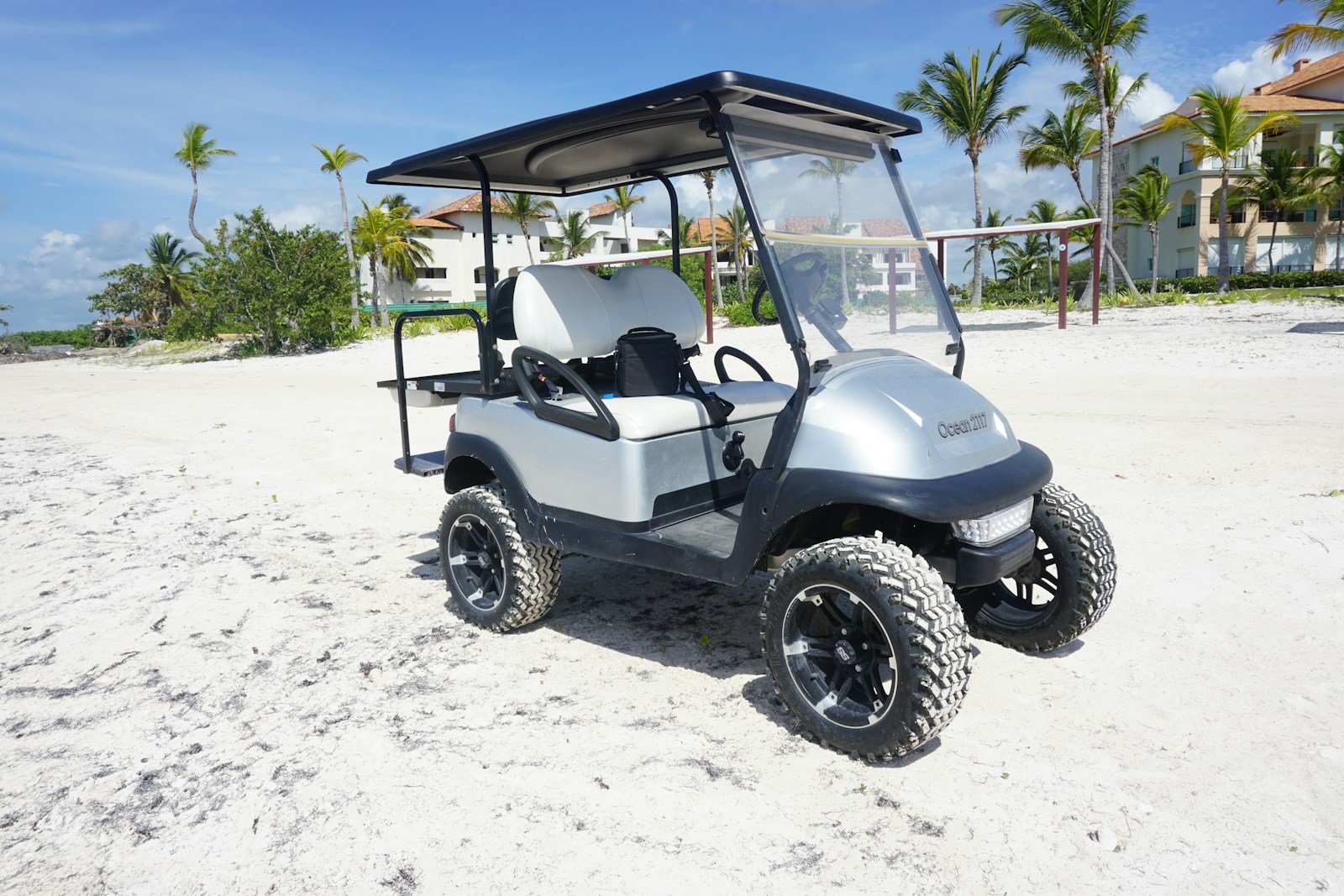
Lift kits run $400 to $1,500, premium wheels and off-road tires add $600 to $1,200, and custom paint or a full wrap job can run $500 to $2,000 more. None of it is necessary for basic use, but it adds up fast once you start checking boxes on a build sheet.
Ongoing Costs of Owning a Golf Cart
The sticker price is only part of what a golf cart actually costs. If you want the full picture of how much do golf carts cost to own — not just to buy — budget for these recurring expenses on top of the purchase, or a “good deal” can turn into an expensive surprise by year two.
- Insurance: $100 – $300 per year (varies by state and LSV classification)
- Electric charging: $50 – $150 per year for typical recreational use
- Gas fuel: $250 – $500 per year
- Routine maintenance: $150 – $300 per year
- Battery replacement (every 4–6 years, lead-acid): $800 – $1,500
- Registration or local permits: $20 – $200, where applicable
Over a 5-year ownership window, electric and gas carts end up in a similar total-cost neighborhood once you add everything up — electric saves on fuel but eventually needs a battery pack, gas skips the battery cost but spends more on fuel and periodic engine work. Lithium batteries shift that math further in electric’s favor since you’re less likely to need a mid-ownership replacement at all.
Should You Rent or Buy a Golf Cart?
If you only need a cart a handful of times a year, renting is genuinely the cheaper option, and it’s worth doing the math before you commit to a purchase — since how much do golf carts cost to rent versus own changes completely based on how often you’ll actually use one.
Daily rentals typically run $65 to $225 for a standard 4-passenger cart, with weekly rates around $300 to $700 and monthly rentals in golf-cart communities landing between $700 and $1,500. For fewer than 15 days of use a year, renting avoids insurance, storage, and maintenance obligations entirely, and it’s hard to beat on pure dollars.

Past 15 to 20 days a year, the math flips. A $3,000 to $5,000 used cart becomes competitive with rental fees within a single season, and full-time residents of golf-cart communities typically spend $1,300 to $1,800 a year owning versus $10,800 to $18,000 renting the same amount of use. Snowbirds who use a cart for three to six months often save $2,700 to $9,000 a season by buying instead of renting for the stay.
Financing a Golf Cart
Most dealers and manufacturers offer financing directly, with rates generally falling between 4.9% and 12.9% APR over 36 to 60 months depending on credit. On a $14,000 cart financed at 7% APR over 48 months, expect a monthly payment in the $300 to $340 range.
Some big-box and direct-to-consumer brands also offer buy-now-pay-later style plans through services like Affirm or Klarna, sometimes with 0% APR promotions for qualified buyers, which can be worth comparing against a traditional dealer loan for a lower-priced cart. Whichever route you take, get the total cost of the loan in writing before you sign — a low monthly payment stretched over a long term can end up costing more than a shorter loan with a higher payment.
Frequently Asked Questions
How much do golf carts cost on average?
Most new golf carts cost between $5,000 and $16,000 depending on seating capacity and power type, with street-legal lithium models running $14,000 to $20,000 or more. Used carts average $1,500 to $8,000 depending on age and battery condition.
Is it cheaper to buy a gas or electric golf cart?
Gas carts are usually $500 to $1,000 cheaper upfront, but electric carts cost less to operate year to year. Over a full ownership period the totals often come out close, with lithium-battery electric carts pulling ahead long-term since they need less frequent battery replacement.
How much does it cost to replace golf cart batteries?
A lead-acid battery pack typically costs $800 to $1,500 installed, while a lithium pack runs $1,500 to $4,500 installed but lasts roughly twice as long. Factor this into any used-cart purchase, since a pack near the end of its life should lower the price you’re willing to pay.
Do golf carts hold their value?
Reasonably well compared to cars — most carts retain 40% to 60% of their original price after three to five years. Battery condition, brand, and overall maintenance history all affect resale value more than mileage does.
How much does it cost to rent a golf cart instead of buying?
Daily rentals run $65 to $225, weekly rentals $300 to $700, and monthly rentals in golf-cart communities $700 to $1,500. Renting makes financial sense at under about 15 days of use per year; beyond that, buying a used cart typically comes out cheaper.
Why do street-legal golf carts cost so much more?
Street-legal, or low-speed vehicle (LSV), carts require federally mandated safety equipment — headlights, turn signals, mirrors, seat belts, a windshield, and a minimum top speed — that standard course carts don’t need. That equipment, plus the larger battery packs typically paired with it, pushes new LSV pricing to $14,000–$20,000 or more.
Final Thoughts
The honest answer to how much do golf carts cost is a wide range, but it’s not random — seating capacity, battery type, brand support, and street-legal equipment explain almost all of the spread between a $5,000 cart and a $20,000 one. Start with how you’ll actually use the cart, then work backward to the type and budget that fits, rather than shopping by price alone and hoping the fit works out.
And if a cart is part of a bigger plan to spend more time on the course this year, remember it’s the smallest piece of the equation for actually playing better. Time spent on fundamentals will lower your scores far more than anything sitting in the cart barn — our beginner’s guide to golf is a solid place to start if that’s where you’re headed next.