In this Article
A close look at Bintelli golf carts — the Beyond and Nexus Gen2 lineups, real 2026 pricing, performance specs, common owner complaints, and how the brand stacks up against Club Car, EZGO, and Yamaha.
If you’ve been shopping around for a street-legal ride, there’s a good chance the name Bintelli has crossed your screen. A Bintelli golf cart is one of the more talked-about options in the low-speed vehicle market right now, and for good reason — the brand has built a reputation for loading in features like power steering and hydraulic disc brakes that used to be reserved for premium models. I’m not a cart mechanic by trade, but I’ve spent enough time around clubs and neighborhoods full of these things to know what separates a smart purchase from a regretted one.
This guide walks through what Bintelli actually offers, what a Bintelli golf cart costs in 2026, how it stacks up against the big legacy brands, and where real owners have run into trouble. By the end, you should know whether one belongs in your driveway.

What Is Bintelli, Exactly?
Bintelli is a South Carolina-based electric vehicle company headquartered in Ladson, just outside Charleston. The company built its early business on electric scooters and bikes before expanding into low-speed vehicles and golf carts, and it now sells through a network of more than 250 dealers across the country.
That dealer network matters more than most buyers realize. Unlike a big-box purchase, a golf cart is a long-term relationship with whoever services it. Bintelli has picked up recognition for this side of the business too, including the 2026 Neighborhood Green Car of the Year award from Green Car Journal and back-to-back “Best of” honors from Golf Cart Resource.
The short version: Bintelli isn’t a fly-by-night import brand. It’s a legitimate, growing player positioned as a value alternative to the legacy names you’ll see on every course in America.
The company has also been recognized as a multi-time Inc. 5000 honoree, a list that tracks the fastest-growing private companies in the country. That kind of growth usually means more dealers, more parts availability, and shorter wait times when something needs fixing — all things that matter more once you actually own a Bintelli golf cart than they do on the showroom floor.
Bintelli Golf Cart Models: Beyond vs. Nexus Gen2
Every Bintelli golf cart falls into one of two lineups. Knowing the difference up front will save you a lot of back-and-forth with a salesperson.
Bintelli Beyond
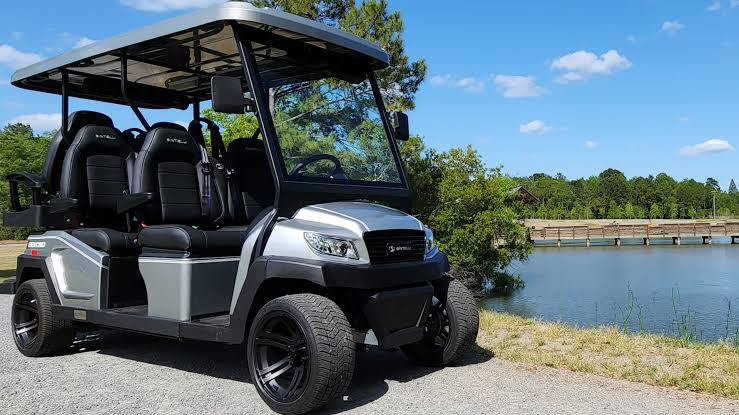
The Beyond is the workhorse of the lineup and the one you’ll see most often. It comes in 4-seater and 6-seater configurations, with forward-facing and lifted variants available depending on the dealer.
Standard equipment includes an aluminum frame, power steering, hydraulic disc brakes on all four wheels, a DOT-compliant windshield with a wiper, LED lighting, a Bluetooth sound system, and a reverse camera. That’s a lot of gear that other brands charge extra for. The Beyond 6PR variant runs a 5kW (roughly 6.7 horsepower) AC motor and carries a max load capacity around 1,200 pounds.
Bintelli Nexus Gen2
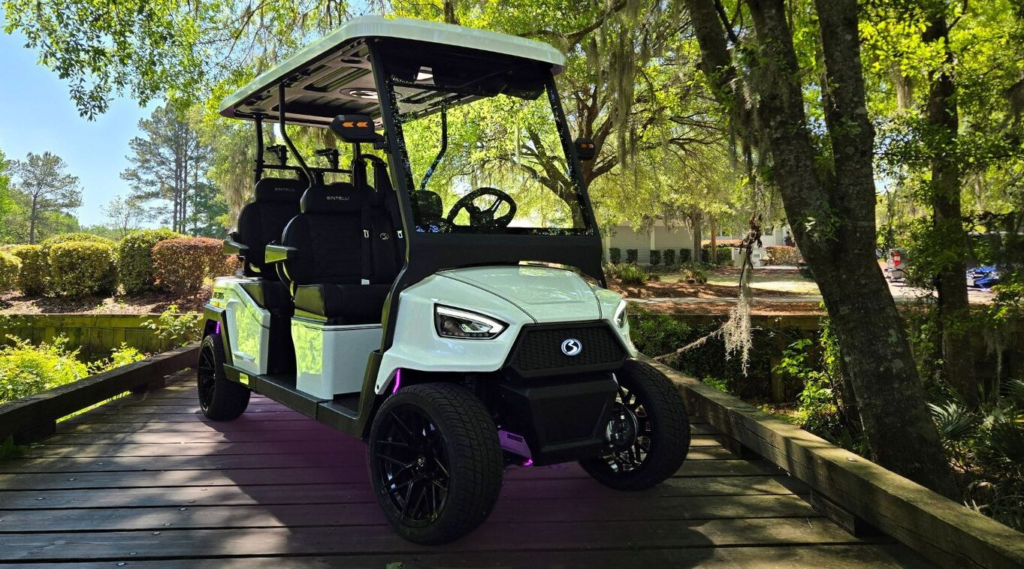
The Nexus Gen2 sits above the Beyond as the flagship. It steps up to a 72-volt electrical system, adds a 13-inch touchscreen infotainment center, and throws in cooling fans and additional lighting that the Beyond doesn’t get.
Where the Nexus really separates itself is range. While the standard lineup covers 30 to 40 miles per charge, the premium Nexus configuration with its largest battery option can reportedly stretch to roughly 105 miles — a genuinely useful number if you’re using the cart for more than trips to the fairway. Full specs and current configurations are listed on Bintelli’s official golf cart page, which is worth a look before you visit a dealer.
Beyond vs. Nexus Gen2: Quick Spec Comparison
| Spec | Beyond | Nexus Gen2 |
|---|---|---|
| Electrical system | 48V / 5kW AC motor | 72V system |
| Standard range | 30-35 miles | 30-40 miles (up to ~105 miles with largest battery) |
| Seating | 4 or 6-seater, forward-facing or lifted | 4 or 6-seater, lifted variants available |
| Tech | Bluetooth sound, reverse camera | 13-inch touchscreen, cooling fans, added lighting |
| Brakes | 4-wheel hydraulic disc | 4-wheel hydraulic disc |
| Typical price (2026) | $10,995-$16,000 | $16,000-$20,000 |
How Much Does a Bintelli Golf Cart Cost?
Pricing varies by dealer, region, and configuration, but here’s the realistic range you should expect to see in 2026. A base Bintelli golf cart in the Beyond line typically starts around $10,995 to $11,995. Fully loaded Beyond models with lithium batteries and lift kits climb toward $13,500 to $16,000.
The Nexus Gen2 commands a premium for its bigger battery and tech package, with well-equipped units landing in the $16,000 to $20,000 range. Lifted 6-seater configurations sit at the top of that spread.
Financing is available through third-party lenders that Bintelli partners with, which is worth asking about if you’re comparing monthly payments rather than sticker prices. Battery chemistry is the single biggest price lever — lithium packs cost more up front but last longer and charge faster than lead-acid, so factor that into any quote you get.
Bintelli Golf Cart Performance and Specs
On paper, a Bintelli golf cart performs like most premium LSVs in its class. Top speed sits at 25 mph, which is the ceiling for how a low-speed vehicle gets classified for street use in the first place. Standard range runs 30 to 35 miles, enough for a full day of errands or several rounds without needing to plug in.
The four-wheel hydraulic disc brakes are a genuine standout. A lot of competing carts still use mechanical drum brakes on the rear wheels only, and the difference in stopping power is noticeable the first time you need to brake hard going downhill with a full load of passengers.
Charging costs next to nothing — a full charge typically runs somewhere between a few cents and a couple of dollars in electricity, depending on your local utility rates. Battery life is the number that matters most for long-term ownership. A well-maintained pack should last around four to five years before capacity starts dropping enough to notice.
Seating comfort is another area where the Beyond and Nexus lines punch above their price point. The bench seats use higher-density foam than you’ll find on entry-level carts, and the lifted variants add a few extra inches of ground clearance along with larger off-road-style tires. That’s worth considering if your neighborhood or course has anything besides smooth cart paths — gravel, grass, or the occasional curb will feel very different on a lifted 6-seater than on a stock street model.
Bintelli Golf Cart Accessories and Customization
Dealers typically offer a range of add-ons beyond the factory options: rear-facing flip seats, custom wheel packages, enclosures for cold-weather driving, upgraded sound systems, and custom wraps if you want to personalize the body panels. Because Bintelli sells through independent dealers rather than a single factory storefront, the exact accessory catalog varies depending on where you buy.
It’s worth asking your dealer for an out-the-door price that includes whatever accessories you actually want, rather than comparing bare sticker prices between dealers. Two quotes for the “same” Bintelli golf cart can look very different once you account for what’s bundled in. And if you’re investing in new gear for your game this season anyway, it’s worth doing the same homework on your clubs — our breakdown of Golf Pride vs. Lamkin grips follows the same logic of comparing real performance instead of just price.
Common Bintelli Golf Cart Problems
No brand is perfect, and I’d rather tell you what I found than pretend otherwise. The complaints I came across, both on the Better Business Bureau and in owner forums, cluster around a few recurring issues.
Battery problems show up most often, usually tied to charging habits or low water levels on lead-acid packs rather than a manufacturing defect. Slower acceleration and reduced range are the early warning signs. A handful of owners reported more serious issues, including carts that lost propulsion or needed repeat repairs shortly after purchase.
Tire wear has come up in a few complaints too, with some owners surprised to need replacements within months of buying. And because Bintelli sells through independent dealers rather than owning its own service centers, the quality of your ownership experience depends heavily on which dealer you’re near. A strong local dealer means quick warranty service; a weak one means frustrating back-and-forth.
None of this is unique to Bintelli — every electric LSV brand has a version of these complaints in its reviews. But it’s worth asking your dealer directly about local service turnaround before you sign anything.

Bintelli vs. Club Car, EZGO, and Yamaha
The legacy brands — Club Car, EZGO, and Yamaha — have decades of track record, stronger resale value, and service networks that go back generations. If your top priority is minimizing risk and maximizing resale, those three are still the safer bet, and they’re the brands you’ll find backing most private golf courses. Budget-value competitors like Coleman are worth cross-shopping too if Bintelli’s price point appeals to you but you want to compare warranty terms and dealer coverage before deciding.
Where a Bintelli golf cart earns its spot in the conversation is standard equipment and value. Power steering, hydraulic disc brakes on all four corners, an aluminum frame, and a reverse camera are either optional add-ons or simply unavailable on comparable base models from the legacy brands. You’re paying less to get more equipment out of the box.
Think of it this way: if you want the cart to still be running strong in fifteen years with minimal fuss, lean legacy. If you want the most comfort and tech features per dollar today and you have a solid local dealer, Bintelli is a serious contender worth test-driving.
Is a Bintelli Golf Cart Worth It?
For most buyers, yes — with a caveat. A Bintelli golf cart makes the most sense if you have a reputable dealer nearby who can handle warranty work and routine maintenance without a fight. The equipment list justifies the price, and the driving experience genuinely impresses people used to older, more basic carts.
Where I’d hesitate is if you’re buying sight-unseen from a dealer with no local footprint, or if resale value matters more to you than upfront features. In that case, a Club Car or EZGO will hold its value better down the road.
If you’re new to golf entirely and just want a comfortable way to get around the course while you work on the fundamentals, the cart matters less than you’d think. Time spent dialing in your stance and grip will do more for your scorecard than any upgrade sitting in the cart barn. Our beginner’s guide to golf is a good place to start if that’s where you’re at.
Bintelli Golf Cart FAQ
How much does a Bintelli golf cart cost?
Expect to pay roughly $10,995 to $16,000 for the Beyond lineup and $16,000 to $20,000 for a fully equipped Nexus Gen2, depending on battery choice, seating, and lift kit.
Are Bintelli golf carts any good?
Generally, yes. Owner reviews are mostly positive, especially around ride comfort, standard features, and braking performance. The brand’s biggest weak point is that service quality depends heavily on your local dealer rather than a centralized support system.
What is the range of a Bintelli golf cart on a full charge?
Standard Beyond models cover 30 to 35 miles per charge. The premium Nexus Gen2 configuration with its largest battery can reach up to roughly 105 miles.
Is a Bintelli golf cart street legal?
Yes, when properly equipped and registered. Bintelli’s street-legal models meet the federal low-speed vehicle standard set by NHTSA, but registration, insurance, and where you’re allowed to drive still depend on your state’s specific rules.
How long do Bintelli golf cart batteries last?
A well-maintained battery typically lasts four to five years before you’ll notice a real drop in range and performance. Sticking to a regular charging routine extends that lifespan.
Where are Bintelli golf carts made?
Bintelli is headquartered and assembles vehicles in Ladson, South Carolina, giving it a more visible U.S. presence than several newer import-focused competitors.
Final Thoughts
A Bintelli golf cart isn’t going to unseat Club Car or EZGO as the industry default, and it doesn’t need to. What it offers is a genuinely loaded, comfortable ride at a price that undercuts what you’d pay for similar equipment from the legacy brands — as long as you’ve got a dealer nearby who’ll stand behind it.
Take one for a real test drive before you commit. Feel the brakes, check the seat comfort with a full group aboard, and ask your local dealer point-blank about turnaround times on warranty repairs. That conversation will tell you more than any spec sheet.
Photo credits: “Electric Golf Cart” by D-Stanley, “Shadow driving a golf cart, Alderbrook Golf Course” by Wonderlane, “Electric Golf Cart” by robennals, and “golf cart parking at McIntosh High” by BernardBoyGenius — used under CC BY 2.0 / CC BY-SA 2.0 via Openverse.
More Golf Cart Guides
- Club Car vs E-Z-GO vs Yamaha: How Bintelli Compares
- Golf Cart Batteries: Lithium vs Lead-Acid
- Best Golf Cart for Hills
- Coleman Golf Carts: Are They Worth It?
Useful accessories (affiliate links): weather enclosures, storage covers and chargers. We may earn a small commission at no cost to you.