In this Article
A practical breakdown of the best golf alignment aids — sticks, mirrors, lasers, gates, and apps — plus how to actually use each one to fix your aim.
If you’ve ever set up over a shot completely convinced you were aimed right at the flag, only to watch it start 15 yards right and keep going, you’ve met the most common problem in golf. It isn’t your swing. It’s your aim. The best golf alignment aids exist to fix exactly that, and they’re some of the cheapest, highest-value tools you can add to your practice bag.
I’ve handed a rotating cast of sticks, mirrors, and gates to students for seven years now, and the ones that actually move the needle aren’t complicated or expensive. Here’s what’s genuinely worth buying, what you can skip, and how to use each one so it changes your ball flight instead of just sitting in your bag.
What Actually Counts as a Golf Alignment Aid
An alignment aid is any tool that gives you an external, physical reference for where your body or clubface is actually pointed, as opposed to where you think it’s pointed. That gap between perception and reality is bigger than most golfers realize — studies on amateur setups routinely find golfers aimed 10 to 20 degrees off target and completely unaware of it.
Most golfers picture a pair of thin rods on the driving range when they hear the term, but the category is wider than that. It also covers putting mirrors, laser pointers, alignment gates, and even swing apps that overlay a target line on your phone screen. Each one solves a slightly different piece of the alignment puzzle.
The Best Golf Alignment Aids for Every Part of Your Game
There’s no single best golf alignment aid that covers everything — full swing, short game, and putting all benefit from slightly different tools. Here’s how I’d break the category down by what you’re actually trying to fix.
Alignment Sticks
Alignment sticks are the entry point for a reason: they’re cheap, they pack flat, and they show you exactly where your feet, hips, and shoulders are pointed relative to your target line. Lay one down at your toe line and a second one parallel to it, and you’ve got an instant, visual answer to whether you’re actually square.
Plastic sets run $15 to $30 and hold up fine for years of range use. If you want something nicer to look at, we’ve got a full breakdown of the best wooden golf alignment sticks, including which hickory brands are worth the upgrade and the drills that actually turn them into straighter aim.
Putting Mirrors
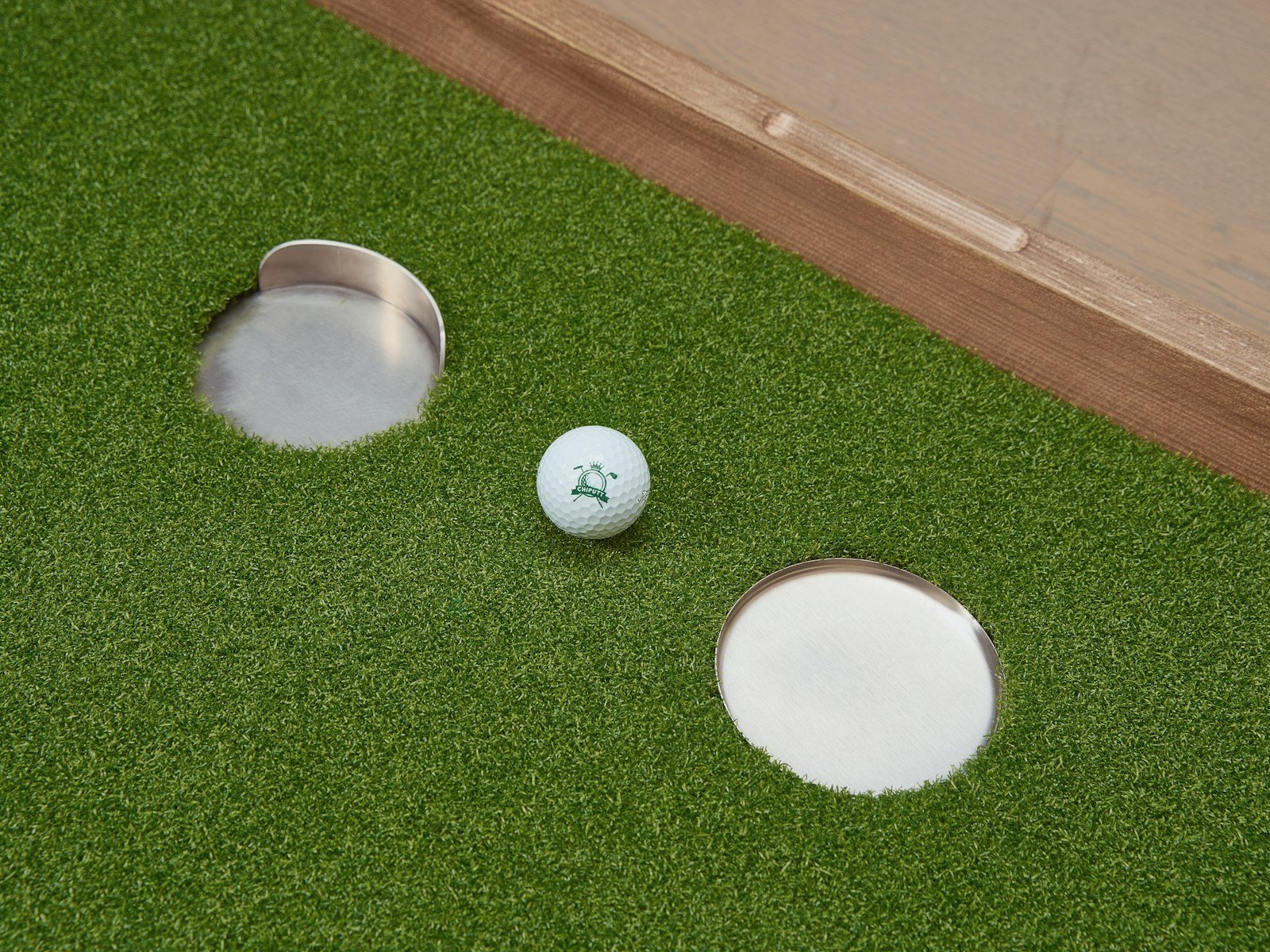
A putting mirror sits flat on the green and gives you two things at once: eye-position feedback (are your eyes actually over the ball, or drifting inside it?) and a reflective sightline you can square your putter face to before you stroke it.
Most decent mirrors run $20 to $40 and often include a cutout track for your putter head, which doubles as a stroke-path check. If your putting alignment feels fine but your speed control is inconsistent, pair a mirror with a simple gate drill — more on that below.
Laser Alignment Tools
Laser aids clip onto a club or sit behind the ball and project a bright line straight down your intended target line. They’re the most visually obvious option — there’s no interpreting a stick angle, the line is just there — which makes them useful for golfers who struggle to trust their own read of a straight line.
The catch: laser sighting devices built into a putter head are non-conforming equipment under the Rules of Golf, so these are strictly practice-green tools, not something to carry mid-round. More on the rules distinction in a minute.
Alignment Gates and Stance Systems
Gate systems combine several alignment references into one setup — think ball position, stance width, and aim, all built into a single frame you drop your clubhead into. They’re bulkier and pricier than a pair of sticks, usually $40 to $80, but they remove the guesswork of laying everything out separately every time you practice.
These are worth it if you practice at home on a mat and want a repeatable setup you don’t have to rebuild from scratch each session, rather than a range tool you’re packing in and out of a bag.
Swing Path Trainers and Apps
The newest category isn’t physical at all. Swing analysis apps let you record your setup and swing, then overlay a digital target line and body-alignment markers on the video afterward. They won’t give you real-time feedback the way a stick or mirror does, but they’re excellent for confirming whether what feels square actually looks square on camera.
I recommend these as a supplement, not a replacement — use a physical alignment aid to build the feeling, then film yourself periodically to confirm the feeling still matches reality.
How to Choose the Right Alignment Aid for Your Game
Start with what’s actually going wrong. If you’re consistently missing right, alignment sticks laid along your toe line will expose an open stance almost immediately. If your putts start online and drift, a mirror is the better first purchase.
Budget and space matter too. A single pair of sticks covers full swing, short game, and putting alignment for under $30 and fits in any bag — that’s why I recommend them first to almost every new student, before anything more specialized. Gate systems and laser devices are better second purchases once you know exactly which part of your setup needs the most work.
Also think about where you’ll actually practice. A golfer with a home putting mat gets far more value out of a mirror or gate system than someone who only hits balls at a crowded range, where a compact pair of sticks is easier to set up and pack away between buckets. Getting your stance right at address matters as much as the tool itself — see our guide to a correct golf stance for the fundamentals an alignment aid is meant to reinforce, not replace.
Are Golf Alignment Aids Legal to Use During a Round?
This is where a lot of golfers get tripped up, so it’s worth being precise. You can carry alignment sticks, mirrors, or gate systems in your bag during a round — that part is fine. What you cannot do is use one to help you aim, take a practice swing with it in play, or set one down on the ground to assist your stance for the shot you’re about to hit.
Rule 4.3 covers training and swing aids during a round, and the USGA’s official clarifications specifically call out alignment rods alongside devices like the Orange Whip as tools you cannot actively use for help mid-round. Rule 10.2b(3) separately prohibits setting down an object like a stick or club to help you take your stance. Break either one and you’re looking at a general penalty for the first breach, disqualification for a second.
Built-in laser or mirror sighting devices are a separate issue entirely — a putter head with a laser or sighting mirror physically attached is non-conforming equipment under the equipment rules, so those clubs can’t be used in competition at all, practice aid or not. None of this affects practice. Every alignment aid on this list is a range and practice-green tool first, and that’s where nearly all the benefit comes from anyway.
How to Actually Use Alignment Aids to Fix Your Setup
Owning the best golf alignment aids on the market doesn’t help your swing sitting in your bag. The value is entirely in how consistently you use them. Three drills cover almost everything.
The train tracks drill. Lay one stick pointed directly at your target, then a second one parallel to it along your toe line, so the two look like railroad tracks. Set up with your feet against the inner stick and check that your shoulders, hips, and knees all match that same line. This exposes the most common miss in amateur golf almost instantly — aiming well right of target while feeling perfectly square.

The gate drill. Push two sticks into the ground just outside your target line, angled to form a narrow gate a few inches wider than your clubhead, just ahead of the ball. Swing through without clipping either stick. It’s brutal on an over-the-top move, and one of the fastest ways to feel what swinging “from the inside” actually means instead of just hearing the instruction.
The mirror check-in. Set your putting mirror down before every practice session, not just when your stroke feels off. Confirm eye position over the ball and square the putter face to the reflective line before you start rolling putts. Two minutes of this before every session builds the habit far faster than an occasional check when something already feels broken.
Common Mistakes Golfers Make With Alignment Aids
The biggest mistake is treating the aid as decoration — laying a stick down once, glancing at it, and moving on without actually squaring your body to it every single rep. The value comes from repetition, not from owning the tool.
The second mistake is only ever checking the feet line and ignoring shoulders, hips, and clubface. Misalignment hides in all four places, and plenty of golfers who think their aim is fine are actually off somewhere above the waist, not at their feet.
The third is never testing yourself without the aid in place. If you only ever practice with the visual crutch on the ground, you can become dependent on it. Build the habit with the tool, then periodically check yourself without it to confirm it’s actually sticking.
Frequently Asked Questions
What is the single best golf alignment aid for a beginner?
A basic pair of alignment sticks. They’re inexpensive, cover feet, hips, shoulders, and swing path in one tool, and every drill that works with more expensive gear starts with the same two-stick setup.
Can alignment aids actually lower my scores?
Indirectly, yes. They don’t hit the ball for you, but poor alignment is one of the most common and most overlooked causes of missed shots for amateur golfers. Fixing your aim removes an entire category of error from your game before the swing even starts.
Are laser putting aids worth buying?
They’re worth it if you’re a visual learner who struggles to trust a straight line laid on the ground. They add clarity but not accuracy — a laser line and a well-placed stick point to the exact same target.
How often should I use alignment aids in practice?
Every session, at least briefly. Two minutes of checking alignment before you start hitting balls or rolling putts does more for your consistency than an occasional deep-dive session once a month.
Can I build my own alignment aid instead of buying one?
Yes. Two clubs laid on the ground work fine as an alignment stick substitute, and tees can stand in for a putting gate in a pinch. The tools on this list are just more durable and purpose-built versions of the same basic idea.
Final Thoughts
The best golf alignment aids aren’t going to rebuild your swing by themselves, but they’re one of the highest-value, lowest-cost additions you can make to your practice routine. Whether you start with a $20 pair of sticks or work up to a full gate system, the real work happens in how consistently you check your setup against them.
Start with the train tracks drill if you’ve never used an alignment aid before, and pair it with the fundamentals in our guide to a proper golf stance for each club. For most golfers, that combination alone is worth more than any swing change you could make this season.
Where to Shop
Affiliate links – we may earn a small commission at no extra cost to you, and it never changes what we recommend.
- Alignment sticks – the cheapest and most useful training aid in golf.
- Setup and putting mirrors – instant feedback on eye line and shoulder alignment.
- Putting gates – for start-line control on the green.
- Impact tape – shows strike location, which alignment aids alone cannot.
- Recording tripods – pairs with alignment work so you can check what you actually did.