In this Article
A practical buyer's guide to the best wooden golf alignment sticks, plus the four drills that actually turn them into straighter aim and cleaner contact.
If you’ve ever watched a tour pro warm up on the range, you’ve seen two thin sticks laid on the ground by their feet. Most amateurs skip this step entirely, which is a shame, because it’s the cheapest swing fix in golf. When people start shopping for their own set, they usually end up comparing plastic versions to something nicer, and that’s when the search for the best wooden golf alignment sticks starts. I get asked about this more than you’d think, so let’s go through what actually matters before you buy a set, and then what to do with them once they’re in your bag.
What Makes the Best Wooden Golf Alignment Sticks Different
A wooden alignment stick is doing the exact same job as a plastic or fiberglass one — giving you a straight visual line for your feet, hips, shoulders, or swing path. The difference is entirely in the material.
Most wooden sticks on the market are made from hickory, the same wood that shafts were made from before steel took over in the 1930s. Hickory has a dense, tight grain that resists warping and snapping, and it has enough natural flex that it won’t shatter if you accidentally step on one or catch it with a practice swing.
The better wooden sets are sanded smooth, sealed with a stain or wax finish, and capped on both ends with a rubber tip. That rubber tip isn’t decorative — it’s what keeps the stick from splitting when you push it into hard or rocky ground, and it protects the wood grain from moisture.
Wood vs. Plastic: Which Alignment Stick Should You Actually Buy
Plastic and fiberglass sticks are the default for a reason. A decent set runs $15 to $30, they’re lightweight, and they hold up fine to years of range use. If you just want something functional to throw in your bag, there’s nothing wrong with the cheap set.
Wooden sticks cost more, usually $30 to $60 for a set of two, sometimes more for hand-finished or engraved versions. You’re paying for the material and the craftsmanship, not better alignment performance. A straight line is a straight line whether it’s hickory or fiberglass.
Where wood pulls ahead is durability and feel. Cheap plastic sticks can ship with a slight bend right out of the package, which defeats the entire purpose of an alignment aid. Hickory doesn’t have that problem, and it holds its straightness for years. There’s also a simple pride-of-ownership factor — a nice set of wooden sticks doesn’t look like a $12 driving range giveaway sitting in your bag.
My honest take after years of recommending training aids to students: if you’re a once-a-week range rat who loses gear constantly, buy plastic. If you practice often, care about your gear, or want something you’ll actually want to pull out and use instead of leaving in the trunk, wood is worth the upgrade.
The Best Wooden Golf Alignment Sticks Worth Buying
A handful of small manufacturers have built their whole business around making the best wooden golf alignment sticks, and the quality differences between them are mostly in finish and customization rather than function.
Hazy Sticks
Hazy Golf has become one of the go-to names for hickory alignment sticks, largely because of how far they take customization. You can pick colors, add engraved initials, and choose from finish packages like their “Icon” or “Patriot” lines. If you want a set that feels personal — a gift for a golfer in your life, for instance — this is the brand people mention first.
Scotch & Skins
Scotch & Skins sources Grade A Appalachian hickory out of Ohio and finishes every stick by hand: double-sanded, stained, hand-painted, then sealed with a beeswax coating. It’s a genuinely American-made product, and the finish quality shows if you compare it side by side with a mass-produced set.
Nor’easter Sticks
Made in New England and used by instructors on multiple pro tours, Nor’easter Sticks lean into the traditional hickory look without a lot of extra customization options. If you want something classic and durable without paying for engraving you’ll never look at again, this is a solid, no-frills choice.
Pins and Aces
Pins and Aces sits closer to the entry-level end of the wooden category. Their sets come in blue, white, or black finishes with rubber tips on both ends, and they’re usually priced lower than the fully custom hickory brands. A good pick if you want the look and feel of wood without the premium price tag.
Prices and availability shift constantly with small manufacturers like these, so check current listings before you buy — but as a category, these four names come up again and again when golfers ask where to find a quality wooden set.
How to Choose the Right Length, Thickness, and Tip
Once you’ve narrowed down the best wooden golf alignment sticks for your budget, three details actually matter more than the brand name: length, thickness, and tip style.
Standard alignment sticks run about 48 inches, and that length works for almost everyone. Taller golfers sometimes prefer a set closer to 50 inches so the stick still reaches comfortably from address to a few feet past their feet.
Thickness matters more than people expect. A stick that’s too thin can bow slightly when you push it into firm ground, which throws off the exact line you’re trying to build. Look for at least 3/8-inch diameter hickory — thin enough to be light, thick enough to stay perfectly straight under normal use.
Tip style is the detail most buyers skip and then regret. A rubber cap on both ends does two things: it keeps the wood from splitting when you push the stick into compact or rocky turf, and it stops the stick from becoming a hazard if you’re using it near your feet or laying it across a golf bag. Don’t buy a set with exposed wood tips, wood or otherwise.
How to Use Alignment Sticks: Drills That Actually Fix Something
Buying a great set of wooden golf alignment sticks doesn’t help your swing sitting in your bag. The value is entirely in how you use them, and there are four drills I come back to with students over and over.
The Train Tracks Drill

Lay one stick on the ground pointed directly at your target. Place a second stick parallel to it, running along your toe line, so the two sticks look like railroad tracks. Set up with your feet against the inner stick and check that your shoulders, hips, and knees are all square to that same line.
This is the drill I hand to almost every new student because it exposes the most common miss in amateur golf: aiming your body well right of target while thinking you’re aimed straight. Most golfers are shocked the first time they see it laid out this way.
The Target Line Gate Drill
Push two sticks into the ground just outside your target line, angled to create a narrow gate a few inches wider than your clubhead, positioned just ahead of the ball. The goal is to swing down and through that gate without clipping either stick.
This drill is brutal on an over-the-top move. If you’re casting the club from outside in, you’ll hit the outer stick almost immediately. It’s one of the fastest ways I’ve found to get a slicer feeling what “from the inside” actually means, rather than just hearing the instruction.
The Rotation Drill
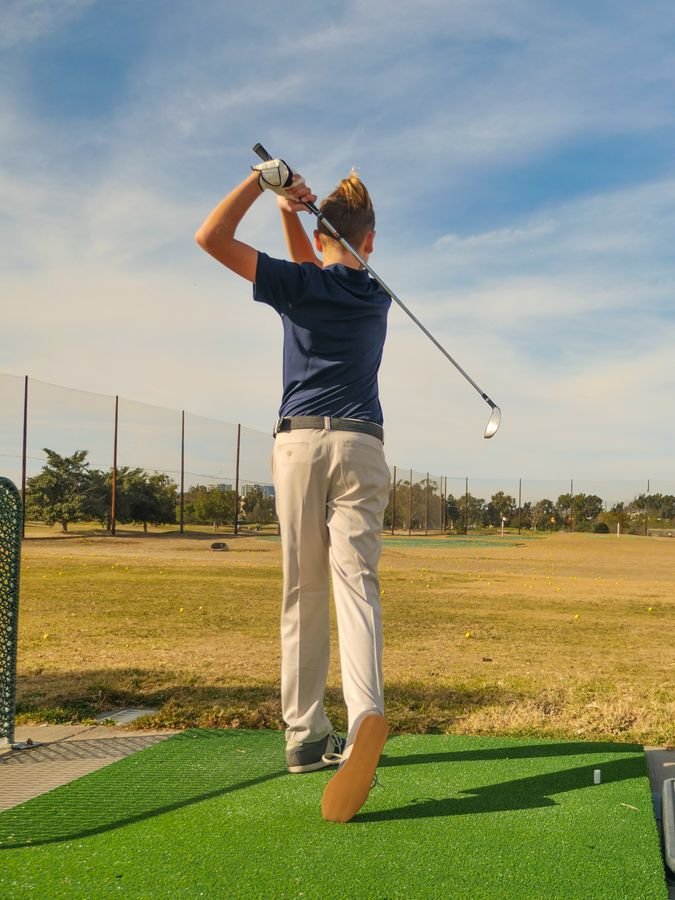
Place a stick in the ground just outside your trail foot, perpendicular to your stance line. Turn your shoulders back until your chest and the club across it match up with that stick’s angle. It gives you a real visual target for how far your body should be turning, instead of guessing.
Golfers who complain about “losing power” are frequently just under-rotating on the backswing. This drill makes that shortfall painfully obvious within a few reps.
The Putting Gate Drill

Set two sticks — or tees, if you don’t want to bend your good ones — just wider than your putter head, a few inches in front of the ball. Roll putts through the gate without touching either side. As your stroke gets more consistent, narrow the gate.
This is the single best drill I’ve seen for cleaning up a putting stroke that wanders off-line during the takeaway or through impact. It also pairs well with the setup work in our guide to building a correct golf stance, since a lot of putting misses actually start with a crooked address position.
Are Golf Alignment Sticks Legal to Use During a Round?
Here’s where a lot of golfers get tripped up. You are allowed to carry alignment sticks in your bag during a round — that part’s fine. What you cannot do is use one to help you aim, take practice swings, or set one down on the ground to assist your stance during the round itself.
Rule 4.3 covers the use of training and swing aids during a round, and the USGA’s official clarifications specifically call out alignment rods alongside things like the Orange Whip and grip trainers as devices you can’t actively use for swing help mid-round. Rule 10.2b(3) separately prohibits setting down an object like a rod or club to help you take your stance for the shot you’re about to play. Break either one and you’re looking at a general penalty for the first instance, disqualification if it happens again.
None of this affects practice. Alignment sticks are a range and practice-green tool first and foremost — that’s where nearly all the benefit comes from anyway.
Common Mistakes Golfers Make With Alignment Sticks
The biggest mistake is treating the stick as decoration — laying it down once, glancing at it, and moving on without actually squaring your body to it every single rep. The value comes from repetition, not from owning the tool.
The second mistake is only ever using sticks for the feet line and never for shoulders, hips, or swing path. Alignment problems hide in all four of those places, and a lot of golfers who think their aim is fine are actually misaligned somewhere above the waist.
The third mistake is skipping a pre-shot check with the sticks removed. If you only ever practice with the visual crutch on the ground, you can become dependent on it. Build the habit, then periodically test yourself without the sticks to confirm it’s actually sticking.
Finally, don’t ignore stick placement relative to ball position. A perfectly aligned stance with the ball in the wrong spot in your stance will still produce mishits — alignment and ball position are two separate fundamentals that both need attention, something we cover in more depth in our guide to proper stance for each club.
Frequently Asked Questions
Are the best wooden golf alignment sticks better than plastic ones?
Not functionally — a straight line works the same regardless of material. Wood wins on durability and feel, and it won’t ship with the slight factory bend that budget plastic sticks sometimes have. Plastic wins on price and weight. Neither improves your alignment more than the other; it comes down to what you’re willing to spend and whether you care about how your gear looks and feels.
What length alignment stick should I buy?
48 inches is the standard length and works for the vast majority of golfers. If you’re over 6’2″ or want a stick that reaches well past your feet for full-swing path drills, look for a 50-inch option instead.
Can I use alignment sticks for putting too?
Yes, and you should. The putting gate drill is one of the most useful ways to use a set of sticks, since it gives you instant feedback on whether your stroke is staying on line through impact rather than drifting inside or outside the target line.
Do alignment sticks actually help lower my scores?
Indirectly, yes. They don’t hit the ball for you, but poor alignment is one of the most common — and most overlooked — causes of missed shots for amateur golfers. Fixing your aim with consistent practice using sticks removes one entire category of error from your game.
How do I stop my wooden alignment sticks from splitting?
Buy a set with rubber tips on both ends and avoid jamming them into frozen or rock-hard ground. If you practice on firm turf often, angle the stick slightly as you push it in rather than forcing it straight down, which spreads the pressure more evenly along the grain.
Can I use alignment sticks during a real round of golf?
You can carry them in your bag, but you can’t use them to help your stance, aim, or swing during the round itself. That’s practice-only equipment under the Rules of Golf — see the section above for the specific rules that apply.
Final Thoughts
The best wooden golf alignment sticks aren’t going to rebuild your swing by themselves, but they’re one of the highest-value, lowest-cost tools you can add to your practice routine. Whether you go with a hand-finished hickory set from a specialty maker or a simpler entry-level option, the real work happens in how consistently you use them — feet, hips, shoulders, and swing path, every single practice session, not just once in a while.
Start with the train tracks drill if you’ve never used sticks before. It’s the fastest way to find out whether your aim actually matches what you think it is, and for most golfers, that alone is worth the price of the set.
Where to Shop
Affiliate links – we may earn a small commission at no extra cost to you, and it never changes what we recommend.
- Wooden alignment sticks – the dowel-style sets covered in this guide.
- Fibreglass alignment sticks – more flexible and less likely to splinter.
- Alignment stick covers – keeps them from rattling loose in the bag.
- Practice mirrors – the natural companion for setup work.