In this Article
An honest look at Kandi golf carts in 2026: the Kruiser 4Pro, 4Pro Fwd, 6Pro and Element, current prices, specs, the short warranty and what owners and service shops report.
Kandi golf cart reviews tend to fall into two camps. Some come from retailers that want to sell you one, and the rest are scattered forum posts. I went through Kandi’s own spec pages and warranty documents, dealer listings, a hands-on press review and owner threads to give you a balanced picture before you buy.
Quick answer: Kandi carts are a budget lithium pick. A new Kruiser 4Pro lists at $9,999 with a 150Ah lithium battery, a 5 kW AC motor and a backup camera, which is a lot of cart for the money. The trade-offs are a short 12-month vehicle warranty, slower parts support than the big brands, and weaker resale value.
I’ve taught golf around Chicago for seven years, and cart questions come up almost as often as swing questions. I haven’t owned a Kandi. Everything below comes from Kandi America’s published specs and warranty, dealer and retailer listings, an Electrek road test and owner reports, and where those sources disagree, I say so.
Table of Contents
Table of Contents
Kandi Golf Cart Reviews: Quick Verdict
Put enough Kandi golf cart reviews side by side and the pattern is clear. People like the price, the big lithium battery and the car-like extras. The worries are about what happens after the sale: warranty length, parts speed and who will service the cart near you.Category Verdict Value for money Very good: lithium, AC drive, touchscreen and backup camera from $9,999 Performance Good: 4 to 6.5 kW AC motors, 20 to 25 mph depending on model and setup Build quality Fair to good: solid drivetrain, trim and finish a step below Club Car and E-Z-GO Warranty Weak: 12 months on the vehicle, 36 months on lithium batteries Parts and service Mixed: growing dealer network, but some parts take longer to arrive Resale value Below average: less brand recognition than the big three Best for Neighborhood, lake and retirement-community driving on a budget
Kandi is one of the value names in my complete guide to golf cart brands and who makes them. If you’re still building a shortlist, start there, then come back here for the Kandi detail.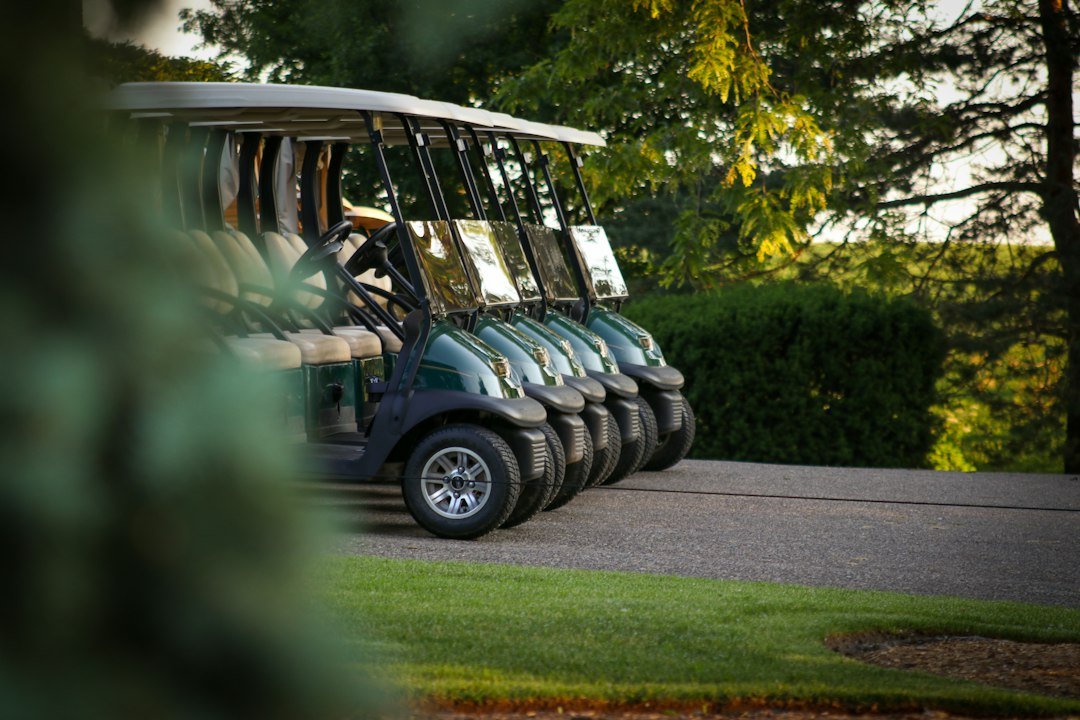
Who Makes Kandi Golf Carts?
Kandi America is the U.S. arm of Kandi Technologies Group, an electric vehicle company that started in China. Kandi’s warranty paperwork names the seller as SC Autosports, doing business as Kandi America, and the company lists a Dallas, Texas address.
Like most value brands, the carts have historically been built in China, and Kandi now points to a growing U.S. manufacturing presence. That’s normal in this price tier. Evolution, ICON, Denago and Advanced EV all lean on Chinese factories too.
What matters more to you is the support chain. Warranty work and parts run through authorized U.S. dealers, so the dealer you buy from is as important as the brand on the hood.
Kandi Golf Cart Lineup and Prices (2026)
Kandi’s current golf carts all sit under the Kruiser name. Prices below are Kandi’s starting MSRPs as of November 2026, before freight, prep, tax and registration.
| Model | Seats | Battery | Motor | Starting MSRP (Nov 2026) |
|---|---|---|---|---|
| Kruiser 4Pro | 4 (rear flip seat) | 48V 150Ah lithium | 5,000W AC | About $9,999 |
| Kruiser 4Pro Fwd | 4 (all forward-facing) | 48V 150Ah lithium | 5,000W AC | About $10,999 |
| Kruiser Element | 4 | 51.2V 105Ah lithium | 4,000W | About $10,999 |
| Kruiser 6Pro | 6 | 48V 150Ah lithium | 6,500W AC | About $13,999 |
Dealer prices move around. One Mississippi dealer advertised the 4Pro at $9,599 cash in October 2026, while a California dealer listed a 2025 4Pro at $9,999 plus fees. Always ask for an itemized out-the-door quote. For context on what’s normal in this market, see my breakdown of how much golf carts cost.
Kruiser 4Pro and 4Pro Fwd
The 4Pro is the cart most Kandi golf cart reviews focus on. The Fwd costs $1,000 more and swaps the rear flip seat for four forward-facing seats. Battery and listed range are the same, so you’re paying for the seating layout, not more performance.
Kruiser 6Pro
The six-seater gets the biggest motor, a 10-inch touchscreen, a front trunk and a rear trunk. At about $13,999 it’s the priciest Kandi cart, but still undercuts many six-seat carts from the big brands.
Kruiser Element
The Element is the more rugged option, with 7.8 inches of ground clearance and optional dump bed, towing and off-road lighting packages. Kandi also sells the Innovator e10k, but that’s a 60 mph utility vehicle, not a golf cart.
Key Specs: Battery, Motor, Speed and Range
These are Kandi’s advertised figures. Notice that some of them don’t agree with each other, which is worth raising with your dealer.Spec 4Pro / 4Pro Fwd 6Pro Element Top speed 20 mph (25 mph LSV setup) 25 mph 25 mph Claimed range Up to 40 miles Up to 37 miles 28 to 40 miles (Kandi lists both) Battery energy About 7.2 kWh About 7.2 kWh About 5.4 kWh Charging 120V outlet; J1772 port on several models 120V outlet 120V outlet Notable extras 10-inch screen, backup camera, 23-inch tires 10-inch touchscreen, frunk, 1,720 lb towing 7-inch display, optional dump bed and 1,500 lb towing
A 150Ah lithium pack is on the large side for this price, bigger than the 105Ah packs common on Evolution and Advanced EV carts. Electrek’s road test of the 4P also noted four-wheel hydraulic disc brakes, DOT seat belts and a J1772 inlet, so you can charge from a household outlet or a home EV charger.
If you’re weighing an older AGM Kandi against a new lithium one, my guide to lithium vs lead-acid golf cart batteries explains why the battery is the biggest long-term cost.
Are Kandi Golf Carts Street Legal?
Many Kruiser models are built to low-speed vehicle (LSV) standards, with lights, turn signals, mirrors, horn, seat belts and a VIN. But equipment alone doesn’t make a cart road legal. It needs the right certification for that VIN, a title and registration where you live, and usually roads posted at 35 mph or less. My guide on making a golf cart street legal walks through the rules.
Kandi Pros and Cons
Here’s how the strengths and weaknesses add up across specs, dealer data and owner-written Kandi golf cart reviews.
Pros
- One of the lowest prices for a new four-seat lithium cart with an AC motor.
- Large 150Ah lithium battery on the Pro models.
- Car-like extras: touchscreen, backup camera, disc brakes and seat belts.
- Charges from a standard 120V outlet, with a J1772 port on several models.
- Easy to find, with listings at Lowe’s, Walmart, Overton’s and local dealers.
Cons
- Only 12 months of vehicle warranty coverage.
- Warranty is tied to the original owner and an authorized dealer.
- Parts can take longer to arrive than for Club Car, E-Z-GO or Yamaha.
- Fit and finish is good, not great, according to a shop that sells and services them.
- Expect faster depreciation than the big three brands.
- Some published specs, such as Element range, conflict with each other.
Kandi Warranty: The Fine Print
This is the weakest part of the package, and the part most Kandi golf cart reviews skip. According to Kandi’s FAQ, coverage runs from the purchase date and belongs to the original owner.
| Component | Coverage |
|---|---|
| Vehicle (cart) | 12 months |
| Lithium battery | 36 months |
| AGM battery | 12 months |
| Winch (where fitted) | 90 days |
| Excluded | Second-hand and auction units, speed modifications, non-approved accessories, wear and tear |
There’s a wrinkle. Kandi’s July 2025 warranty PDF describes a $50 transfer process that needs Kandi’s approval, while the current FAQ says second-hand units are excluded. If you’re buying used, get written confirmation for that exact VIN before you count on any coverage. And compare: many value brands now offer 2 years on the cart and 5 years or more on lithium.
What Owners and Shops Report
There aren’t many detailed owner write-ups for current Pro and Element models yet. Here’s what is out there, with the source type for each.
- Speed setting surprises: a Cartaholics forum member reported in 2022 that a new Kruiser 4P wouldn’t go past 15 mph and that reaching support was difficult. Another owner said their dealer changed the controller settings and the cart then reached 25 mph. Both involve older carts.
- Conflicting speed listings: Electrek noted the Lowe’s listing for the NFL-edition 4P mentioned a 15 mph maximum, while the cart ran about 20 mph in its test. Confirm the speed setup in writing.
- Build quality: a California shop that sells and services Kandi describes fit and finish as good, not great, with plastic trim, seat materials and paint varying, but calls the chassis, motor and electrics solid.
- Parts delays: that same shop says Kandi’s parts network is growing but less mature, and some replacement parts take longer to get.
- Positive road test: Electrek found the 4P very efficient over several days of errands, comfortable, and well protected from rain by the roof and windshield.
These are individual reports, not a statistical sample. They do line up with what I hear about most value brands: the cart itself is often fine, and the dealer experience is where ownership goes right or wrong.
Where to Buy a Kandi (Dealers, Lowe’s and Online)
Kandi is unusual because you’ll see it at big retailers. Lowe’s has sold the NFL-edition 4P at $9,999, and Walmart and Overton’s list Kruiser models online. You can also buy from a Kandi dealer, which you can find with the locator on the official Kandi America site.
My advice is to favor a local authorized dealer, even if a retailer is a little cheaper. Kandi’s warranty runs through authorized dealers and service centers, and you want someone nearby who has done a Kandi pre-delivery inspection before. Replacement parts are also sold through Parts Boss.
Buying a Used or Legacy Kandi
Older Kandi carts, including the GOAT two-seater, the folding Mini and the earlier 2P, 4P and 6P Kruisers, now sit in Kandi’s legacy manual section. Legacy doesn’t mean unsupported, but current Pro specs and warranty terms don’t apply to them.
- Confirm whether the battery is AGM or lithium, its age, and its maker.
- Ask Kandi or a dealer in writing whether any warranty remains for that VIN.
- Check the speed configuration and charger match the battery.
- Test braking, steering, the display and charging before you pay.
- Find the nearest shop that services Kandi carts.
Who Should (and Shouldn’t) Buy a Kandi
Here’s who these Kandi golf cart reviews point toward.
Buy one if you want a new lithium cart under about $14,000, you’ll mostly drive neighborhood streets, a lake community or a retirement community, and you have an authorized Kandi dealer or service shop close by.
Skip it if you want a long warranty, top resale value or deep accessory options, or if the nearest Kandi service point is hours away. A big-three cart or a better-supported value brand will cost more but carry less risk.
Kandi vs the Alternatives
Kandi competes head-on with the other value brands. My Evolution golf cart reviews cover the brand with the biggest dealer footprint in this tier, and my ICON golf cart reviews cover a close rival on standard tech.Brand Typical new 4-seat price Main strength Main weakness Kandi About $10,000 to $11,000 Big lithium battery and extras for the price 12-month vehicle warranty Advanced EV About $8,500 to $9,500 Lowest entry price Smaller dealer network Evolution About $10,000 to $13,000 Large dealer network Higher price ICON About $10,000 to $13,000 Standard touchscreen and disc brakes Fit and finish Club Car / E-Z-GO About $9,000 to $13,000+ Resale and parts everywhere Less standard equipment for the money
Frequently Asked Questions
Are Kandi golf carts any good?
For the money, yes. Kandi golf cart reviews praise the lithium battery, AC motor and standard extras. The concerns are the short warranty, slower parts and resale value, so buy from a dealer that will service the cart.
Where are Kandi golf carts made?
Kandi America is part of Kandi Technologies Group, which started in China, and its carts have historically been built there. The U.S. business operates from Texas and cites a growing U.S. manufacturing presence.
How much does a Kandi golf cart cost?
As of November 2026, Kandi lists the Kruiser 4Pro at about $9,999, the 4Pro Fwd and Element at about $10,999 and the 6Pro at about $13,999, before fees, tax and options.
How fast does a Kandi golf cart go?
The 4Pro is rated at 20 mph, or 25 mph in LSV setup, and the 6Pro and Element at 25 mph. Some carts ship with lower speed settings, so confirm the configuration before delivery.
How far can a Kandi golf cart go on a charge?
Kandi claims up to 40 miles for the 4Pro and up to 37 miles for the 6Pro. Hills, passengers, cold weather and big tires all cut real-world range.
What warranty does Kandi offer?
12 months on the vehicle and 36 months on lithium batteries, for the original owner, according to Kandi’s FAQ. Get transfer terms in writing if you’re buying used.
The Bottom Line
My take after working through these Kandi golf cart reviews: the Kruiser 4Pro packs more battery and more features than almost anything else at $9,999. If a solid Kandi dealer is close by, it’s a smart way into a lithium, street-ready cart.
Just go in knowing the warranty is short. Inspect the cart before delivery, confirm the speed setup and battery spec in writing, and know exactly who will fix it when something needs attention.