In this Article
Star EV golf cart reviews for 2026: the Sirius, J Plus, Capella and new Leo lineup, current prices, warranty, owner-reported problems and who a Star EV cart really suits.
Star EV golf cart reviews are hard to pin down. Most of what you’ll find is either a dealer selling the carts or a short forum thread from a retirement community. I pulled together Star EV’s published specs, current dealer listings, independent reviews and owner threads so you can see the whole picture in one place.
Quick answer: Star EV is a solid mid-priced brand with a long track record. The flagship Sirius is a factory street-legal lithium cart with car-like features, selling for roughly $14,000 and up as of November 2026. Owners like the ride, power and storage. The common complaints are dealer support, parts for older models and a few fiddly details like the parking brake.
I’ve taught golf around Chicago for seven years, and cart questions land in my inbox almost as often as swing questions. I haven’t owned a Star EV. Everything below comes from the manufacturer, dealer listings, independent reviewers and owner reports, and I flag where those sources disagree.
Table of Contents
Table of Contents
Star EV Golf Cart Reviews: Quick Verdict
Line up enough Star EV golf cart reviews and a pattern shows up. The carts themselves get decent marks, especially the Sirius. The mixed feedback is mostly about what happens after the sale, and that depends heavily on your local dealer.Category Verdict Value for money Good: lots of standard features, priced between the value brands and the big three Performance Good: 48V AC drive, 4 to 5 kW motors, 25 mph in LSV setup Comfort and features Very good on the Sirius: touchscreen, LED lights, front cooler trunk Street legal Strong: Sirius and J Plus are factory-certified low-speed vehicles Parts and service Mixed: 200+ dealers, but owners of older carts report parts hassles Track record Long: the company has built carts since 2003 Best for Retirement communities, neighborhood driving and private golf use
Star EV is one of the mid-tier names in my complete guide to golf cart brands and who makes them. If you’re still building a shortlist, start there, then come back for the Star EV detail.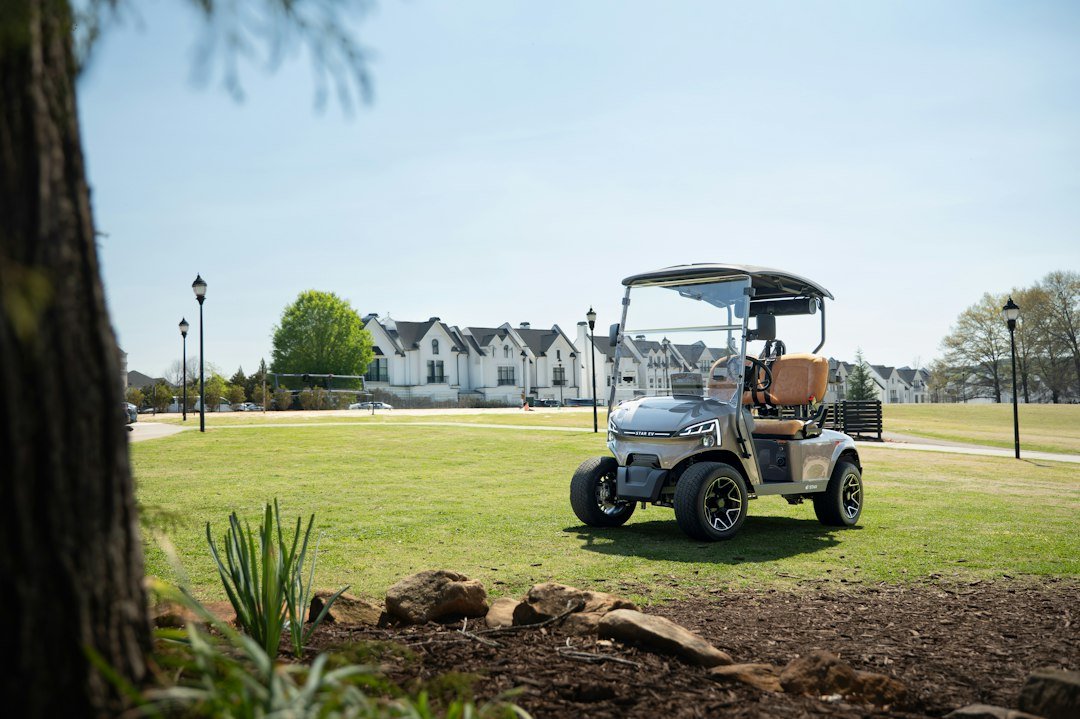
Who Makes Star EV Golf Carts?
STAR EV is a family-owned company based in Simpsonville, South Carolina. It was founded in 2003 by Jane Zhang and Jun Hu, and the company says it handles engineering and assembly at its U.S. facility.
That 20-plus-year history matters. Many of the value brands you’ll compare it with are under ten years old. Star EV now sells through more than 200 dealers and also builds commercial shuttles, so it isn’t a fly-by-night importer.
You’ll sometimes see older carts sold as “Star Classic” or by model codes like AK48. Those are earlier Star EV products, and they’re the ones most often mentioned in parts complaints.
Star EV Golf Cart Lineup and Prices (2026)
Star EV doesn’t publish a simple MSRP list, so the prices below come from dealer listings and buyer’s guides as of November 2026. Expect freight, prep, tax and registration on top.
| Model | Seating options | Battery | Top speed | Typical price (Nov 2026) |
|---|---|---|---|---|
| Sirius (flagship) | 2, 2+2, 4, 4+2, lifted versions | LiFePO4 lithium standard | 25 mph (LSV) | About $14,000 to low $20,000s |
| J Plus (formerly J Model) | 2, 2+2, 4, 4+2, lifted versions | 48V 105Ah lithium | 25 mph (LSV) | Low to mid $10,000s |
| Capella | 2, 2+2, 4, 4+2, lifted versions | Trojan lead-acid, lithium upgrade | 19.5 mph (25 mph LSV version) | From about $9,900 to mid $10,000s |
| Leo (new for 2026) | 4 forward-facing | 105Ah lithium (dealer listing) | Not yet published | About $12,995 (Florida dealer) |
Real-world prices bounce around. A North Carolina dealer listed a 2025 Sirius 2+2 lithium at $13,995 on sale, while lifted 4+2 Sirius builds with options push past $20,000. Always ask for an itemized out-the-door quote before you compare brands.
Star EV Sirius
The Sirius is the cart most Star EV golf cart reviews focus on. It comes with LED headlights and turn signals, a color display with speed and battery level, USB and 12-volt outlets, a lockable glove box and a front trunk with a drainable cooler. Backup camera, lift kit and custom paint are options.
Star EV J Plus
The J Plus is the mid-range model. It keeps factory LSV certification and a lithium battery but trims some of the Sirius styling and extras, which brings the price down.
Star EV Capella
The Capella is the course and community cart. It ships with lead-acid batteries and a 19.5 mph top speed, with lithium and LSV packages as upgrades. Independent front suspension and rack-and-pinion steering give it a comfortable ride.
New for 2026: Leo and Gemini
Star EV showed two new models at the 2026 PGA Show. The Leo is a four-forward cart with wireless CarPlay and Android Auto, an adjustable steering column and three-point seat belts. The Gemini is a heavy-duty, UTV-styled cart with an 8 hp motor and a claimed range of up to 90 miles, due later in 2026. Neither has enough owner history yet to judge reliability.
Key Specs: Battery, Motor, Speed and Range
Specs are where Star EV golf cart reviews often get muddled, so here are the published figures. All current Star EV personal carts run a 48V system with an AC motor and thermal protection. Here’s how the main numbers compare.
| Spec | Sirius | J Plus | Capella |
|---|---|---|---|
| Motor | 4 kW (350A controller) or 5 kW (450A) by size | 4 kW or 5 kW by size | 48V AC, 4 to 5 kW |
| Battery | LiFePO4 lithium | Marxon 48V 105Ah LiFePO4 | Trojan lead-acid, lithium optional |
| Claimed range | 40 to 60 miles | 34 to 40 miles | Not published |
| Top speed | 25 mph | 25 mph | 19.5 mph, 25 mph as LSV |
| Street legal from factory | Yes | Yes | LSV version only |
Treat the range claims with care. Golf Cart Resource’s Sirius review advises not pushing the cart to the claimed 60 miles, and hills, passengers, cold weather and lifted tires all cut real-world range.
If you’re choosing between a lead-acid Capella and a lithium model, my guide to lithium vs lead-acid golf cart batteries explains why the battery is the biggest long-term cost of ownership.
Star EV Pros and Cons
Here’s how the strengths and weaknesses add up across specs, dealer data and owner-written Star EV golf cart reviews.
Pros
- Sirius and J Plus come factory-certified as low-speed vehicles, so no aftermarket conversion is needed.
- Lithium is standard on the Sirius and J Plus.
- A generous list of standard features on the Sirius, including the front cooler trunk owners like.
- Owners describe quick, smooth acceleration and good hill performance.
- A 20-plus-year company with a U.S. headquarters and a 200-plus dealer network.
Cons
- No public MSRP, so you have to get dealer quotes to compare.
- The base Capella uses lead-acid batteries and isn’t street legal.
- Owners of older Star carts report trouble getting OEM parts such as wiring harnesses and motors.
- Dealer quality varies, and at least one owner felt the factory didn’t back its dealers strongly.
- Resale value trails Club Car, E-Z-GO and Yamaha.
Star EV Warranty
Warranty is a topic many Star EV golf cart reviews skip, yet it’s one of the brand’s better selling points against cheaper rivals. Here’s what buyer’s guides report for personal models bought new from an authorized dealer.Component Reported coverage Vehicle (limited) 4 years Bumper-to-bumper 2 years Lithium battery pack Up to 6.5 years, depending on usage Excluded Wear items such as tires and brake pads
Read the actual lithium warranty document linked from the official STAR EV site before you buy, and ask the dealer to put the terms for your specific VIN in writing. The pro-rated details on the battery are where the fine print lives.
What Star EV Owners Report
There’s no big database of Star EV golf cart reviews written by owners. What exists is spread across forums and small rating panels, so read these as individual reports, not statistics.
- Long-term reliability on older carts: in a 2014 Talk of The Villages thread, owners of a 2010 and a 2012 Star EV called their carts dependable, with one reporting no problems in more than five years.
- Strong acceleration: a 2022 Sirius owner on the same forum described acceleration as quick, with no hesitation.
- Parking brake: several Sirius owners found the parking brake hard to set. One said a dealer adjustment fixed it.
- Seat grab bar: one owner found the bar on the seat awkward for taller drivers. Another pointed out it comes off with four screws.
- Dealer support: a 2022 owner felt the manufacturer wasn’t supporting dealers well, possibly due to supply chain or staffing issues. Another resident said the brand hadn’t had the best reviews in The Villages.
- Older-model parts: a 2026 buyer’s guide notes some owners struggle to get OEM wiring harnesses and motors for older Star carts.
- Small rating panels: Golf Cart Resource’s Sirius page shows ten owner ratings, with comfort scoring 7.9 out of 10 but reliability only 4.6. Ten ratings is a tiny sample, so treat it as a flag to ask questions, not a verdict.
That lines up with what I hear about most mid-tier brands. The cart is usually fine. The dealer is where ownership goes right or wrong.

How to Check a Star EV Before You Buy
- Ask the dealer how long they’ve sold Star EV and whether they stock common parts.
- Confirm the battery type, capacity and maker, plus the battery warranty terms.
- Check the speed setting and whether the cart is titled as an LSV in your state.
- Set and release the parking brake a few times on a slope.
- Sit in it if you’re tall and check the seat bar and steering reach.
- On a used cart, get the serial number and ask a Star EV dealer about parts for that model year.
Who Should (and Shouldn’t) Buy a Star EV
Buy one if you want a street-legal lithium cart with lots of standard features, you live somewhere with an established Star EV dealer, and you’d rather buy from a company with a long history than the newest value brand.
Skip it if the nearest Star EV service shop is far away, resale value is a priority, or you’re buying an older used Star cart without a plan for parts. Before you sign, make sure you understand the local rules in my guide to making a golf cart street legal.
Star EV vs the Alternatives
In most Star EV golf cart reviews, the brand lands between the value brands and the big three. My Evolution golf cart reviews cover the value brand with the biggest dealer footprint, and my ICON golf cart reviews cover a close rival on standard tech.
| Brand | Typical new 4-seat price | Main strength | Main weakness |
|---|---|---|---|
| Star EV | About $12,000 to $16,000 | Factory LSV, long track record | Dealer support varies |
| Evolution | About $10,000 to $13,000 | Large dealer network | Mixed fit and finish reports |
| ICON | About $10,000 to $13,000 | Standard touchscreen and disc brakes | Fit and finish |
| Club Car / E-Z-GO / Yamaha | About $9,000 to $15,000+ | Resale and parts everywhere | Less standard equipment for the money |
If resale and parts availability matter most, compare the big three in my Club Car vs E-Z-GO vs Yamaha breakdown.
Frequently Asked Questions
Are Star EV golf carts any good?
Yes, for most buyers. Star EV golf cart reviews praise the Sirius for features, ride and power. The weak spots are dealer support and parts for older models, so buy from a dealer with a good service record.
Where are Star EV golf carts made?
STAR EV is headquartered in Simpsonville, South Carolina, and says it does engineering and assembly at its U.S. facility. Ask your dealer where specific components such as the battery come from.
How much does a Star EV golf cart cost?
As of November 2026, expect about $9,900 and up for a Capella, the low to mid $10,000s for a J Plus, about $13,000 for a Leo and roughly $14,000 to $20,000-plus for a Sirius, before fees.
How fast does a Star EV golf cart go?
The Sirius and J Plus reach 25 mph as low-speed vehicles. A standard Capella tops out around 19.5 mph, or 25 mph in its LSV version.
How far does a Star EV go on a charge?
Star EV claims 40 to 60 miles for the Sirius and 34 to 40 miles for the J Plus. Real-world range is lower with hills, passengers, cold weather and big tires.
Is Star EV better than Club Car?
Not better, different. Star EV gives you more standard features and factory LSV certification for the money. Club Car wins on resale value and parts availability almost everywhere.
The Bottom Line
My take after working through these Star EV golf cart reviews: the Sirius is a well-equipped, street-legal lithium cart from a company that has been around for more than 20 years. It’s a sensible middle ground between budget imports and the big three.
Just pick the dealer as carefully as the cart. Test the parking brake, confirm the battery and warranty in writing, and know exactly who will service it when something needs attention.