In this Article
Denago vs Evolution compared side by side: battery and range, prices model by model, standard tech, frame, warranty, dealer support and owner reports, so you can pick the right lithium cart.
If you’ve narrowed your cart shopping to two lithium brands, Denago vs Evolution is probably the comparison keeping you up at night. Both sell feature-loaded, street-ready carts for roughly the same money, and dealers for each will tell you theirs is better. Here’s the side-by-side I’d want before signing anything.
Quick answer: In the Denago vs Evolution matchup, Denago wins on standard tech (CarPlay and a backup camera on every model) and a lighter aluminum frame for about $10,000 to $13,000. Evolution wins on battery size options, a bigger dealer and parts network, and a wider lineup that runs up to four-wheel drive. Pick the brand with the better dealer near you.
I’ve taught golf around Chicago for seven years, and cart questions come up with my students almost as often as swing questions. I haven’t owned either brand, so everything below comes from manufacturer and dealer spec sheets, published warranty terms, and owner reports from forums like Talk of The Villages. Where those sources disagree, I say so.
Table of Contents
Table of Contents
Denago vs Evolution: The Quick Verdict
These two brands follow the same formula: lithium battery standard, AC motor, LED lights, seat belts and an LSV package for street use. The differences are in the details, and those details decide which one suits you.Category Denago Evolution Edge Standard tech CarPlay, Android Auto and backup camera on every model Touchscreen and backup camera on D5; CarPlay on D-Max Denago Battery options 51.2V 105Ah on most models 48V lithium, larger packs available; 160Ah on D-Max Evolution Lineup breadth Nomad, Rover, City Classic, Forester, D5, D-Max (incl. 4WD), commercial Evolution Frame Aluminum (per dealer listings) Powder-coated steel Denago Dealer and parts network Growing More established Evolution Starting price (4-seat) About $9,500–$11,000 About $8,700–$10,700 Tie
Both are newer brands built around globally sourced components and a U.S. dealer network. If you’re still deciding which names belong on your shortlist at all, my guide to golf cart brands and who makes them covers every major manufacturer in one table.
Evolution Electric Vehicles is headquartered in Chino, California, with distribution centers in Texas and Florida, and industry guides report its main components are built overseas, mainly in China. Denago EV is a Florida-based brand that sells through authorized dealers and doesn’t publish where its carts are built. Ask either dealer directly if origin matters to you.
Denago vs Evolution Specs Side by Side
This compares the volume sellers: Denago’s Nomad and Rover family against Evolution’s D5 Ranger and Maverick. Numbers come from manufacturer pages and dealer listings as of November 2026.Spec Denago Nomad / Rover Evolution D5 Ranger / Maverick Battery 51.2V 105Ah LiFePO4 48V LiFePO4 with smart BMS; larger packs offered Motor AC, listed as 5 kW / 6.3 kW 6.3 kW AC Top speed 25 mph (LSV setup) 19 mph standard, 25 mph LSV Claimed range About 40 miles Varies by pack; owners report 40 to 80 miles Charging Onboard, about 5 hours 25A onboard, about 4–6 hours Brakes Four-wheel disc Disc brakes; confirm the setup on the model spec sheet Screen Digital dash with CarPlay / Android Auto 9-inch touchscreen (CarPlay on D-Max’s 10.1-inch) Frame Aluminum Powder-coated steel Seating layouts 4, 2+2, 4+2, 6 2+2, 4, 4+2, 6 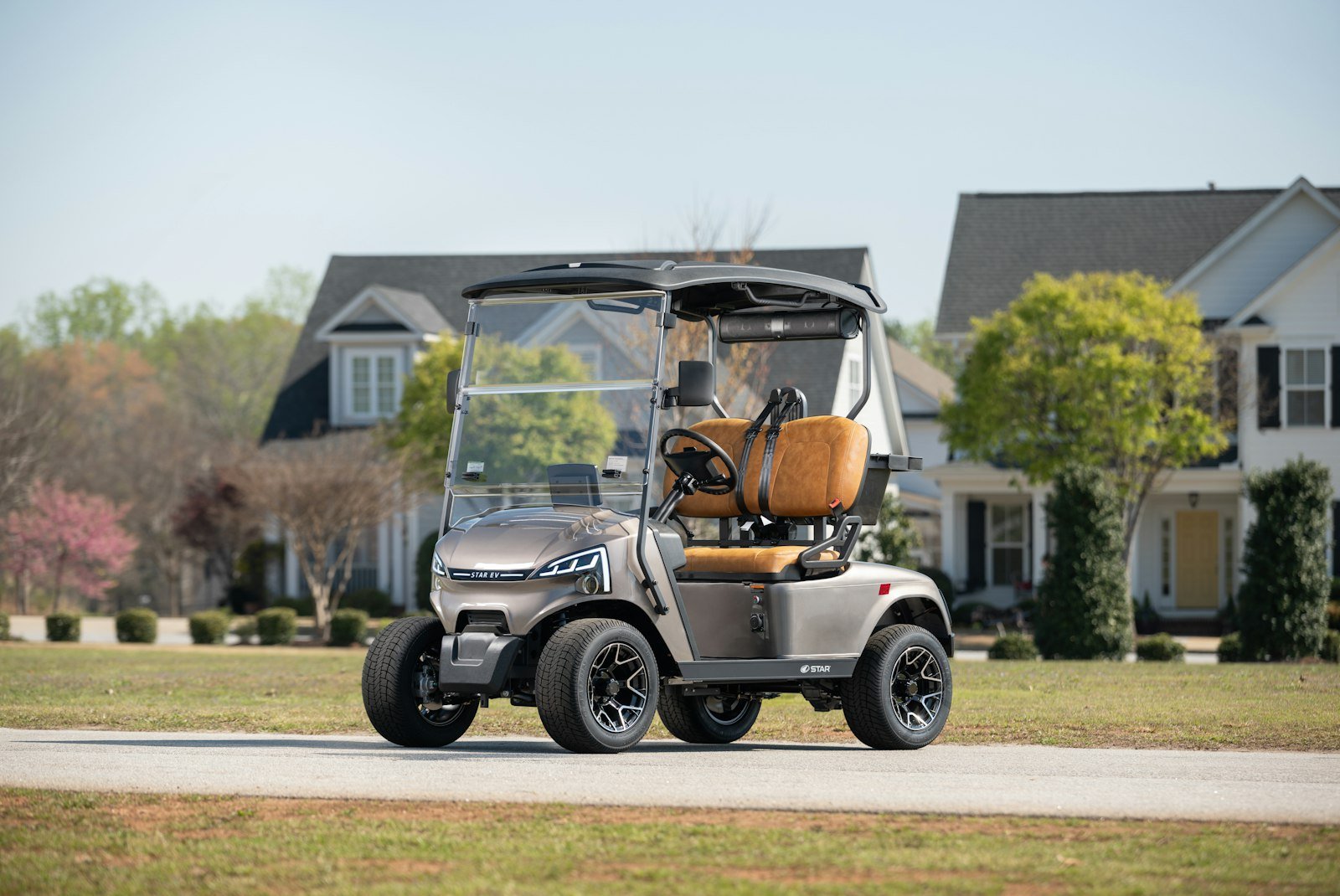
Battery and Range: The Biggest Difference
If you only read one section of this Denago vs Evolution comparison, make it this one. Battery capacity decides how far you can go, and it’s where these brands differ most.
Most Denago models use a 51.2V 105Ah lithium iron phosphate pack, rated at about 40 miles. Denago’s own figure for the six-seat Rover XL6 is about 32 miles with a heavy load. Only the flagship City is advertised at up to 80 miles.
Evolution gives you more room to choose. The D-Max line uses a 48V 160Ah pack, and owners on The Villages forum describe paying around $2,000 extra for a bigger battery on a D5 Ranger. Several Evolution owners there report 60 to 80 miles per charge in flat community driving, which is a best case, not a guarantee.
On that same forum, one shopper estimated a 105Ah pack would give “25–30 miles max” on real community days and wanted 200Ah or more. That’s one person’s estimate, but it’s the right question to ask. Hills, cold weather, six passengers and lifted tires all cut range.
Both brands use LiFePO4 chemistry, so neither needs watering. If you’re new to that, my breakdown of lithium vs lead-acid golf cart batteries explains why it matters for long-term cost.
Price and Value, Model by Model
Denago vs Evolution prices are close enough that the right comparison is model against model. These are approximate starting MSRPs as of November 2026, before freight, prep, tax and registration. Dealers vary, so get a written out-the-door quote.Buyer need Denago model Approx. price Evolution model Approx. price Standard-height 4-seater Nomad About $9,500–$10,000 D5 Ranger 4 About $8,700–$10,700 Lifted 4-seater Rover XL About $10,995 D5 Maverick 4 About $9,000 Lifted 2+2 Nomad XL About $9,995 D5 Maverick 2+2 Dealer-dependent Six-seater Rover XL6 / XXL About $12,995 D5 Maverick 6 About $11,000 Premium / flagship City About $16,500 D-Max GT4 / XT6 About $13,600–$17,600
On sticker price alone, Evolution’s D5 is often a few hundred dollars cheaper. But Denago includes CarPlay and a backup camera at that price, so compare equipped carts, not base prices. Freight and prep charges can easily swing the difference either way.
Evolution also has an entry-level Classic line, which a dealer comparison lists from around $7,895 for a Classic 2 Plus. Denago has nothing that cheap, so tight budgets favor Evolution.
Standard Features and Tech
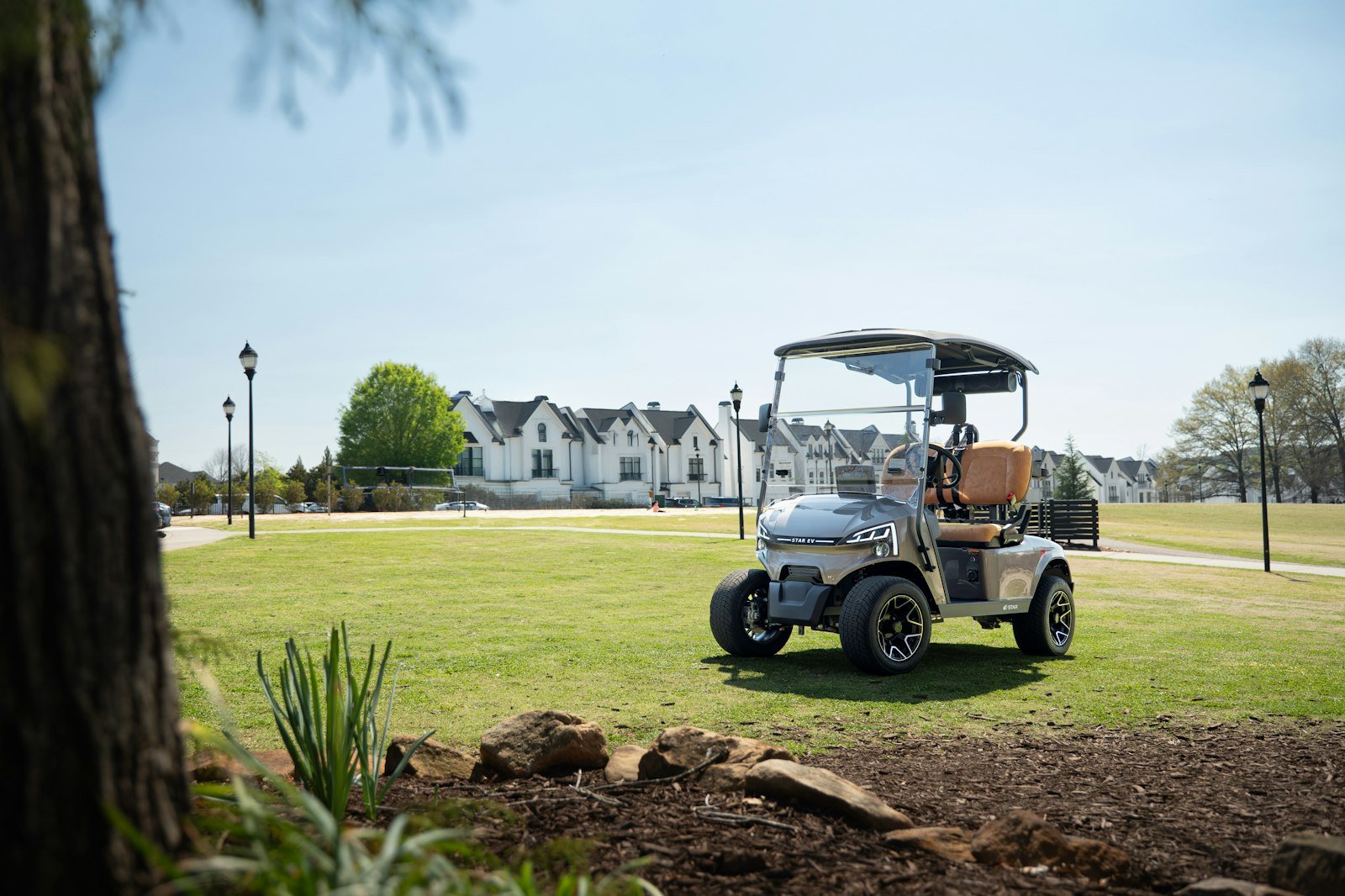
This is where Denago earns its fans. Every Denago comes with Apple CarPlay and Android Auto, a backup camera, LED lighting, USB and USB-C ports, seat belts, four-wheel disc brakes and independent suspension.
Evolution’s D5 is also well equipped: a 9-inch touchscreen, USB ports at every seat, a light-up soundbar, a backup camera and powered mirrors with turn signals. Full CarPlay and Android Auto arrive on the D-Max, along with a 10.1-inch screen, dual wireless chargers and a dash fridge.
- Want phone mirroring at the lowest price? Denago.
- Want four-wheel drive? Only Evolution offers it, on the D-Max XT with a second front motor.
- Want a 2-seat or utility cart? Evolution’s Classic and commercial Turfman lines cover that; Denago doesn’t.
Build Quality, Frame and Ride Comfort
Dealer listings describe Denago frames as aluminum, which resists rust and saves weight. Evolution uses a powder-coated steel frame, which is strong but needs the coating kept intact, especially near salt water.
Both brands get the same criticism on trim: plastic panels that feel less premium than a Club Car or Yamaha. Shoppers mention it about Denago’s interior plastics, and Evolution owners say body panels show wear sooner than Big Three carts.
Seat comfort is a split decision in the Denago vs Evolution debate. One Villages forum owner who compared both called Evolution’s seats “far more comfortable,” and a dealer comparison scored Evolution’s comfort 4.5 out of 5 against Denago’s 4. Other shoppers prefer Denago’s seats, and a few Evolution owners describe a firm ride on low-profile tires. Sit in both before you decide.
Warranty Compared
On paper, the Denago vs Evolution warranties look close. The fine print is where they differ.Component Denago Evolution Frame Lifetime Lifetime provision, excluding paint, corrosion and some components Lithium battery 8 years on current listings (some older pages say 5) Up to 8 years on newer packs; 5 years on earlier serial numbers Controller and charger Covered under 2-year parts 4 years Other major parts 2 years 2 years Key conditions Parts only, original buyer, unapproved mods can void it Wear items and tires excluded
Evolution’s 4-year controller and charger coverage is a real advantage, since those are expensive parts. Whichever you choose, ask for the current warranty document, not the brochure line, and confirm the battery term for your exact serial number. Evolution posts its terms on the official Evolution Electric Vehicles website.
Dealer Network, Parts and Service
Here’s the part of the Denago vs Evolution debate that matters most after the first month. Both brands rely on dealers for warranty work, and both use brand-specific parts.
Evolution has been on the U.S. market since around 2019 and has the more established network. In The Villages forum thread, one owner noted Evolution had two local dealers while Denago had none at the time. Denago’s network is growing, but parts can lag, and one dealer comparison says some parts take 30 days or more.
Evolution isn’t immune. Parts lead times are still the most common complaint in Evolution owner reports, and service quality varies a lot from one dealer to the next.
What Owners Report About Each Brand
Neither brand has decades of long-term data. Here’s what owners and serious shoppers commonly report on forums and review sites.
Denago owner reports
- Range worries on long community days with the 105Ah pack.
- Parts waits, including one owner who reported over a month for a replacement axle.
- Isolated electronics issues, such as a card reader that failed on a three-month-old cart.
- Lifted Rovers can be too tall for some community tunnels, and street tires may not be allowed on golf courses.
Evolution owner reports
- Praise for range and quiet, smooth power, especially with larger battery packs.
- Slow parts and uneven dealer service are the most frequent complaints.
- Battery management system faults that show up as no-charge or limp-mode issues.
- Some dealers cap top speed lower than owners expect, so ask before you buy.
For more detail on each, see my full Denago golf cart reviews and Evolution golf cart reviews, which cover each lineup, price list and owner complaint in depth.
Choose Denago If, Choose Evolution If
Choose Denago if you want CarPlay and a backup camera without paying for a flagship, you like the lifted look, you want an aluminum frame near the coast, your typical day is under 30 miles, and you have an authorized Denago dealer with a service bay nearby.
Choose Evolution if you need more range or a bigger battery, you want four-wheel drive or the cheapest possible entry model, longer controller and charger coverage matters to you, or Evolution simply has the closer, better-reviewed dealer.
Both brands ship LSV setups for public roads where your state allows them. My guide to making a golf cart street legal covers registration, and the federal equipment rules are in FMVSS 500 on the eCFR.
- Find your nearest dealer for each brand and visit both service departments.
- Ask each how long axles, controllers and body panels take to arrive.
- Get written out-the-door quotes for equivalently equipped carts.
- Estimate your longest typical day and match it to the battery size.
- Test-drive both on a bumpy road and a hill, and sit in every seat.
- Measure your garage and any community tunnels before choosing a lifted model.
Frequently Asked Questions
Is Denago better than Evolution?
Neither is better across the board. Denago gives you more standard tech for the money and an aluminum frame. Evolution gives you bigger battery options, a wider lineup and a more established dealer network.
Which has more range, Denago or Evolution?
Usually Evolution, because it offers larger packs. Most Denago models are rated around 40 miles from a 105Ah battery, while Evolution owners with larger packs report 60 to 80 miles in flat community driving.
Are Denago and Evolution made in China?
Industry guides report Evolution’s main components are built mainly in China, with U.S. distribution. Denago describes its components as globally sourced and doesn’t publish a factory location, so ask the dealer.
Which is cheaper, Denago or Evolution?
Evolution’s base prices are slightly lower, starting around $8,700 for a D5 Ranger 4 and under $8,000 for a Classic 2 Plus. Denago starts around $9,500 but includes CarPlay and a backup camera as standard.
Do Denago and Evolution carts hold their value?
Both are newer brands with limited resale history, so expect weaker resale than Club Car, E-Z-GO or Yamaha. I compare the Big Three in Club Car vs E-Z-GO vs Yamaha if resale is a priority.
The Bottom Line
The Denago vs Evolution choice is closer than either brand’s dealers will admit. Denago is the tech-and-style pick, with CarPlay, a backup camera and an aluminum frame standard. Evolution is the range-and-support pick, with bigger batteries, more models and a longer-established network.
My advice is the same one I give for every newer brand: choose the dealer first and the cart second. The better service department within driving distance will shape your ownership far more than the badge on the hood.