In this Article
A plain-English guide to Chinese golf cart brands: which popular carts are built in China, which factories make them, how the 2025 U.S. tariffs changed the market, and how to vet a dealer before you buy.
If you have shopped for a new golf cart lately, most of the unfamiliar names on the dealer lot are Chinese golf cart brands, or at least brands built from Chinese factories. Evolution, Denago, ICON, Epic, Kandi and plenty of others all trace back to factories in China, even when the company selling them is based in Texas, Florida or South Carolina.
Quick answer: Most newer golf cart brands sold in the U.S. are built in China, including Evolution, Denago, ICON, Advanced EV, Epic and Kandi. They usually cost less for the features and ship with lithium batteries. The real risks are parts supply, dealer support and the 2025 U.S. anti-dumping duties, not the cart itself.
I teach golf in Chicago, and over the last few years more of my students have asked me about cart shopping than about drivers. This guide is the narrow version of that conversation: which brands come from China, who actually builds them, and how to protect yourself as a buyer.
Table of Contents
Table of Contents
Which Golf Carts Are Made in China?
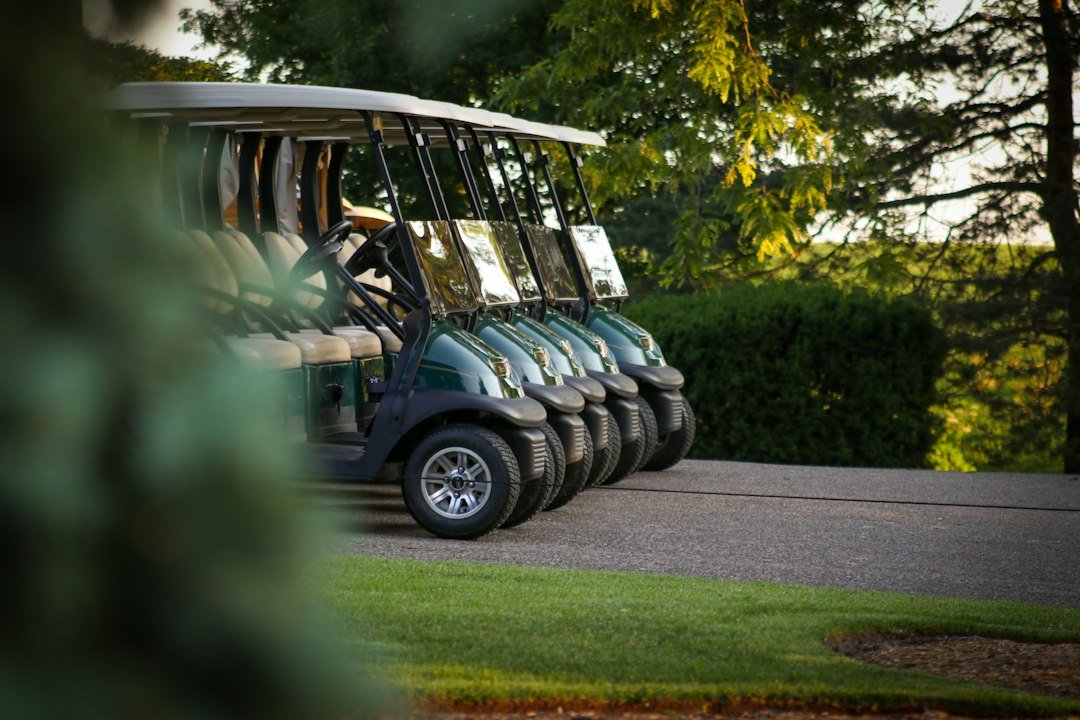
The short version: nearly every golf cart brand that appeared in the U.S. after about 2015 is built in China or assembled from Chinese chassis, motors and electronics. The “Big Three” (Club Car, E-Z-GO and Yamaha) build their carts in Georgia, though like most vehicle makers they source some parts globally.
The growth has been fast. U.S. Census import figures cited in the 2025 trade case show Chinese cart imports roughly doubling from about 57,000 units in 2021 to more than 114,000 in 2023. That is why your local dealer lot looks so different from a decade ago.
If you want every brand side by side, including the American ones, start with my complete list of golf cart brands and who makes each one. This article zooms in on the Chinese golf cart brands on that list.
Chinese Golf Cart Brands List (2026)
Here are the Chinese golf cart brands you are most likely to see at U.S. dealers. “Reported factory partner” means what dealers and industry sources say; most of these companies do not publish who builds their carts, so I have marked anything that is not confirmed.Brand U.S. Company / Base Where Built Reported Factory Partner Battery Evolution Evolution Electric Vehicles China-built components, U.S. final assembly Xiamen Dalle (HDK), per multiple dealer sources Lithium standard Denago EV Denago EV Corporation, Plano, Texas China Zhejiang Taotao group, per dealer sources Lithium standard ICON EV ICON EV China Not publicly confirmed Lithium on current models Advanced EV Advanced EV China Not publicly confirmed Lithium or lead-acid Epic Carts Epic China Not publicly confirmed (sources disagree) Lithium standard Kandi Kandi America (parent Kandi Technologies, NASDAQ: KNDI) China, with some reported U.S. assembly since 2025 Kandi’s own factories in China Lead-acid or lithium Coleman Coleman Powersports China Not publicly confirmed Lead-acid or lithium Bintelli Bintelli, Charleston, South Carolina China-sourced components Not publicly confirmed Lithium or lead-acid
A few notes on the big names. Evolution is the largest of this group, and its components are widely reported to come from China with final assembly in the U.S. I break down its lineup and the problems owners report in my Evolution golf cart reviews.
Kandi is the clearest case of a truly Chinese brand: the parent company, Kandi Technologies, is based in Jinhua, Zhejiang province, and builds the carts in its own plants. My Kandi golf cart reviews cover how that plays out for warranty and parts.
The Factories Behind the Brands
Here is something most buyers never hear: a small number of factories build carts for many different Chinese golf cart brands sold under U.S. company names. The same basic chassis can show up under two or three badges with different seats, wheels and screens.
The most reliable public list of these factories is the U.S. government’s own trade case. Companies named in the Commerce Department’s 2025 determinations include:
- Guangdong Lvtong New Energy Electric Vehicle Technology (often written LVTong), one of the two companies Commerce examined in depth.
- Xiamen Dalle New Energy Automobile, the other examined company, whose carts are also sold under the HDK name.
- Guangdong Marshell Electric Vehicle, a large Guangdong maker of golf and sightseeing carts.
- Zhejiang Taotao Vehicles, better known in the U.S. for small powersports vehicles.
- Kangdi Electric Vehicle (Hainan), part of the Kandi family.
- Shanghai Dachi Auto Power and affiliates, plus Dongguan Excar, Suzhou Eagle Electric Vehicle and Taizhou Yoki Carts.
Why does this matter to you? Because when a U.S. brand changes factories, or when a factory stops supplying a brand, parts for older carts can get harder to find. Asking a dealer which factory builds the cart is a fair question, and a good dealer will know.
How the 2025 Tariffs Changed Chinese Golf Carts
This is the biggest change in the cart market in years, and a lot of buyers still do not know about it. In 2024, a coalition made up of Club Car and Textron Specialized Vehicles (E-Z-GO’s parent) petitioned the U.S. government, arguing that Chinese carts were being sold below fair value and with government subsidies.
The government agreed. In June 2025 the Commerce Department published its final anti-dumping determination on low-speed personal transportation vehicles from China, and in July 2025 the U.S. International Trade Commission voted that the domestic industry had been injured. That made the duties official.Exporter Anti-Dumping Rate (June 2025 final) Countervailing (Subsidy) Rate Guangdong Lvtong 119.39% 31.45% Xiamen Dalle 312.31% 44.38% Other cooperating exporters (separate rate) 291.04% 41.14% China-wide rate (non-cooperating) 478.09% Varies
Those rates were adjusted slightly in amended orders later in 2025, so treat them as approximate. Either way, they sit on top of the regular tariffs on Chinese goods, and they are large enough to change the economics of importing a cart.
What the Duties Cover
The scope is broad. It covers open-air carts with at least four wheels, a top speed of 25 mph or less and a gross weight up to 5,500 pounds, whether electric or gas. It also covers rolling chassis and subassemblies, and carts made in China but finished in another country are still covered.
Enclosed vehicles with built-in doors and windows are excluded, as are things like go-karts, ATVs and push or electric golf trolleys.
What It Means for Buyers
For you, the practical effects are threefold. First, the price gap between Chinese carts and the Big Three has narrowed, and dealers expect it to keep narrowing as older inventory sells through.
Second, some brands are shifting production or final assembly to other countries or to the U.S. Third, U.S. Customs and Border Protection opened duty-evasion investigations in 2026 into several cart importers over alleged routing of Chinese carts through countries like Vietnam and Thailand. Those are interim measures, not final findings, but they add uncertainty about which brands will look the same in two years.
Chinese Golf Carts vs Club Car, E-Z-GO and Yamaha
Here is how Chinese golf cart brands generally stack up against the established American-built carts. These are broad patterns, not rules; individual brands and dealers vary a lot.Factor Chinese-Built Brands Club Car / E-Z-GO / Yamaha New 4-seat price (approx., Nov 2026) About $8,000–$16,000 About $11,000–$18,000 Standard features Lithium, touchscreen, LED lights, Bluetooth, often LSV-ready Many features are paid upgrades Parts availability Varies; some parts take weeks Usually days; huge aftermarket Dealer network Growing, uneven by region Large and established Resale value Depreciates faster Strongest in the market Track record Most brands under 10 years old Decades in fleet use Tariff exposure High after 2025 duties Low
The feature gap is real. A China-built cart at $11,000 often has a lithium pack, a screen and a street-legal light kit that would cost several thousand extra on a Big Three cart. For a deeper look at the American side, see my Club Car vs E-Z-GO vs Yamaha comparison.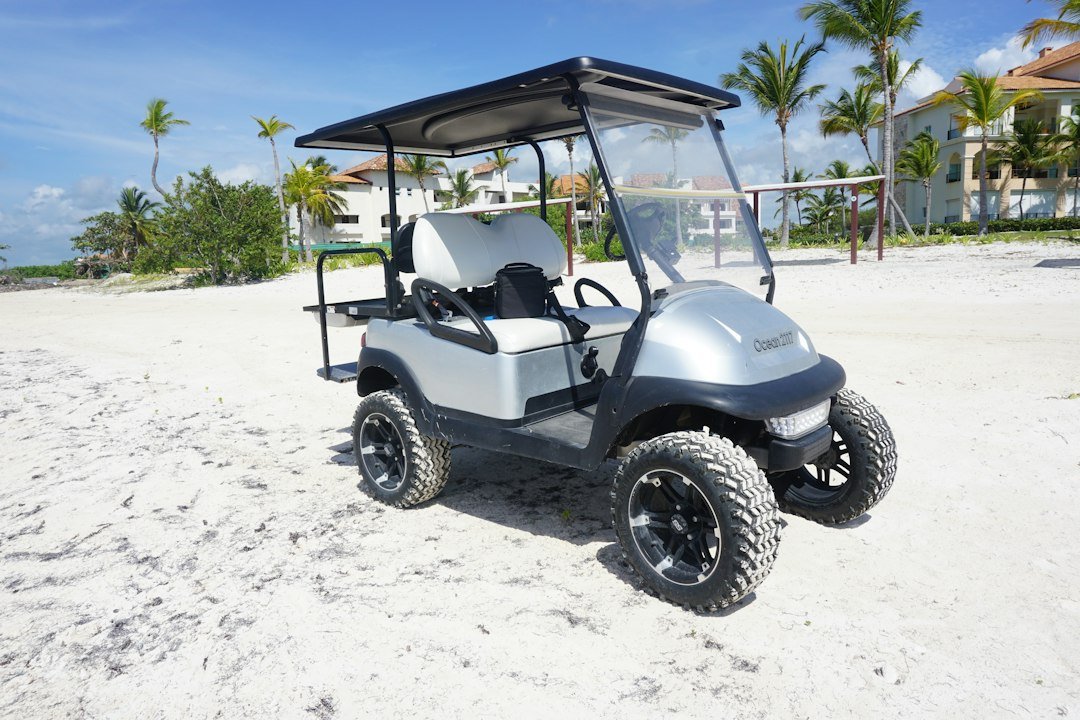
What Made in China Means for Parts and Warranty
Build quality across Chinese golf cart brands has improved a lot, and plenty of owners on forums like Talk of The Villages report years of trouble-free driving. When owners do complain, the complaints cluster around the same few areas.
- Parts lead times. Owners commonly report waiting weeks for brand-specific parts like controllers, body panels and screens, especially from newer or smaller brands.
- Lithium battery issues. Battery management system faults are one of the most common complaints dealers report on China-built carts. Ask whose battery is inside and who honors its warranty.
- Warranty fine print. Some brands cover parts but not labor or transport, and some warranties do not transfer to a second owner.
- Dealer quality. The same brand can be great at one dealer and frustrating at another, because the dealer does almost all warranty work.
One upside: many China-built carts use common components such as standard lithium cells, generic LED kits and widely used controllers, so a good independent cart shop can often source equivalents. If battery chemistry is part of your decision, my lithium vs lead-acid golf cart battery guide explains the long-term cost math.
How to Vet a Chinese Golf Cart Dealer
With Chinese golf cart brands, the dealer matters as much as the badge. This is the checklist I would use before signing anything.
- Confirm they are an authorized dealer. Check the brand’s own dealer locator. Unauthorized sellers often cannot process warranty claims.
- Ask where warranty work happens. Is there a service bay on site, or do they send carts out? How far would you need to haul the cart?
- Ask about parts stock. Ask how long a controller, charger or windshield takes to arrive, and whether the brand has a U.S. parts warehouse.
- Get the warranty in writing. Compare vehicle, battery and drivetrain coverage separately, and ask whether labor is included and whether it transfers.
- Check for a real VIN if you need street use. A true low-speed vehicle needs a 17-digit VIN and must meet FMVSS 500. Lights and a windshield alone do not make a cart street legal.
- Ask how tariffs affect your cart. A good dealer can tell you whether the model is still being imported, assembled elsewhere, or being phased out.
- Read local reviews of the dealer, not just the brand. Look for comments about service after the sale.
Should You Buy a Golf Cart Direct From China?
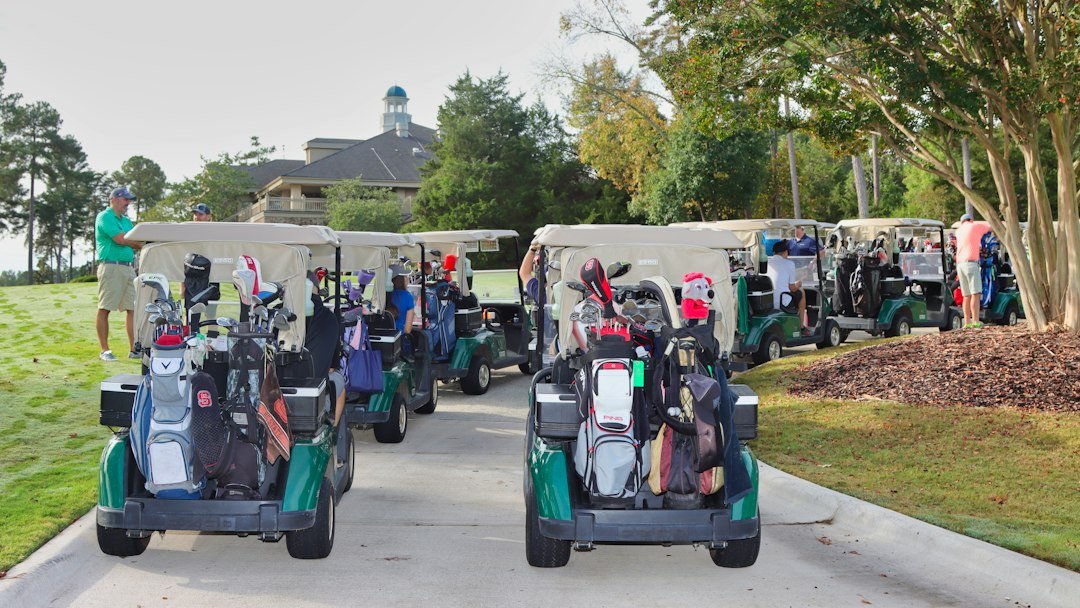
Sites like Alibaba and Made-in-China list carts at factory prices that look incredibly cheap. For an individual buyer, I would not do it.
You would be the importer of record, which means you would owe the anti-dumping and countervailing duties, which can be several times the cart’s price at the China-wide rate. You would also pay ocean freight, port fees and customs brokerage, and you would get no local warranty support at all.
On top of that, a cart that is not certified as a low-speed vehicle cannot be titled for street use. Once you add it all up, a dealer cart is almost always cheaper and far less risky.
FAQ
Are Chinese golf carts any good?
Many are good carts with impressive features for the money, and owners commonly report years of reliable use. The weaker points are parts availability, dealer support and resale value, so buy from an authorized dealer close to home.
Are Evolution golf carts made in China?
Evolution carts are built largely from Chinese components, with final assembly reported at U.S. facilities. Dealer sources link the brand to Xiamen Dalle, a factory named in the 2025 trade case.
Are Club Car golf carts made in China?
No. Club Car builds its carts in Augusta, Georgia, as does E-Z-GO, and Yamaha builds in Newnan, Georgia. Like most vehicle makers, they do source some individual components from overseas suppliers.
Did tariffs make Chinese golf carts more expensive?
Yes. The 2025 anti-dumping and countervailing duties added large percentages to the import cost of covered carts. The full effect shows up gradually as pre-duty inventory sells out, so prices vary a lot by dealer right now.
What is the best Chinese golf cart brand?
There is no single winner among Chinese golf cart brands. Evolution has the largest dealer network of the group, while ICON and Denago compete hard on value. The best choice is usually the brand with the strongest authorized dealer near you.
Bottom Line
Chinese golf cart brands now make up a huge share of the new carts sold in the U.S., and many of them are solid machines with more standard features than a comparably priced Big Three cart. The trade-offs are parts lead times, uneven dealer support, faster depreciation and new tariff uncertainty.
If you have a strong authorized dealer nearby and you get the warranty in writing, a China-built cart can be a smart buy. If you live far from service or plan to keep the cart for a decade, the extra cost of Club Car, E-Z-GO or Yamaha buys real peace of mind.