In this Article
Can you use car batteries in a golf cart? Usually yes in a gas cart and rarely in an electric one. Here is why deep-cycle batteries matter and what to buy instead.
Can you use car batteries in a golf cart? It depends on what is under your seat. A gas cart uses a regular 12-volt starting battery, so a car-style battery works fine there. An electric cart is a different story, and that is where most people get burned.
I am Andrew James, and after seven years teaching golf and riding around in the carts my students use, I have seen this shortcut tried more than once. It looks cheap on paper and gets expensive fast. This guide explains what actually happens, when it is safe, and what to buy instead.
Table of Contents
Table of Contents
Can You Use Car Batteries in a Golf Cart? The Short Answer
In a gas golf cart, yes. The battery only has to crank the engine and run the lights, which is exactly the job a starting battery is built for.
In an electric golf cart, you can physically make it work, but you should not. A car battery is designed to deliver a big burst of power for a few seconds and then get topped off by an alternator. An electric cart asks the battery to deliver steady power for hours and then drain deep, over and over.
That mismatch is why car batteries die quickly when you drive an electric cart on them. The rest of this guide shows you where the line is.
Starting Batteries vs Deep-Cycle Batteries
Both are lead-acid batteries, so they look similar from the outside. Inside, they are built for opposite jobs.
| Feature | Car starting battery | Golf cart deep-cycle battery |
|---|---|---|
| Main job | Short, high-current burst to start an engine | Steady current for hours to drive the cart |
| Plate design | Many thin plates for surface area | Thicker plates that survive repeated deep discharge |
| Typical capacity | About 40 to 80 Ah | About 150 to 225 Ah for flooded 6V and 8V golf cart batteries |
| Discharge tolerance | Shallow only | Built to be drained and recharged daily |
| Recharged by | Alternator while the engine runs | Plug-in charger after each round |
Why Plate Thickness Matters
Thin plates give a starting battery lots of surface area, which is what lets it dump hundreds of amps for a few seconds. The downside is that thin plates wear out when you pull a deep charge out of them again and again.
Deep-cycle plates are thicker and tougher. They give up some peak power in exchange for the ability to be drained and recharged for years. You can read more about how the two designs differ in this overview of the deep-cycle battery.
Why Capacity Matters
Capacity is the other gap. A typical car battery stores a fraction of what a golf cart battery does, so your range shrinks even before the plates start to fail.
Cold cranking amps, the number printed on every car battery, measures starting power. It tells you nothing about how far your cart will go.
Can You Use Car Batteries in a Golf Cart That Runs on Electricity?
Here is the math people use to justify it. Electric carts run on 36, 48, or 72 volts, and you can build those voltages by wiring 12-volt batteries in series.
- 36 volts: three 12V batteries, or six 6V batteries.
- 48 volts: four 12V batteries, six 8V batteries, or eight 6V batteries.
- 72 volts: six 12V batteries.
Wiring in series adds voltage but not capacity. Four 12V batteries rated at 100 Ah give you a 48V pack that is still rated at 100 Ah.
So yes, four car batteries will make a 48V cart move. But the pack is small, thin-plated, and not meant to be drained, which sets up every problem in the next section.
The Exception: 12V Deep-Cycle Batteries
The 12-volt format itself is not the problem. A genuine 12V deep-cycle battery works in a 36V or 48V cart if all of the batteries match in capacity, age, and condition.
The problem is using a starting battery. Check the label for the words deep cycle before you buy.
Gas Golf Carts: Where a Car Battery Is Fine
So, can you use car batteries in a golf cart with a gas engine? Yes. Most gas carts, including those from Club Car, E-Z-GO, and Yamaha, use a single 12-volt battery for the starter and lights. The engine drives a charging system, so the battery behaves much like the one in your car.
If you are replacing it, check three things before you buy.
- Physical fit: the case must fit the tray and the hold-down strap.
- Terminal layout: the positive and negative posts must reach your cables without stretching.
- Cold cranking amps: match or slightly exceed the original rating, especially if you ride in cold weather.
A good starting battery in a gas cart is not a hack. It is simply the right part for that job.
5 Problems You Will Run Into
If you try car batteries in an electric cart anyway, here is what usually happens, roughly in the order you will notice it.
1. They Fail Fast
Repeated deep discharges wear thin plates down quickly. In my experience, a pack like this can go from fine to flat within a few months of regular use.
When it happens, the symptoms look like golf cart batteries not holding charge, and the fix is a full replacement.
2. Range Drops Sharply
With a fraction of the capacity, you may not finish nine holes. The cart will also feel weak on hills because voltage sags under load.
3. Your Charger May Not Match
Golf cart chargers are programmed for deep-cycle packs of a specific voltage and chemistry. Feeding them a different battery type can cause undercharging or overcharging.
If the charger refuses to start at all, see my guide on a golf cart charger not turning on.
4. One Weak Battery Drags Down the Pack
In a series pack, the weakest battery sets the limit for the whole string. Mixing old and new, or deep-cycle and starting batteries, makes the weakest link show up very quickly.
5. Safety Gets Sloppy
Flooded batteries give off hydrogen while charging, so you need ventilation and no sparks. Undersized cables or loose terminals can overheat under the heavy current an electric cart draws.
If your flooded pack also needs regular refills, my guide on how often to water golf cart batteries covers the routine.
When a Car Battery Is Okay for a Short Test
There are a few cases where I would not object. If you just bought a used electric cart and want to confirm the motor and controller work, a temporary hookup is a reasonable test.
The same goes for getting a cart a short distance home. Treat it as a test or a limp-home fix, not a plan.
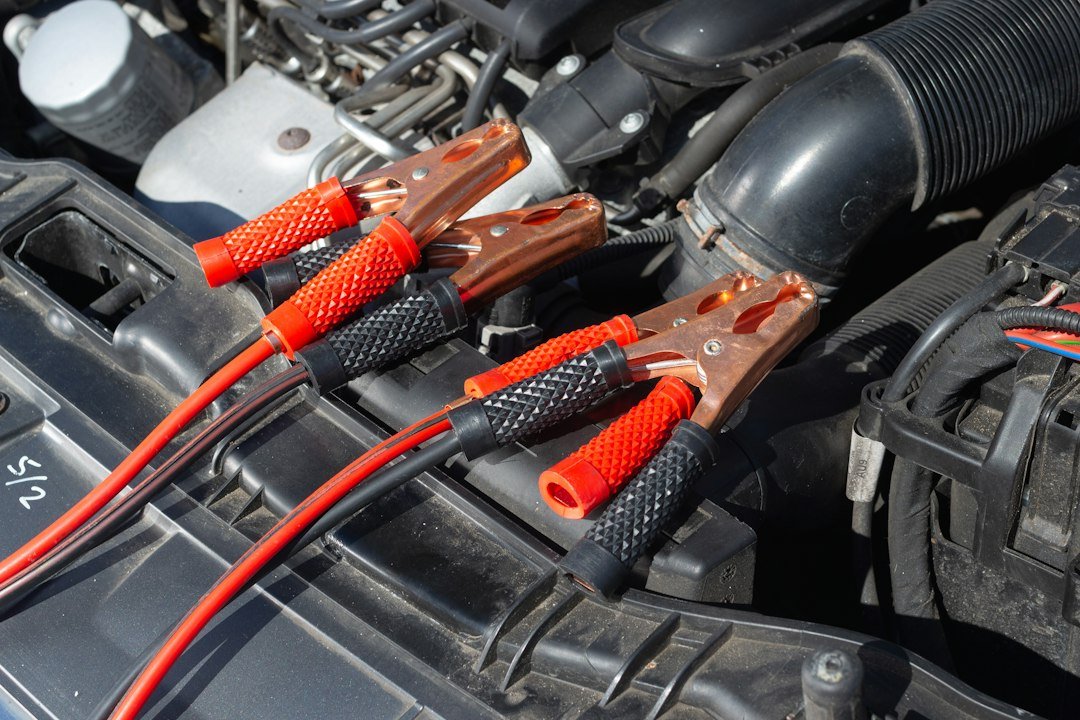
Keep the connection short, use properly sized cables, and disconnect when you are done. Do not leave a car battery wired into an electric cart for regular rounds.
Can You Use Car Batteries in a Golf Cart? A Two-Minute Checklist
If you are still asking can you use car batteries in a golf cart like yours, run through this quick checklist before you spend a dollar. It takes about two minutes and can save you from buying the wrong battery.
- Is the cart gas? A car-style starting battery is fine, as long as the size, terminals, and cold cranking amps match.
- Is the cart electric? Lift the seat. If you see a row of 6V, 8V, or 12V batteries or a single lithium pack, you need deep-cycle or lithium replacements.
- What is the system voltage? Check the label on the charger or controller, then count your batteries to confirm the math adds up to 36, 48, or 72 volts.
- What does the battery label say? Words like deep cycle or golf cart are what you want. Starting, SLI, or a label that only lists cold cranking amps means it is built to start an engine.
Light use does not rescue a starting battery in an electric cart. Lead-acid batteries that sit partly discharged between rounds also lose capacity over time, and a thin-plated battery has less margin for that abuse.
If the checklist leaves you unsure, take a clear photo of the battery labels and the charger label to a golf cart dealer. They can match the pack to your cart in a few minutes.
Better Options Than Car Batteries
If you asked can you use car batteries in a golf cart because you want to save money, there are smarter ways to do it than a starting battery.
Flooded Deep-Cycle Lead-Acid
This is the traditional choice and the cheapest way to do it right. Expect to water them regularly and replace them every few years with good care. The Battery University guide to prolonging lead-acid batteries explains how charging habits affect life.
Lithium
Lithium costs more up front but needs no watering and weighs far less. A 48V lithium pack is commonly cited at roughly 90 to 130 pounds, versus over 300 pounds for a flooded lead-acid set. Check my breakdown of lithium vs lead-acid golf cart batteries before you decide.
12V Deep-Cycle Batteries
If you like the simplicity of fewer batteries, buy true 12V deep-cycle units sized for your voltage and keep them all the same age. That gets you the convenience you wanted from car batteries without the early failures.
Frequently Asked Questions
Can you use car batteries in a golf cart for a few days?
In an electric cart, a few days of light use will usually work, but range will be short and the batteries will be damaged by deep discharge. In a gas cart, a car-style starting battery is fine permanently.
Can I use 12V batteries in a 48V golf cart?
Yes, if they are genuine 12V deep-cycle batteries. You need four of them wired in series, and they should match in capacity, age, and condition.
Can I use a marine battery in a golf cart?
A marine deep-cycle battery can work like any deep-cycle battery. A marine starting battery has the same weakness as a car battery, and a dual-purpose marine battery is a compromise that still will not last like a true golf cart battery.
How many batteries does an electric golf cart need?
It depends on the voltage. A 36V cart uses three 12V or six 6V batteries, and a 48V cart uses four 12V, six 8V, or eight 6V batteries.
Is it cheaper to use car batteries in a golf cart?
Only at the checkout counter. Because car batteries wear out so fast under deep cycling, you end up buying them again and again. Compare the total cost with the full cost of owning a golf cart before deciding.
Bottom Line
So, can you use car batteries in a golf cart? Yes in a gas cart, where a starting battery is the right tool, and only as a short-term test in an electric cart, where you need deep-cycle or lithium batteries.
Buy the battery that matches the job and your cart will run longer, go farther, and cost you less over time. Skip the shortcut, and the back nine will not end with a long walk.