In this Article
The best shoulder brace for golf reduces swing-related shoulder pain without restricting your rotation. Here is what to look for, real options worth trying, and how to wear one correctly.
A player I coach — mid-40s, single-digit handicap, grinds range balls twice a week — showed up to a lesson last spring wincing every time he took the club back past parallel. He’d been playing through a nagging rotator cuff strain for two months, hoping it would just go away on its own. It hadn’t, and by the time he asked me about it, he was three swing thoughts deep into compensations that were wrecking his ball-striking. I told him what I’m about to tell you: before you rebuild your swing around an injury, go find the best shoulder brace for golf you can and give the joint some backup while you actually deal with what’s causing the pain.
That’s what this guide is for. We’ll cover why the golf swing is so hard on the shoulder in the first place, what separates a genuinely useful brace from a waste of money, a handful of real options worth trying, and how to wear one without turning your backswing into a half-turn.
Why Your Shoulder Hurts After Golf (Even With a “Good” Swing)
Golf doesn’t look violent, but the shoulder joint doesn’t get the memo. The golf swing asks your lead shoulder to work through an enormous range of motion at speed, over and over, thousands of times a season — and the shoulder is the least stable major joint in the body to begin with, held together more by muscle and connective tissue than by bone structure.
Research on golf injuries consistently puts the shoulder among the three most commonly injured areas in the sport, and the lead shoulder — the left shoulder for a right-handed golfer — takes the brunt of it. That’s the shoulder doing the most work decelerating your arm through a fast, cross-body follow-through, which is exactly the kind of repetitive stress that leads to rotator cuff tendinopathy, impingement, and labral irritation over time.

Limited thoracic spine rotation makes it worse. When your mid-back can’t turn as far as your swing wants it to, your shoulder joint ends up absorbing the extra rotation instead — I see this constantly on the lesson tee with golfers who’ve lost mobility with age or spend all day at a desk. Weak scapular stabilizers compound the problem, letting the top of the arm bone shift slightly in the socket on every swing, which irritates the tendons that pass right through that space.
Does a Shoulder Brace for Golf Actually Help?
Yes, within reason. A golf shoulder brace won’t add clubhead speed or fix a flaw in your takeaway, but it can meaningfully reduce pain and protect a vulnerable joint while you work on what’s actually causing the problem.
Compression sleeves are the lighter-touch option. They don’t limit your range of motion much, but they increase proprioception — your brain’s sense of where the joint is in space — so you’re less likely to let your shoulder drift into a painful position without noticing. The Titleist Performance Institute’s research on the shoulder girdle’s role in the golf swing backs up just how much stability, not just mobility, matters through the transition and downswing.
Semi-rigid and rigid braces go further. They physically limit how far the joint can move into an aggravating position, which is useful if you’re managing instability, a partial tear, or recovering from a strain. The tradeoff is feel — too much restriction and your turn suffers, which is why fit and design matter more here than with almost any other piece of golf gear.
What to Look For in the Best Shoulder Brace for Golf
Not every shoulder support sold online is built with a rotational sport in mind. A brace designed for lifting boxes in a warehouse restricts movement in ways that will wreck your swing tempo. Here’s what actually matters if you’re shopping for a golf shoulder brace specifically.
Compression Sleeve vs. Rigid or Semi-Rigid Support
If your pain is mild, occasional, or you’re not even sure bracing will help yet, start with a compression sleeve. If you’re dealing with recurring instability, a partial rotator cuff tear, or you’re returning from injury, a semi-rigid design with adjustable straps gives you real mechanical support instead of just a feeling of security.
Full Rotational Range of Motion
This is the single biggest difference between a golf-appropriate brace and a generic one. The best shoulder brace for golf lets you complete a full backswing and a full follow-through without the brace digging in or pulling against your shirt. If a brace advertises itself for football or weightlifting first, test it on a slow practice swing before you trust it on the course.
Breathable, Low-Profile Fit Under a Golf Shirt
You’re wearing this for four hours in the sun, often under a polo. Neoprene traps heat fast; knit compression fabrics and mesh panels breathe far better and sit flatter under clothing, which matters more than it sounds like it would once you’re on hole 14 in July.
Targeted Support vs. Full Coverage
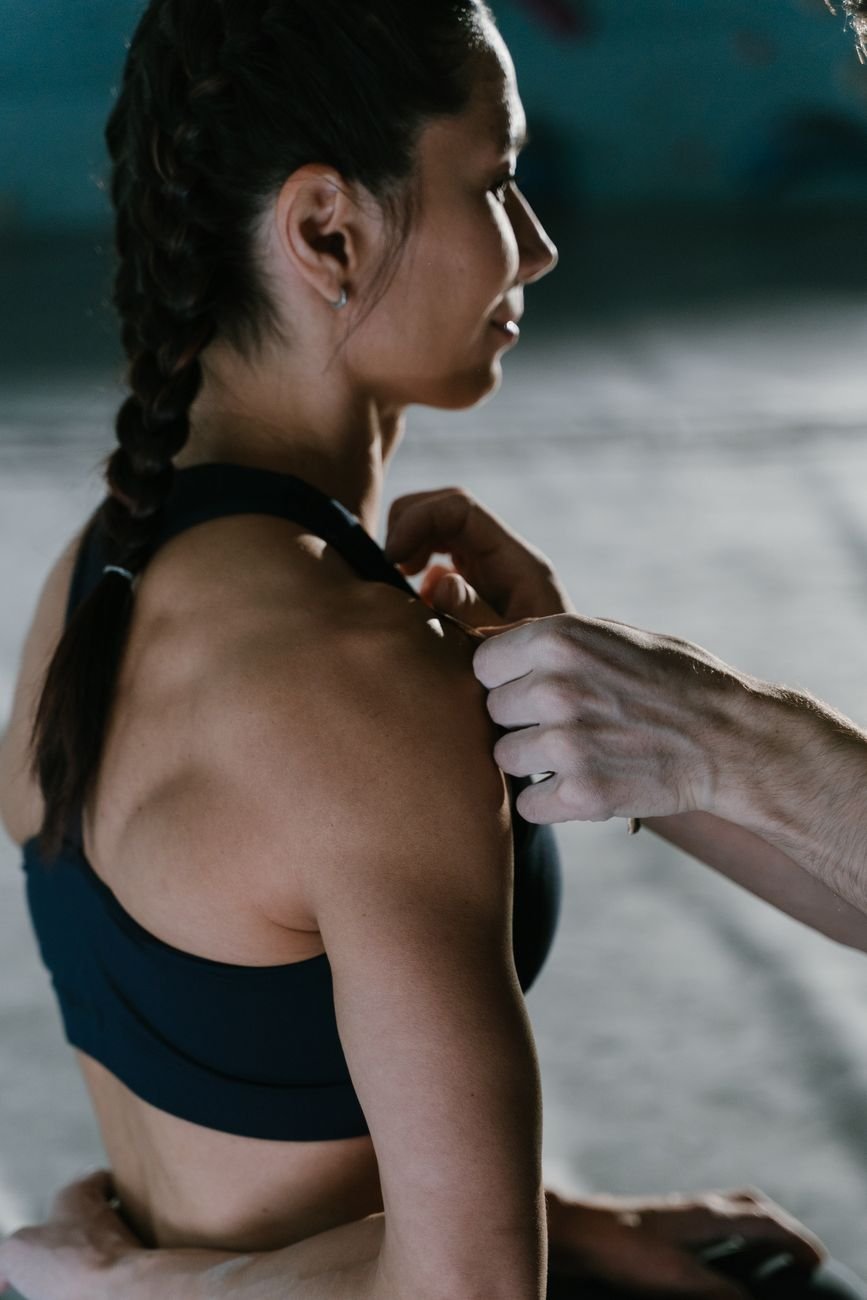
Some braces wrap the whole shoulder and upper arm; others are built as a strap-and-pad system that targets just the front of the joint, which is where most golf-related impingement pain sits. If your pain is specifically in the front of the shoulder during the takeaway or top of the backswing, a targeted design tends to feel less bulky and interferes less with your swing.
5 Solid Shoulder Brace Options Worth Trying
There’s no single universal “best” brace here — the right one depends on your specific pain and how much support versus mobility you need. These five cover the realistic range of what’s out there.
DonJoy Sully Shoulder Stabilizer. DonJoy’s Sully uses an elastic strapping system designed to mimic natural shoulder movement while adding mechanical security against instability and minor subluxation. It’s a good pick if your shoulder occasionally feels like it’s going to “pop” or shift during the swing. Expect to pay in the $40–$60 range.
Bauerfeind OmoTrain. Bauerfeind’s circular-knit compression technology moves with your body instead of fighting it, which is exactly what a rotational swing demands. It’s a premium option, typically $150–$200, but the build quality and medical-grade compression hold up over years of regular wear.
The Kinetic Arm K2 Sleeve. Built specifically for golf, this dynamic sleeve supports both the shoulder and elbow without the rigid feel of a traditional brace, using a webbed support pattern that stabilizes without capping your range of motion. It’s a strong option if you want golf-specific design over a general sports brace.
Shock Doctor Shoulder Support Brace. A budget-friendly, widely available option with an adjustable strap system for dialing in compression. It won’t match a medical-grade brace for serious instability, but it’s a reasonable $30–$40 starting point if you’re not sure bracing will even help yet.
Mueller Adjustable Shoulder Support. A simple, breathable neoprene-alternative wrap with adjustable straps, generally under $35. It’s a sensible low-commitment option for mild, occasional soreness rather than a structural injury.
How to Wear a Shoulder Brace Without Wrecking Your Backswing
The most common mistake I see is golfers cranking a brace down so tight it restricts rotation entirely. That doesn’t protect the shoulder — it just forces your swing to compensate somewhere else, usually your trail hip or your correct golf stance at address, and you trade one problem for another.

It should feel snug and supportive, not compressed. You should be able to comfortably complete a full practice swing and take a deep breath without the brace pulling or digging in. If either of those things feels restricted, loosen it a notch before you tee off.
Wear it during rounds or practice sessions where you’re swinging at full speed — not around the clock. Your shoulder stabilizer muscles still need to do their own work to stay strong, and leaning on a brace all day can let those muscles get lazy over time. Save it for golf, physical labor, or days when you already feel a twinge coming on.
A Shoulder Brace Isn’t a Fix for Bad Mechanics
I want to be straightforward about this because I see too many golfers treat a shoulder brace like a permanent solution instead of a bridge. If you’re consistently sore after every round, the brace is buying you time — it isn’t buying you a pass on fixing what’s actually causing the strain.
Poor sequencing is the usual root cause. A reverse C finish or an over-rotated top-of-backswing position both load the shoulder in positions it was never designed to hold under speed, and no brace fully compensates for a swing that keeps asking the joint to do more than its share. According to the American Academy of Orthopaedic Surgeons, rotator cuff injuries are frequently driven by repetitive overhead and rotational stress combined with underlying weakness — which describes an untreated golf swing flaw almost exactly.
Start with thoracic spine mobility and scapular strength. If your mid-back can rotate further, your shoulder doesn’t have to make up the difference on every single swing. Golfers coming back from a shoulder procedure, or working through the same kind of rehab timeline as someone recovering from a hip replacement returning to golf, know this pattern well — protect the joint while it heals, but don’t skip the mechanical work that prevents the next injury.
Who Benefits Most from a Golf Shoulder Brace

Golfers over 50 see the biggest benefit, and it’s not close. Rotator cuff tendons naturally lose blood supply and elasticity with age, so the same swing that felt fine at 30 puts noticeably more strain on the shoulder at 60. A brace that adds stability and proprioceptive feedback gives an aging shoulder a fighting chance against a lifetime of repetitive motion.
Golfers returning from a strain, a partial tear, or shoulder surgery are the second group who should seriously consider one. And golfers playing back-to-back tournament rounds or 36 holes in a day benefit simply because fatigue is when form — and joint position — tends to break down first.
Frequently Asked Questions
Does a shoulder brace actually help your golf swing?
It helps indirectly. A brace doesn’t add distance or fix a swing flaw, but by reducing pain and adding stability, it lets you swing with less compensation and more consistency. Golfers who play pain-free tend to swing more freely, and that shows up in ball-striking.
What is the best shoulder brace for golf if I have a rotator cuff issue?
Semi-rigid or strap-based options like the DonJoy Sully or a Bauerfeind compression brace tend to work best for recurring instability or a diagnosed rotator cuff issue, since they add real mechanical support rather than just compression. Always check with a physical therapist or orthopedist first if you suspect a tear.
Should I wear a golf shoulder brace during every round?
Not necessarily. Wearing it whenever you’re playing or practicing at speed is reasonable, but wearing it constantly outside of golf can let your stabilizing muscles get lazy. Reserve it for golf, heavy activity, or flare-up days.
Can a shoulder brace fix a golf swing that’s causing shoulder pain?
No. It manages the symptom, not the cause. If a reverse C finish, limited thoracic rotation, or poor sequencing is generating the pain, you’ll need to address the swing itself alongside the brace for lasting relief.
How tight should a shoulder brace be for golf?
Snug enough to feel supportive through your full swing, loose enough that you can still rotate freely and breathe normally. If it restricts your backswing or follow-through, it’s too tight and you should loosen it.
Do any professional golfers wear shoulder braces?
Yes, though it’s not always visible on TV since most wear low-profile compression models under their shirts. Several tour pros managing chronic shoulder issues have talked openly about using bracing and taping as part of getting through a long competitive season.
Final Thoughts
The best shoulder brace for golf is the one that matches your specific pain, doesn’t choke off your rotation, and actually gets worn instead of sitting in your golf bag. Start with a compression sleeve if you’re not sure bracing will help, or go straight to a semi-rigid option if you already know you’re dealing with recurring instability or a diagnosed injury.
Either way, treat the brace as support while you fix what’s actually causing the strain — better thoracic mobility, a cleaner top-of-backswing position, and a swing that doesn’t ask your shoulder to do more than its share. Your shoulder will hold up a lot longer for it, and so will the rest of your game.
FAQ: Shoulder Braces for Golf
When should a golfer wear a shoulder brace? A shoulder brace is most useful during recovery from a strain, rotator cuff irritation, or general instability — it’s meant as support during rehab or high-volume play, not a permanent substitute for strengthening the shoulder.
Will a shoulder brace limit my backswing? A well-fitted, golf-specific brace shouldn’t meaningfully restrict a healthy range of motion — look for compression-style designs rather than rigid immobilizers, which are built for injury, not sport performance.
How do I choose the right size shoulder brace? Measure around the widest part of your chest and upper arm and check the brand’s sizing chart — a brace that’s too loose won’t provide support, and one that’s too tight will restrict your swing.
Should I see a doctor before playing with shoulder pain? Yes — a brace can support minor discomfort, but sharp pain, weakness, or pain that persists after rest should be evaluated by a professional before you keep swinging through it.
Related reading: Best Back Brace for Golf, Best Knee Brace for Golf, and Golf Spine Angle Too Upright.
Where to Shop
Affiliate links – we may earn a small commission at no extra cost to you, and it never changes what we recommend. Always follow your doctor or physiotherapist over any general guidance here.
- Rotator cuff support braces – the standard choice for shoulder instability.
- Compression sleeves – lighter and far less likely to restrict your backswing.
- Resistance bands – for the strengthening work that reduces reliance on a brace.
- Kinesiology tape – minimal restriction, useful for mild support during a round.