In this Article
The best back brace for golf reduces swing-related back pain without killing your rotation. Here is what to look for, top options worth trying, and how to wear one without hurting your swing.
A student of mine — mid-fifties, plays three times a week, swing speed still in the mid-90s — pulled me aside on the range last month and asked if he was “too old” for golf. What he actually meant was that his lower back was screaming by the back nine, every single round. Before we changed a single thing about his swing, I told him to go try on a back brace and see if he could finish 18 holes without wincing. He texted me two days later: “Why didn’t anyone tell me about this years ago?”
That conversation is the reason I’m writing this. Finding the best back brace for golf isn’t about buying a gadget — it’s about giving your spine backup while you work on the swing changes that actually fix the problem. This guide walks through why golf beats up your lower back in the first place, what separates a genuinely useful brace from a waste of money, a handful of solid options worth trying, and how to wear one without turning your swing into mush.
Why Your Back Hurts After Golf (Even When Your Swing Feels Fine)
Golf doesn’t look like a contact sport, but your spine doesn’t know that. Researchers studying swing biomechanics have recorded peak compressive loads on the lumbar spine that exceed six times your body weight during the downswing alone. That force lands hardest at the L4-L5 and L5-S1 discs — the same discs that show up again and again in golfers’ MRIs.
The culprit is the gap between how far your shoulders turn and how far your hips turn on the backswing. Modern instruction wants a big shoulder-to-hip separation because it generates power, but that separation also twists your lumbar spine like a wrung-out towel, shot after shot, round after round. Add a fast transition from backswing to downswing and you get shearing forces on top of the compression — a combination your lower back was never really built to absorb thousands of times a season.

Photo by Mikhail Nilov via Pexels
Weak glutes and a tight lead hip make it worse. When your hip can’t clear properly on the downswing, your lower back over-rotates to finish the job your hip should have done — I see this constantly on the lesson tee, and it’s the same mechanism behind a reverse C finish that loads your lower back every time you swing. Fix the sequencing eventually, sure, but in the meantime your spine still needs support today.
Does a Back Brace for Golf Actually Help?
Yes, and there’s real research behind it, not just marketing copy. A 2013 study published in the Journal of Sports Science and Medicine found that wearing a supportive back brace reduced harmful force on the lower back during the golf swing by limiting excessive rotation and extension — findings echoed in a broader clinical review of golf-related low back pain that identifies swing torque as the primary driver of chronic lumbar injuries in golfers. That’s not a small claim — it’s a measurable reduction in the exact forces that cause disc problems over time.
A golf back brace works two ways. Semi-rigid models with plastic or metal stays physically limit how far you can over-rotate or hyperextend, which protects you from the worst of the reverse-C style loading. Elastic compression models don’t limit motion nearly as much, but they increase what’s called proprioceptive feedback — you feel your lower back position more clearly, so you’re less likely to let it collapse into a painful position without noticing.
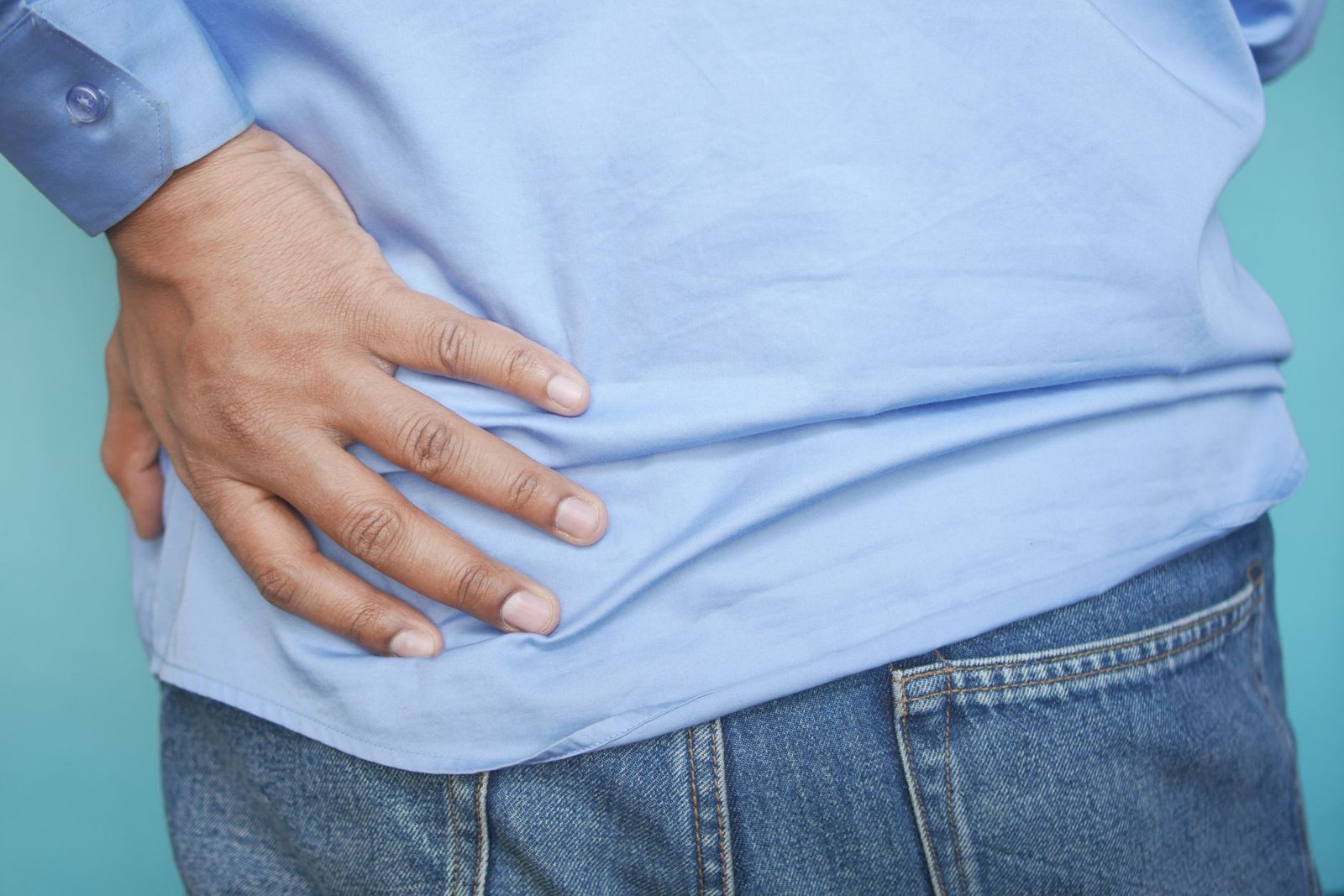
Photo by Towfiqu barbhuiya via Pexels
What a brace won’t do is fix the root cause. If weak hip clearance or a reverse C finish is driving the pain, a brace buys you comfort and protection while you retrain the movement — it isn’t a permanent substitute for better mechanics. Think of it the way you’d think of a knee sleeve for a runner: useful support, not a cure.
What to Look For in the Best Back Brace for Golf
Not every back support sold online is built for a rotational sport. A brace designed for lifting heavy boxes in a warehouse restricts movement in ways that will wreck your swing tempo. Here’s what actually matters for golf specifically.
Semi-Rigid vs. Elastic Compression
Semi-rigid braces with flexible stays are the better choice if you’re dealing with recurring strain, sciatica, or you’ve had a back injury before. They stabilize the lumbar segment without turning you into a mannequin. Pure elastic compression wraps are lighter and less noticeable, and they’re a reasonable starting point if your pain is mild or occasional.
Breathability and a Low Profile Under Golf Clothes
You’re going to wear this thing for four hours in the sun. Look for breathable, moisture-wicking panels and a design that sits flat enough to disappear under a polo. Neoprene traps heat and gets uncomfortable fast on a warm day — mesh paneling matters more than it sounds like it would.
Adjustable Compression
Your comfort level with compression will change hole to hole as fatigue sets in. Braces with a pull-strap or pulley system let you tighten or loosen on the course without taking the whole thing off, which matters more than most first-time buyers expect.
Coverage Area
Some braces target the lumbar region only; others wrap further down to include the sacroiliac joint and hips. If your pain sits low, near your belt line and into your glutes, a brace with SI joint coverage tends to help more than a lumbar-only design.
5 Solid Options Worth Trying
I’m not going to pretend there’s one universal “best” brace — fit and pain location vary too much for that. These five cover the range of what’s actually out there.
Bauerfeind SacroLoc or LumboTrain. Bauerfeind’s braces use circular knit compression that moves with your body instead of fighting it, which is exactly what a rotational swing demands. The SacroLoc targets the SI joint specifically, while the LumboTrain focuses higher on the lumbar spine. Expect to pay in the $100-$150 range — it’s a premium option, but the build quality holds up over years of regular wear.
Zamst ZW-5. Built from actual 3D body-scan data, the ZW-5 contours tightly around the lumbar-pelvic region and is specifically marketed toward golfers and rotational-sport athletes. It reduces shear force through the downswing without feeling like a straightjacket. Pricing typically lands around $90-$120.
BraceAbility Spine Sport Back Brace. This one uses a mechanical pulley system that gives you a strong, adjustable compression ratio you can dial in yourself mid-round. It’s a good semi-rigid option if you want more support than a basic elastic wrap without stepping up to the premium tier. Prices generally run $50-$80.
A DonJoy-style semi-rigid support. DonJoy’s sport braces are built with removable stays, so you can add or remove rigidity depending on how your back feels that day. Golfers coming back from a specific injury, rather than general soreness, often do best with this level of adjustability. Expect a similar $80-$120 range.
A basic neoprene compression wrap. If you’re not sure a brace will even help yet, don’t spend $150 to find out. A simple velcro neoprene wrap, usually under $30, gives you the proprioceptive benefit and mild compression to test the waters before committing to something more structured.
| Brace | Type | Best For | Price Range |
|---|---|---|---|
| Bauerfeind SacroLoc / LumboTrain | Circular-knit compression | SI joint / general lumbar support, premium durability | $100–$150 |
| Zamst ZW-5 | Semi-rigid, body-scan contoured | Golfers and rotational-sport athletes wanting reduced shear force | $90–$120 |
| BraceAbility Spine Sport | Semi-rigid, pulley adjustable | Golfers who want dial-in compression mid-round | $50–$80 |
| DonJoy-style support | Semi-rigid, removable stays | Recovering from a specific injury, adjustable rigidity | $80–$120 |
| Basic neoprene wrap | Elastic compression | Testing whether bracing helps before investing more | Under $30 |
If your pain traces back to swing mechanics rather than a one-off tweak, it is worth looking at what is driving the strain in the first place — issues like poor hip clearing in the downswing are a common contributor to lower back strain. Golfers managing a prior injury should also see our guide on returning to golf after hip replacement for additional pacing and setup advice.
How to Wear a Golf Back Brace Without Wrecking Your Swing
The most common mistake I see is golfers cranking a brace down so tight it restricts rotation entirely. That doesn’t protect your back — it just forces your swing to compensate somewhere else, usually your shoulders or your lead knee, and you trade one problem for another.

Photo by Mikhail Nilov via Pexels
It should feel snug and supportive, not compressed. You should still be able to comfortably rotate through a full practice swing and take a deep breath without the brace digging in. If you can’t do either of those things, loosen it a notch before you tee off.
Wear it during the round or during practice sessions where you’re swinging at full speed — not all day, every day. Your lower back muscles still need to do their own work to stay strong, and leaning on a brace around the clock can actually let those stabilizing muscles get lazier over time. Save it for golf, physical labor, or days when you already feel a twinge coming on.
Posture at address matters here too. A brace supports your spine, but starting your swing from a poor correct golf stance still puts unnecessary strain on your lower back before you’ve even taken the club away. Get your setup right and the brace has less work to do.
A Back Brace Isn’t a Fix for Bad Mechanics
I want to be honest about this because I see too many golfers treat a back brace like a permanent solution instead of a bridge. If you’re consistently sore after every round, the brace is buying you time — it isn’t buying you a pass on fixing what’s actually causing the strain.
Start with your hip mobility and core strength. Weak glutes and a tight lead hip are two of the biggest reasons golfers develop the kind of over-rotation that leads to chronic back pain, and the Titleist Performance Institute’s research on golf back pain backs this up — daily hip and thoracic mobility work does more for long-term back health than any brace on the market. If you’ve had hip surgery or are working your way back into the game, our guide on returning to golf after hip replacement covers a lot of the same territory — protecting your lower back while your body relearns the movement.
It’s also worth filming your swing from face-on. Golfers who finish with their spine bent noticeably backward, weight hanging on the trail foot, are loading their lumbar spine on nearly every single shot. That’s a mechanical fix, not a bracing fix, even though a brace can make the pain more manageable while you work on it.
Who Benefits Most from a Golf Back Brace
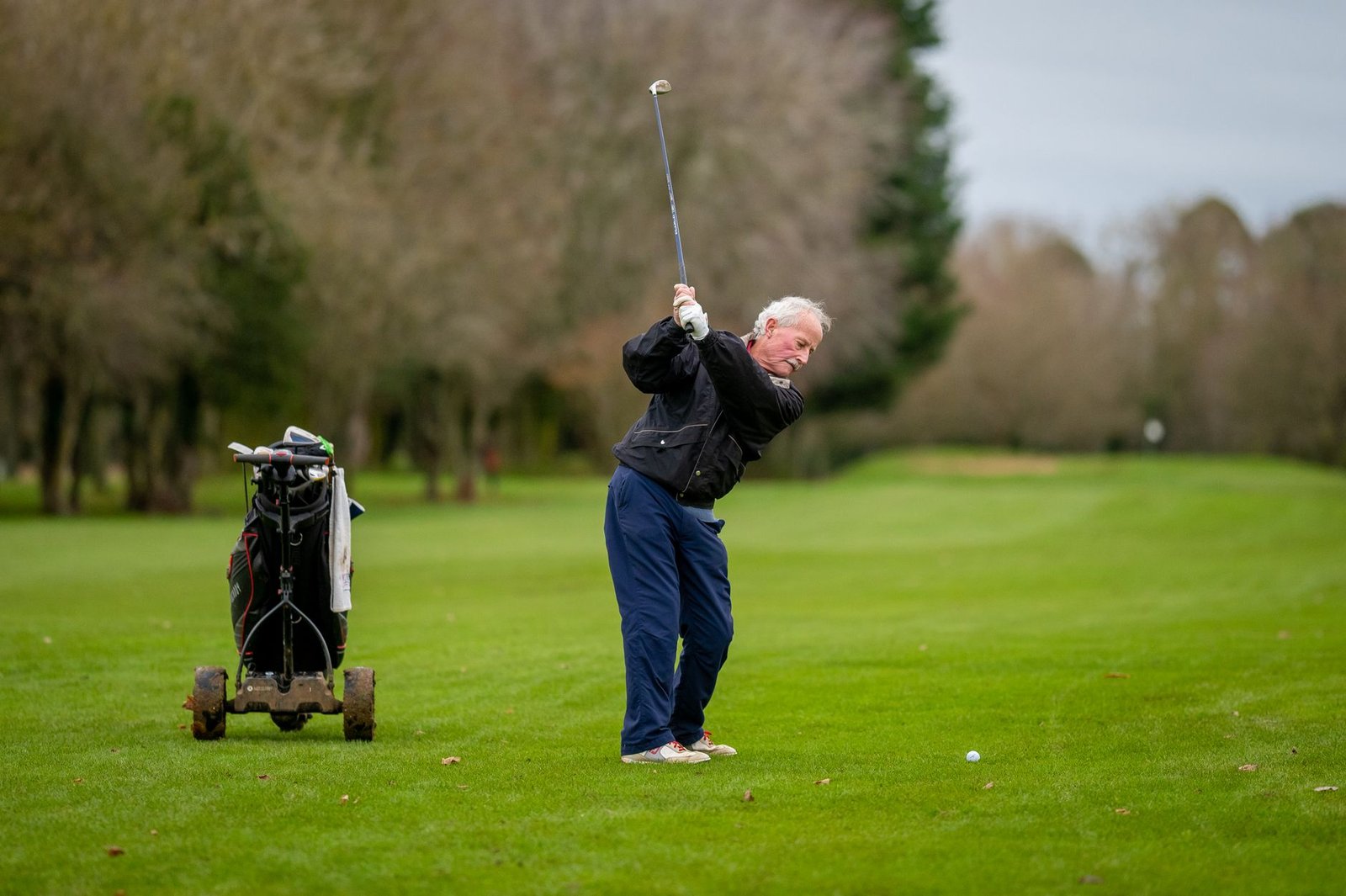
Photo by Centre for Ageing Better via Pexels
Senior golfers see the biggest benefit, and it’s not close. Disc hydration and spinal mobility both decline with age, so the same swing that felt fine at 30 puts noticeably more strain on the spine at 60. A brace that limits excessive rotation gives an aging lower back a fighting chance against a lifetime of accumulated wear.
Golfers coming back from a back strain, a disc issue, or any lower-body surgery are the second group who should seriously consider one. And golfers playing back-to-back tournament rounds or 36 holes in a day benefit from the extra support simply because fatigue is when form — and spinal position — tends to break down first.
Frequently Asked Questions
Does a back brace actually help your golf swing?
It helps indirectly. A brace doesn’t add distance or fix your mechanics, but by reducing pain and limiting harmful over-rotation, it lets you swing with less compensation and more consistency. Golfers who play pain-free tend to swing more freely, and that shows up in ball-striking.
What is the best back brace for golf if I have chronic pain?
Semi-rigid options like the Zamst ZW-5, Bauerfeind SacroLoc, or a DonJoy-style support with removable stays tend to work best for chronic or recurring pain, since they physically limit the extreme positions that aggravate an already sensitive lower back.
Should I wear a golf back brace during every round?
Not necessarily. Wearing it whenever you’re playing or practicing at speed is reasonable, but wearing it constantly outside of golf can let your core muscles get lazy. Reserve it for golf, heavy activity, or flare-up days.
Can a back brace fix a golf swing that’s causing back pain?
No. It manages the symptom, not the cause. If a reverse C finish, weak hip clearance, or poor posture is generating the pain, you’ll need to address the swing itself alongside the brace for lasting relief.
How tight should a back brace be for golf?
Snug enough to feel supportive through your full swing, loose enough that you can still rotate freely and breathe normally. If it restricts your backswing or follow-through, it’s too tight and you should loosen it.
Do any professional golfers wear back braces?
Yes, though it’s not always visible on TV since many wear low-profile compression models under their shirts. Several tour pros dealing with chronic back issues have talked openly about using bracing and taping as part of managing a long competitive season.
Final Thoughts
The best back brace for golf is the one that fits your specific pain, doesn’t choke off your rotation, and actually gets worn instead of sitting in your golf bag. Start with a basic compression wrap if you’re not sure bracing will even help, or go straight to a semi-rigid option if you already know your pain is chronic and swing-related.
Either way, treat the brace as support while you fix what’s actually causing the strain — better hip mobility, a cleaner finish position, and a setup that doesn’t ask your lower back to do more than it should. Your back will hold up a lot longer for it, and so will the rest of your game.
Where to Shop
Affiliate links – we may earn a small commission at no extra cost to you, and it never changes what we recommend. Always follow your doctor or physiotherapist over any general guidance here.
- Lumbar support braces – the mainstream option for general lower-back support.
- Flexible sports braces – less restrictive, better if you need to keep rotating.
- Posture trainers – for off-course work rather than wearing during a round.
- Kinesiology tape – a lighter-touch alternative some golfers prefer.
- Foam rollers – for the mobility work that reduces the need for a brace at all.