In this Article
The best knee brace for golf reduces swing-related knee pain without limiting your hip rotation. Here's what causes golfer's knee, what to look for in a brace, and five solid options worth trying.
One of my regular Saturday-morning students — a 61-year-old who still shoots in the low 80s — came off the 18th green last month walking like he’d played 36 holes instead of 18. His lead knee had been barking at him for weeks, and he finally asked me point blank what the best knee brace for golf actually was. He’d scrolled through forty Amazon listings and still had no idea what separated a good one from a waste of $25.
That question deserves a real answer, because a golf knee brace can genuinely help — but only if you understand what’s actually causing the pain first, and only if you pick the right type for your specific problem. This guide covers why your knee takes such a beating during a golf swing, whether bracing is backed by anything besides marketing copy, what to look for when you’re shopping, five solid options at different price points, and how to wear one without turning your swing into a mess.
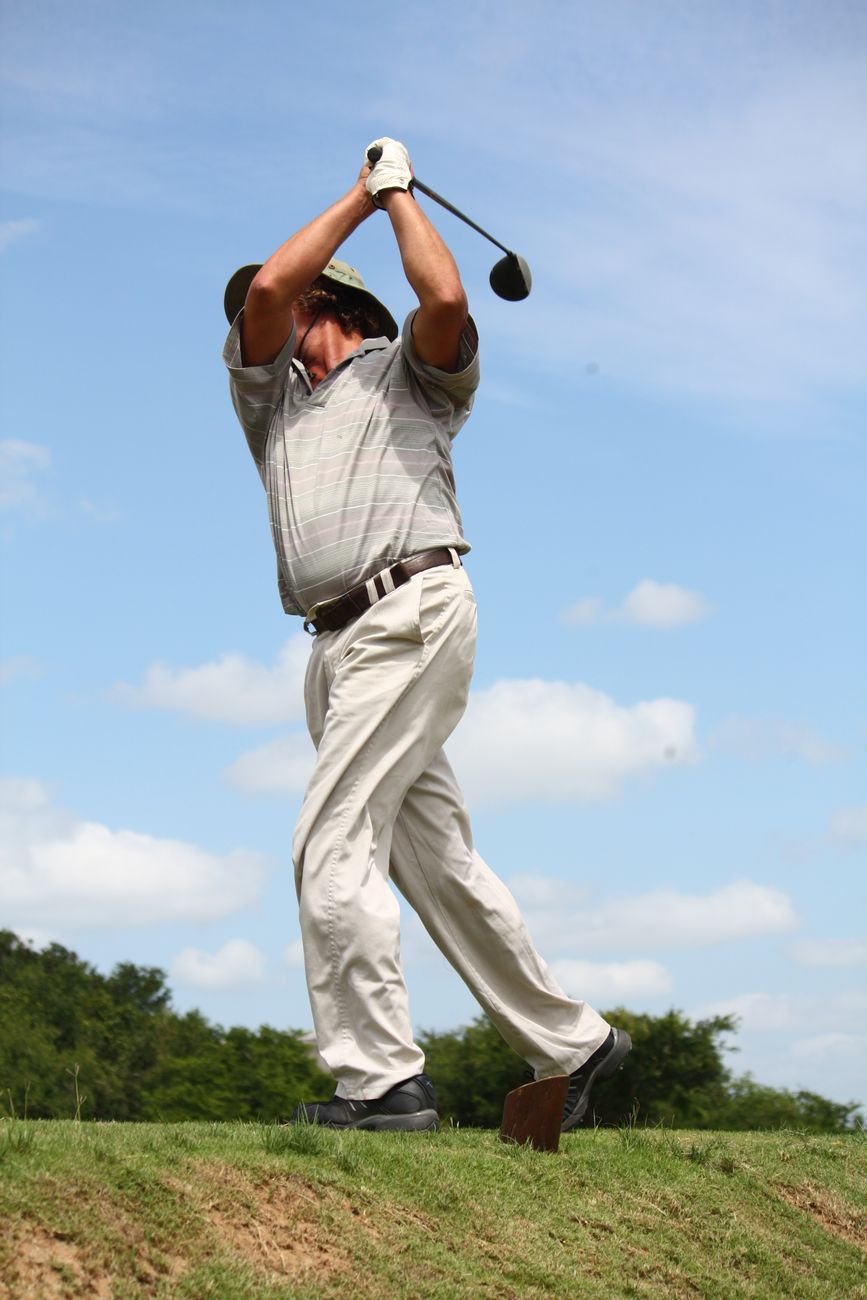
Why Your Knee Hurts After Golf (Even When Your Swing Feels Fine)
Golf doesn’t look like a contact sport, but your lead knee doesn’t get that memo. During the downswing, your lead knee — the left knee for a right-handed golfer — goes through a rapid shift from external rotation to internal rotation while it’s still bearing most of your body weight. That combination of twisting and loading is exactly the kind of stress knees handle poorly.
A systematic review of knee injury risk factors in golf points to repetitive rotational loading, rather than any single traumatic event, as the main driver of golfer’s knee. It’s death by a thousand swings, not one bad one.
The problem gets worse when your hip mobility is limited. If your lead hip can’t clear properly on the downswing, your body finds rotation somewhere else — and the knee is usually first in line to compensate. I see this constantly on the lesson tee: golfers whose hips stall out end up with their lead knee absorbing torque it was never designed to handle. If that sounds like you, it’s worth reading about clearing your left hip in the downswing alongside anything you do about bracing.
Weight distribution matters too. Golfers who hang back on their trail leg through impact, then lunge forward to catch up, put uneven and often awkward loads through both knees. Poor footwear, tight quads, and weak glutes all pile onto the same problem — the knee ends up as the joint that pays for everything upstream that isn’t working correctly. Riding in a cart instead of walking doesn’t fully protect you either, since the repetitive swing itself is the bigger driver than the walking.
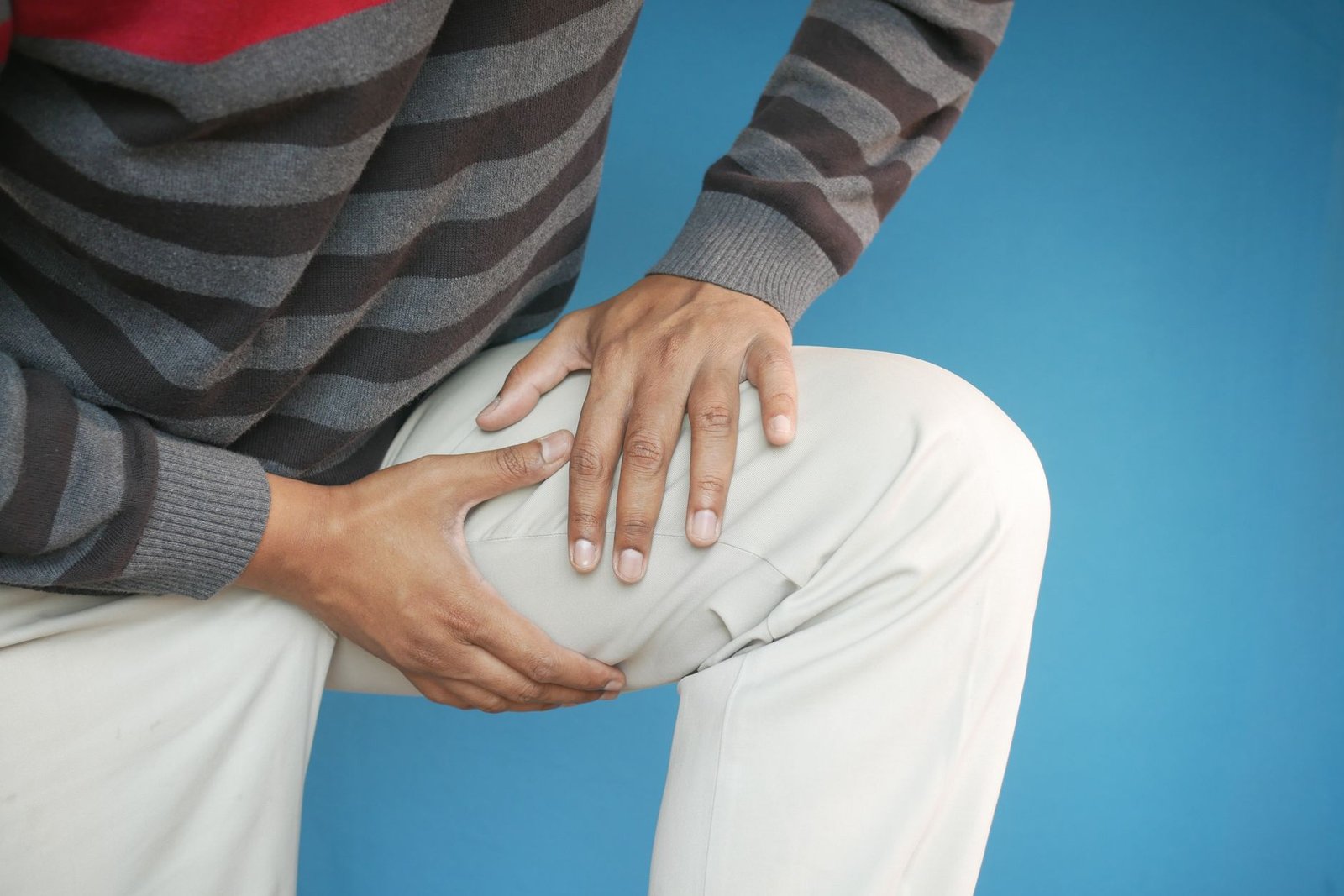
Does a Knee Brace for Golf Actually Help?
Yes, with some real nuance, and it’s worth understanding before you invest in the best knee brace for golf. A knee sleeve or brace doesn’t add clubhead speed and it won’t fix a swing fault, but it does two things well: it limits harmful movement and it improves your sense of where your knee actually is in space.
Compression sleeves work mostly through that second mechanism — proprioception. Wrapping the joint in even, snug pressure sharpens your brain’s awareness of knee position, which means you’re less likely to let it collapse inward into a painful position without noticing. Hinged braces go further: rigid or semi-rigid side supports physically restrict excessive lateral or rotational movement, which matters a lot if you’re dealing with ligament laxity or a previous injury.
What a brace won’t do is correct the mechanical fault causing the pain in the first place. If a stalled hip or poor weight shift is driving the strain, the brace buys you comfort and protection while you work on the actual cause — it’s support, not a cure. Think of it the same way you’d think of a compression sleeve for a runner’s knee: genuinely useful, not a substitute for fixing your gait.
What to Look For in the Best Knee Brace for Golf
Not every knee support sold online is built for a rotational sport. A brace designed for straight-line loading — like the kind used for running or weightlifting — won’t necessarily hold up to the twisting a golf swing demands. Here’s what actually matters.
Sleeve vs. Hinged Brace vs. Patellar Strap
A compression sleeve is the right starting point for mild, occasional soreness. It’s light, low-profile, and gives you proprioceptive feedback without restricting your swing at all. A hinged brace with metal or plastic side stays is the better choice if you’ve got real instability, a ligament history, or pain severe enough to change how you walk. A patellar strap targets tendon-specific pain — usually a sharp ache just below the kneecap — rather than general joint soreness, and it’s a poor fit if your actual problem is ligament instability instead.
Breathability and Range of Motion Under Golf Pants
You’re wearing this for four hours in the heat, often under golf pants or shorts that already fit snug. Look for moisture-wicking, breathable fabric and a low-profile design that doesn’t bunch up mid-swing. Anything that traps heat or bulks up under your clothing is going to get abandoned in your golf bag by the third round.
Which Knee Needs It — Lead or Trail?
Most golfer’s knee pain shows up in the lead knee, since that’s the joint absorbing the bulk of the rotational and weight-bearing load through impact. But trail-knee pain isn’t rare either, especially in golfers who hang back excessively during the downswing or who have pre-existing arthritis that flares under any twisting load. Pay attention to which knee actually hurts before you buy — a brace sized and fitted for the wrong leg, or the wrong kind of support for your specific pain, won’t do much.
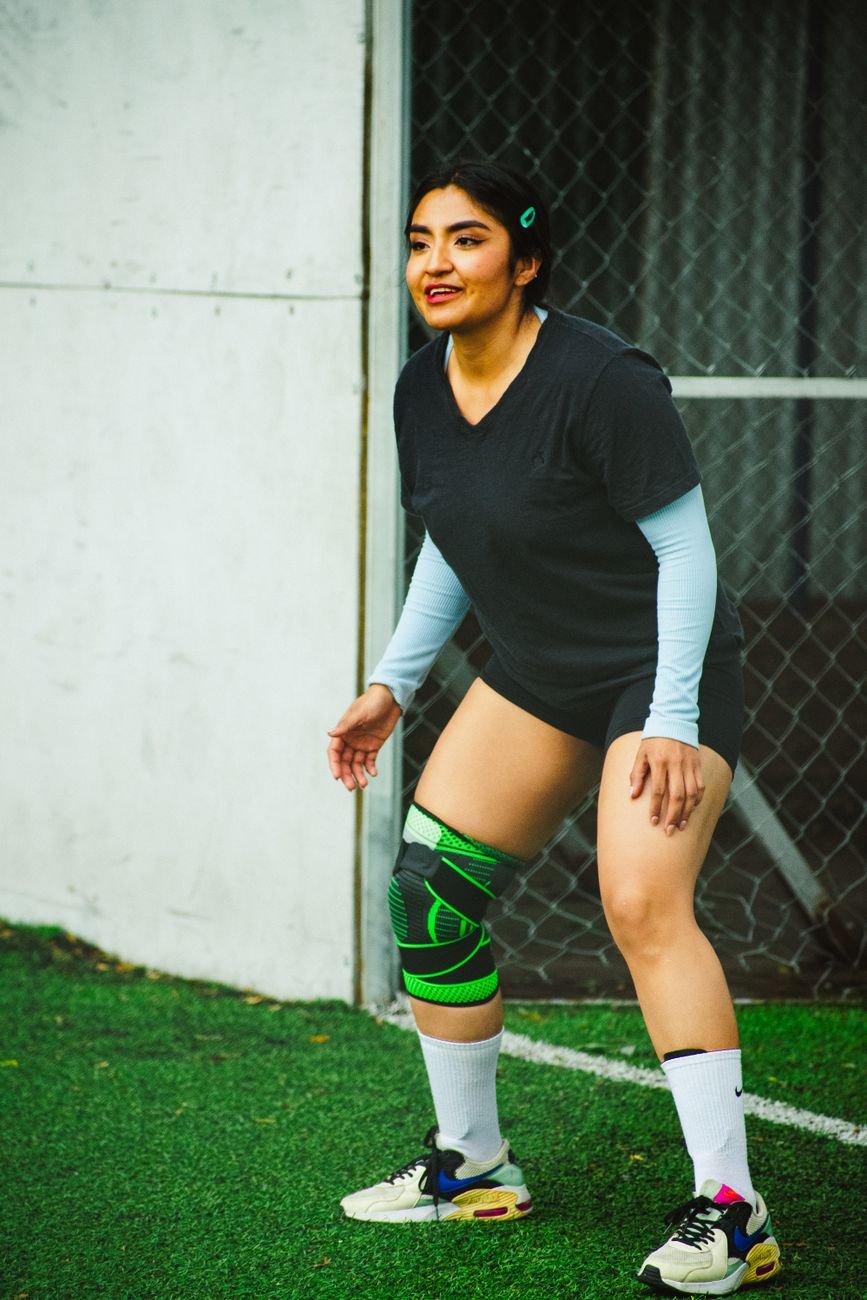
5 Solid Knee Braces Worth Trying
Fit and pain type vary too much for a single “best” pick, so here are five real contenders for the best knee brace for golf, covering the realistic range of what’s actually out there.
Bauerfeind GenuTrain. A medical-grade compression sleeve built from a knit fabric that moves with your leg instead of fighting it, with a gel ring that helps stabilize the kneecap. It’s the closest thing to an all-around answer for general golfer’s knee soreness. Expect to pay in the $120-$180 range depending on size and version — it’s a premium option, but the build quality holds up over years of regular wear.
DonJoy Performance Bionic Knee Brace. A hinged design with dual-axis support that limits excessive lateral and rotational movement without locking the knee down completely. It’s a solid step up for golfers with a real instability issue or a previous ligament injury. Pricing typically runs $100-$160.
McDavid Knee Compression Sleeve. A budget-friendly neoprene sleeve that delivers the proprioceptive benefit without much bulk. It’s the right starting point if you’re not sure bracing will even help yet and don’t want to spend much to find out. Usually $20-$35.
Shock Doctor Ultra Knee Support with Flexible Support Stays. A middle-ground option — more structure than a basic sleeve thanks to flexible side stays, but still light enough to disappear under golf pants. A reasonable pick if a plain compression sleeve isn’t cutting it but you’re not ready for a full hinged brace. Typically $30-$50.
Bauerfeind GenuTrain A3. Built specifically for arthritis-related knee pain, with a pad system designed to offload pressure from the affected compartment of the joint. This is the one to look at if your knee pain is arthritis-driven rather than swing-mechanics-driven — a distinction worth confirming with a doctor first. Expect $180-$250.
How to Wear a Golf Knee Brace Without Hurting Your Swing
Once you’ve settled on the best knee brace for golf for your situation, the most common mistake is cranking it down so tight it restricts natural knee flexion. That doesn’t protect the joint — it just forces your swing to compensate somewhere else, usually your hip or lower back, and you trade one problem for another.
It should feel snug and supportive, not compressed to the point of numbness or restricted blood flow. You should still be able to make a full practice swing, including a complete weight shift, without the brace binding or sliding. If either of those things happens, size up or loosen the straps before you tee off.
Wear it for the round or for full-speed practice sessions — not around the clock. Your knee’s stabilizing muscles still need to do their own work, and leaning on a brace constantly outside of golf can let them get lazy over time. Save it for golf, physical labor, or days when you already feel a twinge building.
Your golf shoes matter here too. A worn-out outsole or a shoe with no lateral support undoes a lot of what a good brace is trying to do, since your foot is the first thing absorbing rotational force before it ever reaches your knee.
A Knee Brace Isn’t a Fix for Bad Mechanics
I want to be straightforward about this, because I see golfers treat a knee brace like a permanent fix instead of a bridge. If you’re sore after nearly every round, the brace is buying you time — it isn’t buying you a pass on fixing what’s actually causing the strain.
Start by looking at your setup and your weight shift. A poor correct golf stance at address puts your knees in a compromised position before you’ve even started the swing, and an inefficient weight shift in the downswing often dumps extra load directly onto the lead knee. Both are mechanical problems a brace can’t solve on its own.
If you’re returning from a hip or knee procedure, the mechanics get even more important to get right early. Our guide on golf swing after hip replacement covers a lot of the same ground — protecting a vulnerable joint while your body relearns the movement pattern.
Who Benefits Most from a Golf Knee Brace
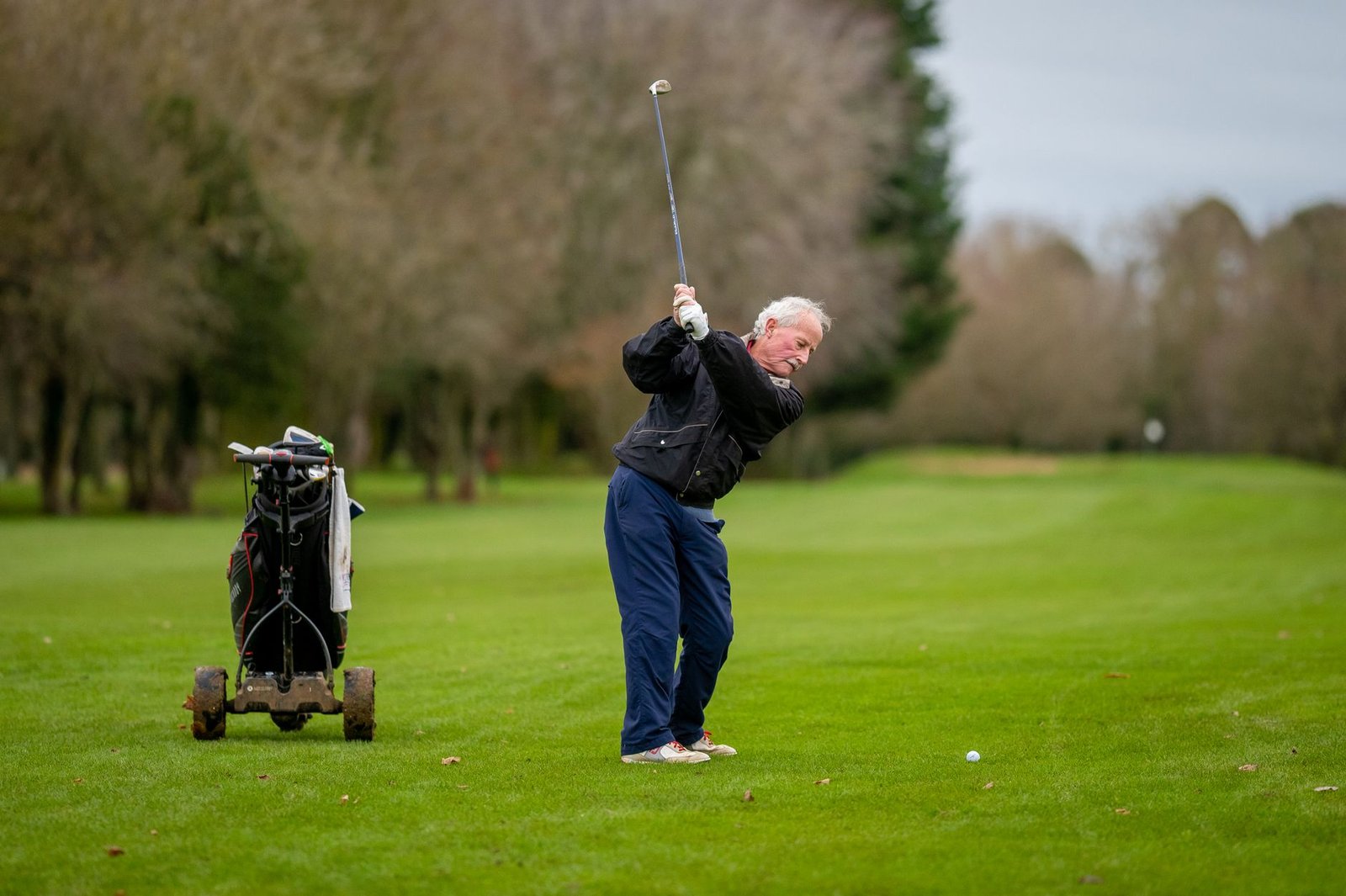
Senior golfers are exactly who the best knee brace for golf tends to help most, and it isn’t close. Cartilage thins and joint stability declines with age, so the same swing that felt fine at 35 puts noticeably more strain on the knee at 65. A brace that adds stability and proprioceptive feedback gives an aging knee a fighting chance against a lifetime of accumulated wear — the same logic behind why so many senior golfers also end up reading about the best back brace for golf once one joint starts talking to another.
Golfers coming back from a meniscus tear, ligament sprain, or any knee surgery are the second group who should seriously consider one — ideally with a physical therapist’s input on which type fits their specific injury. And golfers carrying extra body weight or playing back-to-back rounds put more cumulative load through the knee simply through repetition, which is exactly where a brace earns its keep.
Frequently Asked Questions
Does a knee brace actually help your golf swing?
Indirectly. A brace doesn’t add distance or fix your mechanics, but by reducing pain and limiting harmful movement, it lets you swing with less compensation and more consistency. Golfers who play pain-free tend to swing more freely, and that shows up in ball-striking.
Which knee needs the most support — lead or trail?
Usually the lead knee, since it absorbs the bulk of the rotational and weight-bearing load through impact. Trail-knee pain happens too, particularly with a poor weight shift or existing arthritis, so brace the knee that’s actually hurting rather than assuming.
What’s the best knee brace for golf if I have arthritis?
Look at an unloader-style brace like the Bauerfeind GenuTrain A3, which is designed specifically to shift pressure away from the affected compartment of the joint. Talk to a doctor before choosing, since arthritis bracing works differently from bracing for ligament or tendon issues.
Should I wear a golf knee brace during every round?
Not necessarily. Wearing it during play or full-speed practice is reasonable, but wearing it constantly outside of golf can let your stabilizing muscles get lazy. Reserve it for golf, heavy activity, or flare-up days.
Can a knee brace fix a golf swing that’s causing knee pain?
No. It manages the symptom, not the cause. If a stalled hip turn, poor weight shift, or bad setup is generating the strain, you’ll need to address the swing itself alongside the brace for lasting relief.
Do any professional golfers wear knee braces?
Yes, though it’s not always obvious on TV since most low-profile sleeves disappear under golf pants. Several tour pros with a history of knee issues have talked openly about wearing compression or hinged support during competitive rounds.
Final Thoughts
To sum it up, the best knee brace for golf is the one that matches your actual pain — a compression sleeve for mild, occasional soreness, or a hinged brace if you’re dealing with real instability or a history of injury. Start conservative if you’re not sure bracing will even help, and go straight to more structure if you already know your pain is chronic or mechanical.
Either way, treat the brace as support while you fix what’s actually driving the strain — better hip mobility, a cleaner weight shift, and a setup that doesn’t ask your knees to do more than they should. Your knees will hold up a lot longer for it, and so will the rest of your round.
Where to Shop
Affiliate links – we may earn a small commission at no extra cost to you, and it never changes what we recommend. Always follow your doctor or physiotherapist over any general guidance here.
- Hinged knee braces – most support, best for known ligament issues.
- Compression sleeves – light support and warmth, least restrictive for a full swing.
- Patella straps – targeted at kneecap tracking pain specifically.
- Spikeless golf shoes – reduce rotational traction, which takes load off the knee.