In this Article
Low net golf explains how handicaps level the playing field in tournaments. Here's how net scoring works, how to calculate your course handicap, and the strategy that actually lowers your score.
Walk into any club tournament and you’ll hear the same question before anyone’s hit a shot: gross or net? If you’ve ever missed the trophy on the gross leaderboard only to find out you actually won your flight, you already understand the appeal of low net golf. It’s the format that lets a 22-handicapper compete fair and square against a scratch player, and it decides more club championships, member-guest events, and weekend Nassau bets than most golfers realize.
This guide breaks down exactly what low net golf means, how the scoring actually works, and — more usefully — how to play smarter so you post a lower net score the next time it counts.
What “Net” Actually Means in Golf
Your gross score is the honest number on the card: every stroke, every putt, every penalty, added up with nothing subtracted. Your net score takes that same number and subtracts your Course Handicap, the strokes the handicap system gives you to reflect your typical playing ability.
The math is about as simple as golf gets: Net Score = Gross Score − Course Handicap. Shoot a 92 with an 18 handicap and your net score is 74. Shoot 87 with a 14 and you’re looking at a net 73. Low net golf just means the golfer, or team, that posts the lowest of those adjusted numbers, not the lowest raw score.
I’ve had students walk off the 18th green convinced they’d had a mediocre day, then find out they shot two under their handicap and won low net for the whole field. That gap between how a round feels and what it actually means on the scoreboard is exactly why net scoring exists.
How Low Net Golf Scoring Works
In a field with players ranging from 2-handicaps to 24-handicaps, gross scoring alone would turn most events into a formality — the lowest handicaps win almost every time. Low net golf fixes that by adjusting every score to a common baseline before anyone compares cards.
Most tournaments split the field into flights based on handicap range, then award low net within each flight along with an overall low net winner. That’s why you’ll sometimes see a golfer who shot 96 collecting a trophy while someone who shot 78 goes home empty-handed. The 96 might represent the better round once you account for who actually has the tougher job breaking par.
Calculating Your Course Handicap
The number that makes all of this work is your Course Handicap, and it’s specific to the course and tees you’re playing that day. The official USGA formula is:
Course Handicap = Handicap Index × (Slope Rating ÷ 113) + (Course Rating − Par)
Most golfers use the simplified version, dropping the course rating adjustment: Handicap Index × (Slope Rating ÷ 113). Say your Handicap Index is 17.6 and you’re playing a course with a Slope Rating of 128. That’s 17.6 × (128 ÷ 113), which comes out to roughly 19.9 — rounded to a Course Handicap of 20. You’ll rarely need to do this math by hand; the USGA’s Course Handicap Calculator and most posted charts in the pro shop do it instantly once you enter your Handicap Index.
How Your Strokes Get Applied Hole by Hole
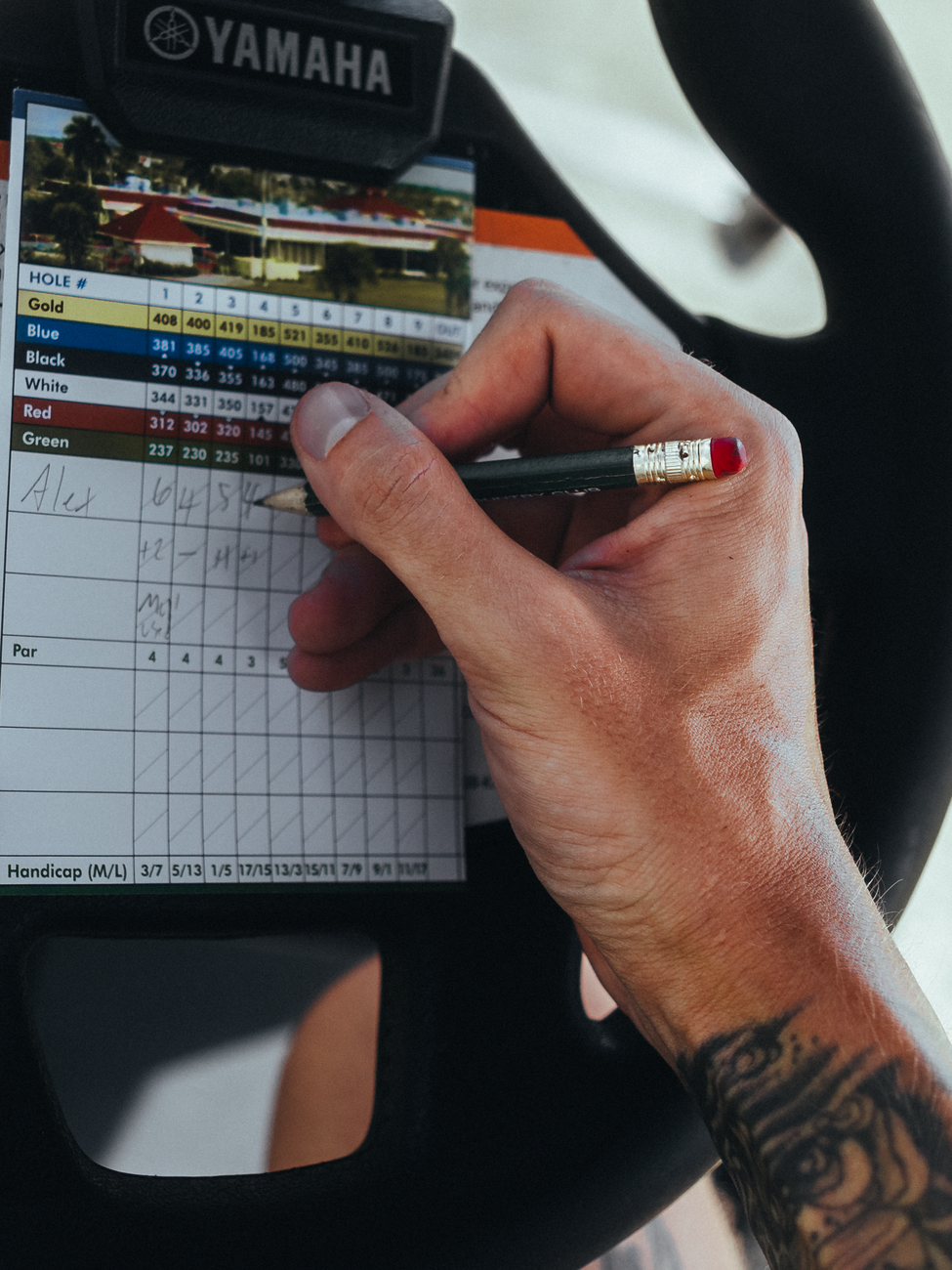
Those 20 strokes aren’t just subtracted at the end of the round — they’re distributed across specific holes using the Stroke Index, sometimes labeled “HCP,” printed on the scorecard. Holes are ranked 1 through 18 by difficulty, with 1 being the hardest.
With a Course Handicap of 20, you get one stroke on every hole, plus a second stroke on the two hardest holes, Stroke Index 1 and 2. Make a 6 on the toughest hole on the card and your net score there is a 4 — a net par, even though it felt like a disaster in the moment. Knowing which holes hand you that cushion changes how you play them.

Low Net Golf Tournaments: Why Flights and Net Scoring Exist
Net scoring isn’t a consolation prize for golfers who can’t break par — it’s the backbone of amateur competitive golf. Club championships almost always run gross and net divisions side by side, and member-guest events, charity scrambles, and weekend leagues lean on low net golf specifically because it keeps a wide range of skill levels competitive against each other.
Flighting takes this further by grouping golfers with similar handicaps so the net competition stays tight within each bracket, not just across the whole field. A low net win inside your flight means you beat golfers roughly as good as you, on that day, by playing closer to your potential than they did to theirs.
Low Net vs. Low Gross: Which One Actually Matters More?
Low gross is simple: fewest actual strokes, no adjustments, bragging rights that need no explanation. It’s the format the pros play and the one most golfers instinctively respect.
Low net measures something different — and arguably harder to repeat. Shooting your handicap, or better, requires consistency and course management on top of ball-striking. According to the USGA’s own handicapping resources, the entire World Handicap System exists specifically so golfers of different abilities can have meaningful competition, which is the whole point of net scoring in the first place. Neither format is “more real” than the other; they’re just answering different questions. Gross asks who played the best golf. Net asks who played the closest to their own best golf.

How to Actually Play Better Low Net Golf
Shooting a lower net score isn’t really about swinging harder or gaming your handicap — it’s about playing the round that’s actually available to you instead of the one you wish you had.
- Adopt a net-par mindset. Before you tee off, circle every hole where you get a stroke. On those holes, your real target isn’t par — it’s net par. A bogey on a stroke hole is a completely successful outcome, and playing it that way takes the pressure off risky shots you don’t need.
- Protect against the blow-up hole. A single 8 does more damage to your net score than three ordinary bogeys combined. When a shot goes sideways, take the flatter angle back to the fairway instead of threading a gap through the trees. This is also where Equitable Stroke Control, called Net Double Bogey under the current World Handicap System, works in your favor — an ugly hole gets capped for handicap posting purposes, so there’s no reason to compound one bad swing with a second reckless one.
- Know your stroke holes before you start. Most scorecards list the Stroke Index right next to par. Spend thirty seconds on the first tee circling your stroke holes so you’re not discovering them mid-round. If your fundamentals need work first, dialing in something as basic as your setup — a correct golf stance included — pays off on every one of those holes, not just the ones with strokes attached.
- Play the percentages, not the highlight reel. Laying up short of a water hazard on a stroke hole and two-putting for a net par beats a hero carry that ends up in the drink half the time. Low net golf rewards the golfer who avoids disasters far more than the one who occasionally pulls off a miracle shot.

Common Mistakes That Cost Golfers a Lower Net Score
The biggest one is simple: not knowing your handicap going into the round, or worse, playing to an outdated one. Post your scores regularly through your handicap service so your Course Handicap actually reflects your current game, not the game you had six months ago.
A close second is ignoring the stroke holes entirely and playing every hole the same way. A conservative bogey on a hole where you get a stroke is worth exactly as much as a birdie on a hole where you don’t, but it’s a far easier shot to pull off.
New and senior golfers sometimes compound this by fighting their equipment on top of their strategy. If your swing speed or strength has changed over the years, something as overlooked as swing weight suited to senior golfers can quietly cost strokes that have nothing to do with course management. And if you’re still building the fundamentals, our beginner’s guide to golf is worth a look before you start worrying about handicap strategy at all — net scoring only pays off once you’re posting rounds consistently enough to have an accurate number in the first place.
Frequently Asked Questions About Low Net Golf
What does “low net” mean in golf?
Low net refers to the lowest net score in a field or flight — the score left over after a golfer’s Course Handicap is subtracted from their gross score. It’s the standard way amateur tournaments determine a winner across a range of skill levels.
What is considered a good net score?
A net score at or below the course par is considered strong in most amateur events — a net 70 on a par-72 course means you played two strokes better than your handicap predicts. In club-level low net golf, anything from net par down to a few strokes under typically contends for the win.
Is winning low net less prestigious than winning low gross?
Not really — they just measure different things. Low gross rewards the best raw round; low net rewards the round that best outperformed a player’s own handicap. Most clubs treat both trophies as legitimate wins, often awarding them separately in the same event.
What is Net Double Bogey, and why does it matter for my score?
Net Double Bogey is the maximum score that counts toward your handicap on any single hole under the World Handicap System — essentially par, plus any strokes you receive there, plus two. It keeps one disaster hole from wrecking your handicap, which is exactly why chasing a miracle recovery shot on a blown-up hole rarely makes sense.
Do I need an official Handicap Index to play in low net events?
Yes, in almost all sanctioned or club tournaments — an official Handicap Index through a service like GHIN is what produces your Course Handicap for that day. Some casual or charity events use informal “honor system” handicaps, but real low net golf competition depends on an accurate, regularly updated number.
How is low net golf different from Stableford scoring?
Both adjust for handicap, but they reward different things. Low net simply totals strokes after the handicap adjustment, so every stroke saved matters equally. Stableford assigns points per hole based on your net score relative to par, which rewards aggressive play on good holes and limits the damage from a single bad one even further than standard net scoring does.
The Bottom Line on Low Net Golf
Low net golf is what makes club tournaments, member-guest weekends, and weekend money games worth playing even when your handicap says you’re not the best ball-striker in the group. Understand how your Course Handicap is built, know your stroke holes before you tee off, and play the conservative shot on the holes that matter most — that’s most of the strategy right there.
The rest comes down to what always matters in this game: showing up with an honest handicap, protecting yourself from the blow-up hole, and trusting that a string of steady net pars adds up to more trophies than a handful of heroic misses ever will.
Course Handicap Quick-Reference Table
Rather than doing the math from scratch every time, here’s how a few common Handicap Index and Slope Rating combinations translate into a Course Handicap (using the simplified formula: Handicap Index × Slope Rating ÷ 113):
| Handicap Index | Slope Rating 113 (avg) | Slope Rating 130 (harder course) | Slope Rating 145 (tour-level) |
|---|---|---|---|
| 5.0 | 5 | 6 | 6 |
| 10.0 | 10 | 12 | 13 |
| 15.0 | 15 | 17 | 19 |
| 20.0 | 20 | 23 | 26 |
| 25.0 | 25 | 29 | 32 |
Notice how the gap between your Handicap Index and your Course Handicap grows on tougher courses (higher Slope Rating). That’s the system’s way of acknowledging a hard course takes a bigger bite out of everyone’s score — and why the same golfer can get more strokes at one course than another.