In this Article
Pull carts are cheaper and lighter. Push carts are easier on your body and roll better on hills. Here is how to pick, and what features actually matter.
Some links below are affiliate links. If you buy through them we may earn a small commission at no extra cost to you. It never changes what we recommend.
Carrying a bag for eighteen holes is roughly five miles with twenty-five pounds on one shoulder. Most golfers who switch to a cart wish they had done it years earlier – and then immediately face the next question: push or pull?
They sound like the same product. They are not, and the difference matters most to the people with the most to gain from walking.
The short answer
Buy a three-wheel push cart unless budget or boot space is the deciding factor. Pushing is easier on your back and shoulders, tracks straighter, and handles slopes and wet ground better.
Buy a two-wheel pull cart if you want the cheapest, lightest, most compact option and you play mostly flat, dry courses.
Side by side
| Factor | Push cart (3-wheel) | Pull cart (2-wheel) |
|---|---|---|
| Body strain | Low – you push forward, facing the load | Higher – twists one shoulder and the lower back |
| Hills and wet grass | Handles both well | Struggles; drags and tips |
| Weight | Heavier | Lighter |
| Folded size | Bulkier | Very compact |
| Price | Higher | Lowest |
| Storage tray, brake, umbrella mount | Usually included | Rare |
| Best for | Most golfers, especially with back or shoulder issues | Flat courses, tight boot space, tight budget |
Why pushing is easier on your body
Pulling a cart means reaching behind you, gripping with one arm, and walking with your torso slightly rotated for several hours. Over eighteen holes that asymmetric load lands on one shoulder and one side of the lower back.
Pushing puts both hands in front, keeps your shoulders square, and lets your legs do the work through a neutral spine. If you already manage a back problem, this is not a small distinction – it is the whole reason to choose a push cart. Our guides to back support for golf and knee braces cover the rest of that picture.
Three wheels or four?
Three-wheel push carts turn more easily and are the default choice for most golfers. Four-wheel carts are more stable on side slopes and track dead straight, which some players prefer, at the cost of a slightly larger folded footprint and a little more weight.
Neither is clearly better. If your course is hilly with lots of cross-slopes, four wheels are worth the bulk.
Features that actually matter
- A proper parking brake. Non-negotiable on any course with slopes. A cart rolling into a bunker is a genuinely bad day.
- One-motion fold. You will fold this thing hundreds of times. A two-second fold is worth paying for; a fiddly three-stage one will make you stop using the cart.
- Folded dimensions. Measure your boot before buying. This is the most common regret.
- Secure bag straps. Top and bottom, adjustable. Cheap carts let the bag rock as you walk.
- Wheel quality. Larger wheels with real bearings roll far better through wet rough than small hard plastic ones.
What about electric push carts?
Electric or remote-control carts do the pushing for you and are genuinely excellent on hilly courses or for golfers with limited stamina. They cost several times what a manual cart does, add battery charging to your routine, and are considerably heavier to lift into a car.
They make most sense if a hilly walk is the specific thing standing between you and playing more often.
What to buy
- Three-wheel golf push carts – the right default for most walking golfers.
- Four-wheel push carts – better on cross-slopes.
- Two-wheel pull carts – lightest and cheapest.
- Electric push carts – worth it on genuinely hilly courses.
- Umbrella holders and accessory attachments.
Frequently asked questions
Does walking with a cart really burn fewer calories?
Slightly fewer than carrying, but far more than riding. Most golfers walk more rounds once they stop carrying, so the total activity usually goes up.
Will a push cart damage the course?
No, when used properly. Observe the same rules you would for any traffic – keep off tees and greens, and follow any posted cart routing.
Can I use any bag on a push cart?
Most cart and stand bags fit fine. Very large staff bags can overhang the frame and unbalance the cart on slopes.
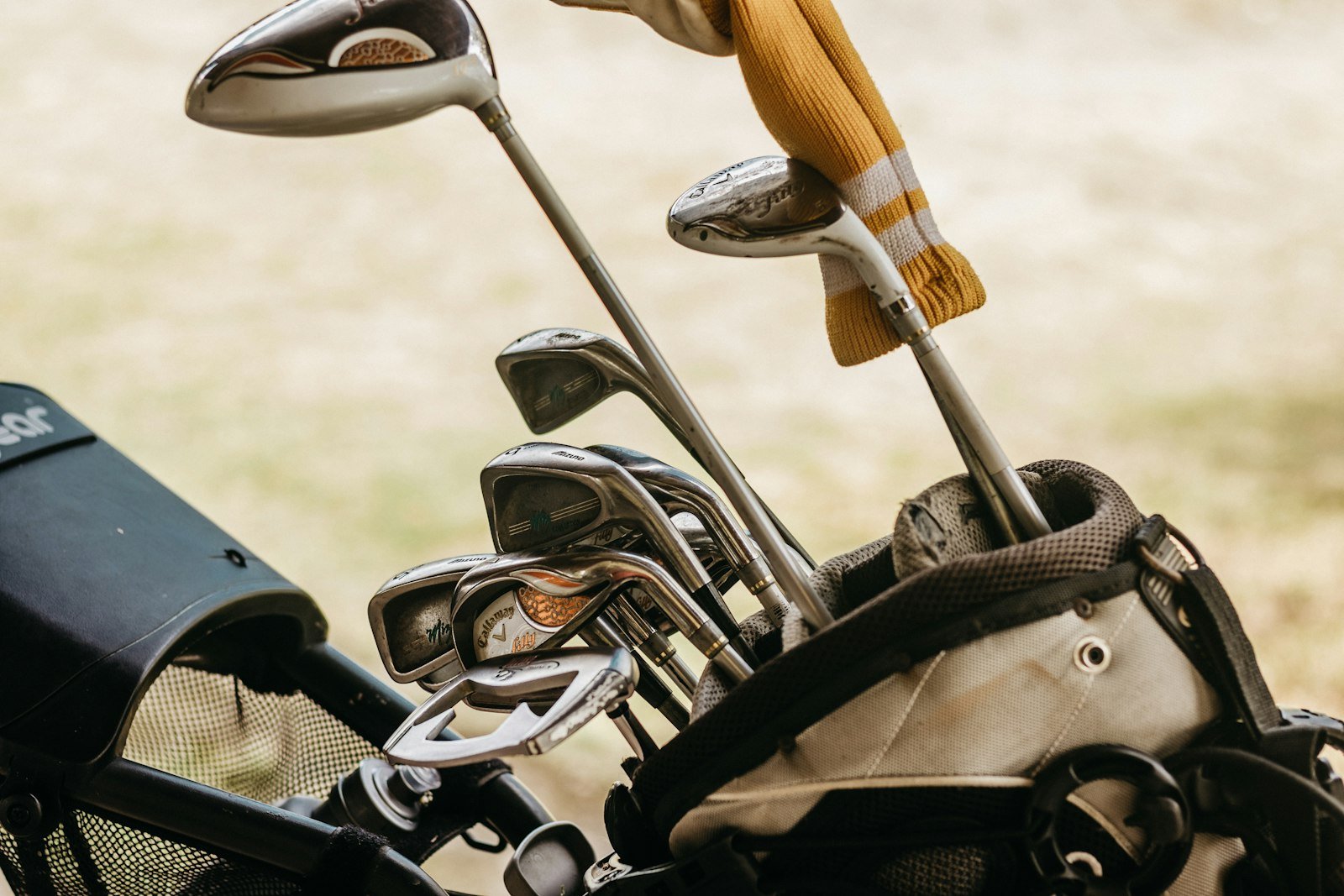
The Case for Walking at All
Eighteen holes on foot covers roughly five miles. That is a substantial amount of moderate activity, and it is the main reason many golfers want to walk even when riding is available.
Sustained walking of that kind sits comfortably within the physical activity levels recommended by organisations such as the American Heart Association, and it comes with the considerable advantage of not feeling like exercise. Golfers who walk regularly tend to keep doing it.
The obstacle is rarely the walking itself. It is the bag. Carrying twenty-five to thirty-five pounds on one shoulder for five miles is what wears people down and eventually pushes them into a riding cart. A trolley removes that load while keeping the walk, which is why it is one of the better equipment purchases in golf.
Build Quality: What You Are Paying For
Push carts range from very cheap to genuinely expensive, and the difference is not marketing. It shows up in four places.
- Frame material. Aluminium frames are lighter and will not rust. Steel frames cost less and weigh more, which matters every time you lift the cart into a car.
- Wheels and bearings. Larger wheels with sealed bearings roll noticeably easier through wet rough. Cheap carts use small, hard wheels on plain axles that drag badly on soft ground.
- The fold mechanism. This is where budget carts fail first. Cheap latches wear, develop play, and eventually stop locking properly.
- The brake. A proper foot-operated brake that holds on a slope is worth far more than the marketing suggests.
A mid-range cart from an established brand generally lasts many seasons. The cheapest options often need replacing within a couple, which makes them poor value despite the price.
Wheel Configurations Compared
| Type | Strengths | Weaknesses |
|---|---|---|
| Two-wheel pull | Lightest, cheapest, most compact | Body strain, poor on hills and wet ground |
| Three-wheel push | Manoeuvrable, good all-round, easy turning | Can feel tippy on steep cross-slopes |
| Four-wheel push | Most stable, tracks straight | Heavier, bulkier folded |
| Electric | No effort at all, excellent on hills | Expensive, heavy, needs charging |
Three wheels remains the sensible default. Four-wheel designs have gained ground with golfers who play hilly courses, where the extra lateral stability genuinely helps on cross-slopes.
Accessories That Earn Their Place
Most carts come with a storage tray and a drinks holder. A few additions genuinely improve the round:
- An umbrella holder. Keeps both hands free and your bag dry. The single most useful accessory in wet climates.
- A GPS or phone mount. Puts yardages at eye level instead of in your pocket.
- A cooler bag. Fits most trays and matters more than you would think in summer.
- A seat attachment. Useful on slow rounds, though it adds weight and bulk.
- A rain cover. Cheaper than replacing electronics or a soaked glove.
Accessories worth having (affiliate links): umbrella holders, cooler bags, GPS mounts and rain covers.
Electric Carts in Detail
Electric trolleys divide into two categories. Follow or remote models drive themselves and you walk alongside. Assisted models still require you to steer but add motor power to take the effort out of climbs.
Assisted carts are the better first electric purchase for most people. They are cheaper, simpler, lighter and less prone to the frustrations of remote control on undulating ground. Full remote models are genuinely impressive but demand more of both your budget and your patience.
Before buying, weigh three things honestly: the cart’s weight when you lift it into a car boot, battery range against your typical round, and whether your course permits powered trolleys at all. Some do not.
Course Rules and Etiquette
Trolleys are welcome almost everywhere, but a few conventions apply:
- Never take a trolley onto a green or a tee box. Universal, and the fastest way to annoy a greenkeeper.
- Keep clear of bunker faces and their surrounds. Wheels do real damage to soft edges.
- Park to the side of the green in the direction of the next tee. Faster for you and everyone behind.
- Observe wet-weather restrictions. Some courses ban trolleys after heavy rain to protect the turf.
Keeping It Working
Trolleys need almost nothing, but the little they need is worth doing. Rinse and dry the wheels after wet rounds, because grass and grit destroy bearings. Store it dry rather than in a damp garage corner. Check the fold latches occasionally for play, and keep pneumatic tyres properly inflated – underinflated tyres make the cart feel heavy and sluggish.
A cart looked after this way easily lasts a decade. Neglected, the wheels seize and the fold mechanism stiffens within a couple of seasons.
More Questions Answered
Is a push cart worth it for only a few rounds a year?
If you play a handful of times annually and carry comfortably, probably not. If carrying is why you ride, or why you stop after nine holes, then yes – even an entry-level cart changes what you can comfortably play.
Can I use a push cart with a stand bag?
Yes, and most walking golfers do. Stand bags are lighter and fit securely. The legs sit against the frame without causing problems. Very large staff bags are the only ones that genuinely cause trouble.
Do push carts slow down play?
No – walking groups frequently keep pace with riding groups, because riders spend time driving between two separated balls. Parking sensibly toward the next tee is what keeps a walking group moving well.
Should I buy used?
A used mid-range cart often beats a new budget one. Check that the fold mechanism latches firmly, the wheels spin freely without grinding, and the brake actually holds. Those three things tell you almost everything about how it has been treated.
Matching a Cart to Your Bag
Cart and bag are a system, and a mismatch is the most common reason a new cart feels disappointing.
- Stand bags are the natural partner for a push cart. They are light, the legs fold against the frame without fuss, and the balance is good.
- Cart bags are designed for exactly this use, with forward-facing pockets you can reach while the bag is strapped down. Heavier, but more practical if you never carry.
- Staff bags are too large and heavy for most trolleys. They overhang the frame and raise the centre of gravity enough to make the cart tippy on slopes.
Check that the upper strap sits above the bag’s widest point and the lower cradle supports the base properly. A bag that rocks as you walk will loosen the straps over eighteen holes and wear the cart’s contact points.
Bag options (affiliate links): lightweight stand bags and 14-way cart bags.
The Cost Comparison Nobody Runs
Riding carts are usually a per-round fee. A trolley is a one-off purchase. Over a season the maths becomes striking.
If your course charges a cart fee and you play weekly, a mid-range push cart typically pays for itself within a single season – often within a couple of months. After that it is saving you money every round for a decade.
Even an electric trolley, which costs several times as much, generally breaks even inside two or three seasons for a regular player. That framing changes the purchase from an indulgence into straightforward economics, and it is worth doing the sum with your own numbers before deciding a cart is too expensive.
Walking in Difficult Conditions
A trolley changes how you handle weather and terrain, and a little planning helps.
- Wet ground. Wider pneumatic tyres float over soft turf; narrow hard wheels cut in and drag. This is where cheap carts feel worst.
- Hills. Push going up, and control the descent by keeping the cart in front of you rather than letting it run. Never let a loaded cart get ahead of you downhill.
- Wind. A bag with a rain hood acts like a sail. Remove hoods in strong crosswinds.
- Heat. The cart carries water for you, which is one of its quiet advantages over carrying.
If you play in genuinely wet conditions regularly, prioritise wheel size and bearing quality over every other feature. It is the difference between a cart that helps and one that fights you.
Storage and Transport
The folded dimensions of a trolley matter far more than buyers expect, because this is the friction that decides whether the cart actually gets used.
Measure your boot before you buy, with whatever else normally lives in there. A cart that only fits when the boot is otherwise empty becomes a cart you leave at home. Golfers with small hatchbacks should treat folded size as the primary specification rather than an afterthought.
Weight matters for the same reason. Lifting a heavy cart in and out several times a week is precisely the kind of small annoyance that quietly ends a habit – and it is the most common complaint from electric trolley owners, whose carts are considerably heavier than manual ones.
Store it somewhere dry with the wheels clean. A trolley left damp in a garage corner will have stiff bearings and a sticky fold mechanism by the following season, and both are avoidable with thirty seconds of care after a wet round.
The Short Version
For most golfers the push cart vs pull cart question resolves quickly. Buy a three-wheel push cart, spend a little more than the cheapest option, and check that it folds small enough for your car before anything else.
Pull carts still make sense in two situations: a genuinely tight budget, or a boot with almost no room. Both are legitimate, and a pull cart is far better than carrying. But if neither applies to you, pushing is easier on your body, better in wet conditions and considerably better on slopes.
Whichever you pick, the purchase usually pays for itself within a season if your course charges a riding fee, and it tends to change how much golf you play rather than just how you carry your clubs.