In this Article
Purple golf tees work exactly like any other tee. Here's what actually matters — legality, material, and length — before you buy a pack.
A student showed up to a lesson last month with a full pouch of purple golf tees and asked, half-joking, whether they were going to hurt his ball flight. That question comes up more than you’d think. Golfers get so used to the plain wooden tee that shows up free at the pro shop counter that anything with color on it starts to feel like a gimmick. It isn’t. Purple golf tees work exactly like any other tee — the color is cosmetic, not mechanical — but there are real, practical reasons golfers reach for them anyway, and a few things worth knowing before you buy a bag.
This guide covers what actually changes (and what doesn’t) when you switch to purple tees: whether they’re legal to play, which material holds up best, what length to buy for your driver versus your irons, and the honest reasons golfers pick them over the standard wood peg.
What Are Purple Golf Tees, Exactly?
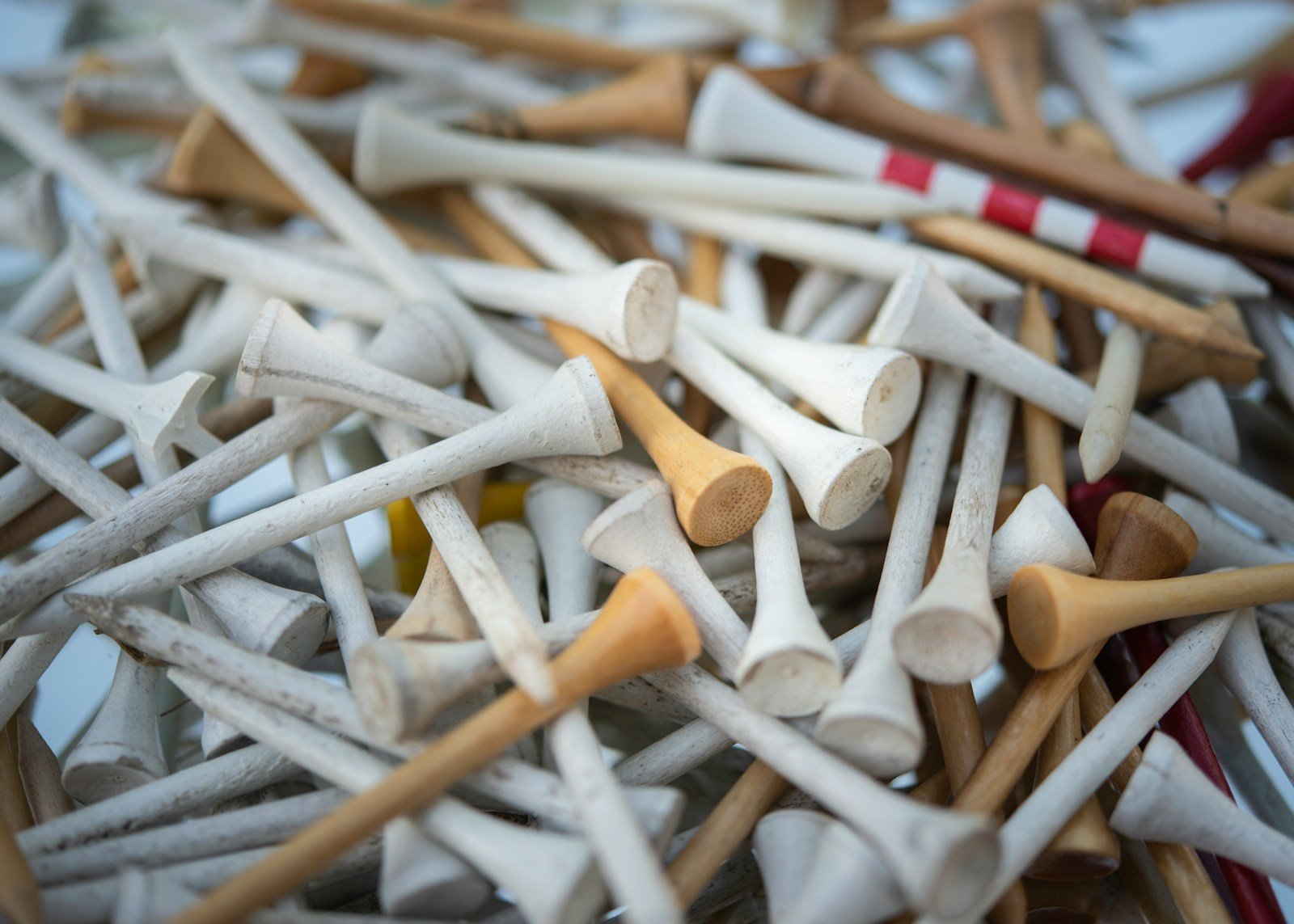
A golf tee is just a small peg that raises the ball off the ground for your tee shot. These tees are the same piece of equipment — wood, plastic, or bamboo — with dye or pigment added during manufacturing. Nothing about the shape, the taper, or the way it sits in the ground changes because of the color.
The golf tee itself has been around since 1899, when Dr. George Franklin Grant patented the first version — a tapered wooden base with a rubber cup — though he never sold it commercially. It took until 1920, when Dr. William Lowell introduced the “Reddy Tee” and reportedly paid Walter Hagen to use one publicly, for colored, mass-produced tees to catch on with everyday golfers. Purple just happens to be one of dozens of shades manufacturers now offer, alongside neon orange, pink, and the classic white.
Why Golfers Actually Choose Them
Nobody needs a purple tee to play good golf. But once you’ve used one, it’s easy to see why they stick around in someone’s bag. The reasons I hear most from students and playing partners:
- Visibility. A bright purple tee is far easier to spot in thick rough, dormant winter grass, or a shaded tee box than a white or natural wood peg that blends right in.
- Getting your tee back. Snapped or knocked-loose tees are easy to lose. A color that stands out against green turf means you’re not leaving a trail of tees behind you all season.
- Group play. When four golfers all tee off with white pegs, it’s easy to grab the wrong one walking off the tee box. Color-coding by player solves that instantly.
- Coaching and self-diagnosis. I’ll sometimes have a student use one consistent tee color for a whole session. From behind them, it’s much easier for me to spot inconsistent tee height shot to shot than it is with a plain wood tee that disappears against the grass.
- Personal style. Team colors, a favorite color, a gift from a family member — plenty of golfers just like carrying something that looks like them.
Are Purple Golf Tees Legal to Play With?
Yes, in every format of play, including tournaments. The Rules of Golf regulate tee design, not tee color. Rule 6.2 of the official Equipment Rules caps tee length at 4 inches (101.6mm) and requires that a tee not be designed or manufactured to unduly influence the movement of the ball or indicate a line of play. A standard wood, plastic, or bamboo peg in any color, including purple, meets that standard without issue.
Where golfers actually run into trouble is design, not color. Spring-loaded or hinged tees, sometimes called “brush” tees, and old-style castle tees with wide, cupped tops are generally non-conforming for competitive play because their design can reduce friction or spin at the moment of impact. That has nothing to do with whether the tee is purple, orange, or plain white — a purple version of a conforming peg tee is exactly as legal as a white one, and a non-conforming spring tee is illegal no matter what shade it comes in.
One mix-up worth clearing up while we’re here: a purple golf tee is not the same thing as a purple tee box. Tee boxes use color to mark different sets of markers on a hole — commonly black or blue for the longest, championship-length tees, white for the standard men’s tees, and red or gold for forward tees — and that system varies from course to course since it isn’t standardized nationally. Your tee peg color has nothing to do with which tee box you’re playing from.
Purple Golf Tee Materials: Wood vs Plastic vs Bamboo
Color aside, the material a tee is made from matters more to your wallet and the environment than to your golf swing. Here’s how the common options compare:
| Material | Durability | Eco-Friendliness | Typical Price |
|---|---|---|---|
| Wood | Snaps easily on mishits; usually good for a few holes | Fully biodegradable | Cheapest, sold in bulk |
| Plastic | Most durable; can be reused dozens of times | Not biodegradable; some brands offer recyclable resin | Moderate |
| Bamboo | Stronger fiber than standard wood, resists snapping better | Fast-growing, biodegradable, considered the greenest option | Slightly more than standard wood |
| Biodegradable composite | Up to several times more durable than wood per manufacturer testing | Designed to break down over time despite the added durability | Premium pricing |
Purple pigment shows up most vividly on plastic, since the dye sits in a smooth, non-porous surface. Wood and bamboo purple tees tend to look a bit more muted or matte because the color has to soak into the grain, but plenty of golfers actually prefer that softer look over a glossy plastic finish.
What Length Should You Buy?
Length matters far more than color, and it’s the detail most golfers get wrong when they buy a bag of colored tees just because the color caught their eye. Tees generally come in four common lengths:
- 2 1/8 inches — short tees built for irons, hybrids, and hitting mats or simulators.
- 2 3/4 inches — the most versatile all-around length, good for irons and fairway woods.
- 3 1/4 inches — the traditional standard for a driver.
- Up to 4 inches — the legal maximum, needed for many of today’s larger, deeper-faced driver heads.
A simple field test works better than memorizing measurements: at address with your driver, roughly the top half of the ball, about an inch to an inch and a half, should sit above the crown of the clubhead. Tee it too low with a driver and you’ll catch more spin and lose distance off the low face contact. Tee it too high with an irons and you’ll skull or pop up shots. If you’re buying a mixed pack for your whole bag, grab a couple of lengths rather than one size for everything.
Getting the Most Out of Colored Tees on the Course
Beyond just looking good in your bag, a bright color like purple has a few practical uses once you’re actually playing. In a foursome, assign each player a different tee color so nobody accidentally pockets someone else’s peg walking off the box. In a scramble or charity event, purple tees make an easy, inexpensive branding touch if it matches your team or school colors.
If you’re working on your swing with an instructor, ask about using a single tee color for the whole session. It sounds minor, but a consistent, visible tee height makes it much easier for a coach watching from behind or the side to catch small setup inconsistencies that a plain, hard-to-see wood tee would hide.

Common Mistakes When Buying Colored Golf Tees
The most common mistake is assuming color changes performance in some way — it doesn’t. Ball flight, spin, and distance come down to tee height, tee material stiffness, and your own swing, not the pigment on the peg.
The second mistake is buying a novelty spring-loaded or brush-style tee without checking whether it’s tournament-legal, especially if you play in club competitions or qualifiers. Read the packaging or manufacturer’s spec sheet before you buy if conformance matters to you.
The third is going with the cheapest bulk pack of dyed plastic tees available. Some budget colored tees fade noticeably after just a few rounds in direct sun, and the color can rub off on your glove or golf bag pocket. Spending a little more on a quality plastic or bamboo option keeps the purple looking purple longer.
Purple Golf Tees FAQ
Are purple golf tees legal in tournament play?
Yes. The Rules of Golf regulate a tee’s length and design, not its color. A standard, conforming peg tee is legal in any color, purple included, as long as it’s no longer than 4 inches and isn’t a spring-loaded or mechanically assisted design.
Does tee color affect distance or spin?
No. Distance and spin are driven by tee height, the material’s stiffness at impact, and your swing, not the color of the tee. A purple tee performs identically to a white one made from the same material and length.
What’s the difference between a purple golf tee and a purple tee box?
A golf tee is the small peg you set your ball on for a tee shot. A tee box is the marked area on the hole where you start play, and courses use colored markers there to indicate different yardage sets. The two uses of “tee” and “color” are unrelated to each other.
What material of golf tee lasts the longest?
Plastic tees generally hold up the longest and can be reused many times over, followed by bamboo, which resists snapping better than standard wood. Traditional wood tees are the most affordable but also the most likely to break on a mishit.
How long should a golf tee be for a driver?
Most golfers do well with a 3 1/4-inch tee for a standard driver, though many modern, deeper-faced drivers play better with a longer tee, up to the legal maximum of 4 inches. Aim for roughly the top inch to inch and a half of the ball peeking above the crown of the driver at address.
Can you use golf tees for anything besides the tee box?
Tees are only permitted for the very first stroke on a hole, played from the tee box. Once your ball is in play anywhere else on the hole, including the fairway or rough, the Rules of Golf require you to play it as it lies without a tee.
Final Thoughts
Purple golf tees are exactly what they look like: a standard, fully conforming tee with a color that’s easier to spot, easier to keep track of, and a little more fun to carry than the plain wood peg most golfers default to. The only decisions that actually matter are length and material — get those right for your clubs and your budget, and the color is simply a bonus.
If you’re also looking to dial in the rest of your setup, it’s worth pairing a good set of tees with a set of alignment sticks for practice, and if grip is the next thing on your list, our breakdown of Champkey’s grip lineup is a good next read. Golfers who like personalizing their gear with color often end up doing the same thing to their ride around the course — see our guide to golf cart wraps if that’s you.
For the full official wording on tee specifications, the USGA’s Equipment Rules on tees (Rule 6.2) is the definitive source, and Golfmagic’s golf tee buying guide is a solid read if you want to compare specific tee models beyond just color.
Where to Shop
Affiliate links – we may earn a small commission at no extra cost to you, and it never changes what we recommend.
- Purple golf tees – variety packs in wood and plastic.
- Bamboo golf tees – the more durable, eco-friendly option.
- Biodegradable composite tees – premium durability that still breaks down.
- Mixed-length tee packs – cover irons through driver in one bag.