In this Article
A hands-on Champkey golf grips review — what's really in them, how they compare to Golf Pride and Lamkin, and who should (and shouldn't) buy them.
I get asked about Champkey golf grips more than almost any other budget equipment question on the range these days. Golfers see a 13-pack selling for a fraction of what a comparable Golf Pride set costs and want to know if it’s a smart swap or a false economy. A student showed up last month with a full set he’d regripped himself over a weekend using one of these kits, and asked me point-blank if he’d wasted his money. This Champkey golf grips review breaks down what’s actually in these grips, how they perform against the name brands most of you already play, and where they make sense — and where they don’t.
What Are Champkey Golf Grips, Exactly?
Champkey isn’t a tour equipment company. It’s a value-focused brand that sells almost exclusively through Amazon, and its whole pitch is simple: give golfers a grip that looks and feels close to the established profiles from Golf Pride and Winn, at a price that doesn’t sting when you’re regripping a full set. Most of their lineup is modeled closely on the Golf Pride MCC family — same general silhouette, similar corded texture, similar sizing options.
That’s not an accusation, it’s just how the budget grip market works. A handful of companies manufacture grips that echo popular profiles once the original patents and trademarks stop being the differentiator, and Champkey has built a real following doing exactly that.
Champkey Golf Grips Review: Materials and Feel
Most Champkey golf grips are built from a polyurethane or high-feedback rubber compound with a micro-textured surface designed to boost traction. The corded and half-corded models add embedded fiber for extra grip in wet or sweaty conditions, which mirrors what Golf Pride does with the MCC Plus4’s brushed cotton cord.
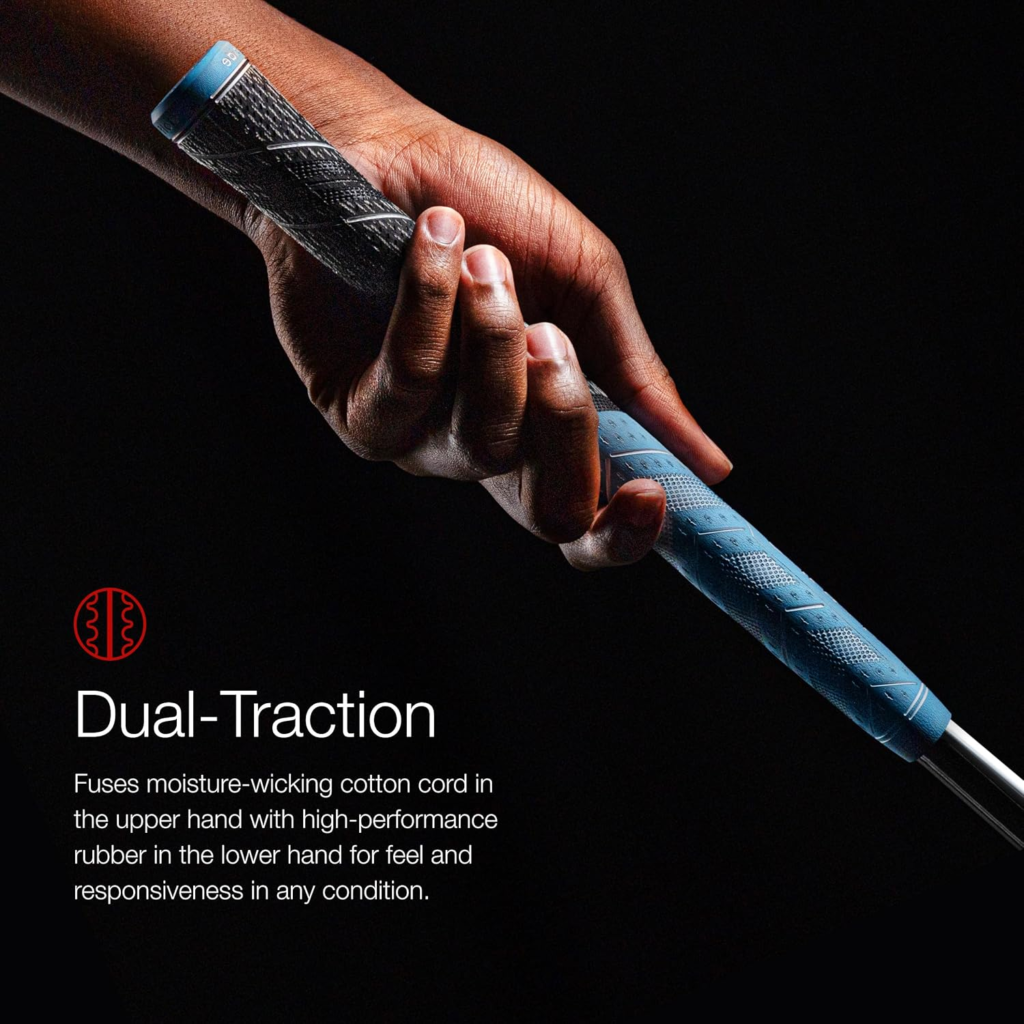
In practice, that translates to a grip that feels soft and tacky right out of the box. Players on the GolfWRX forums who’ve put Champkey golf grips on most of their bag report being genuinely happy with them after six months of regular play — but the same thread notes that the MCC-style version isn’t quite as grippy as the real Golf Pride MCC once your hands get sweaty on a hot back nine.
That’s the honest middle ground here. You get 80-85% of the tackiness and texture of the grip Champkey is echoing, at a fraction of the cost. For most recreational rounds, you probably won’t notice the gap. If you’re playing competitively in July heat with a lot on the line, you might.
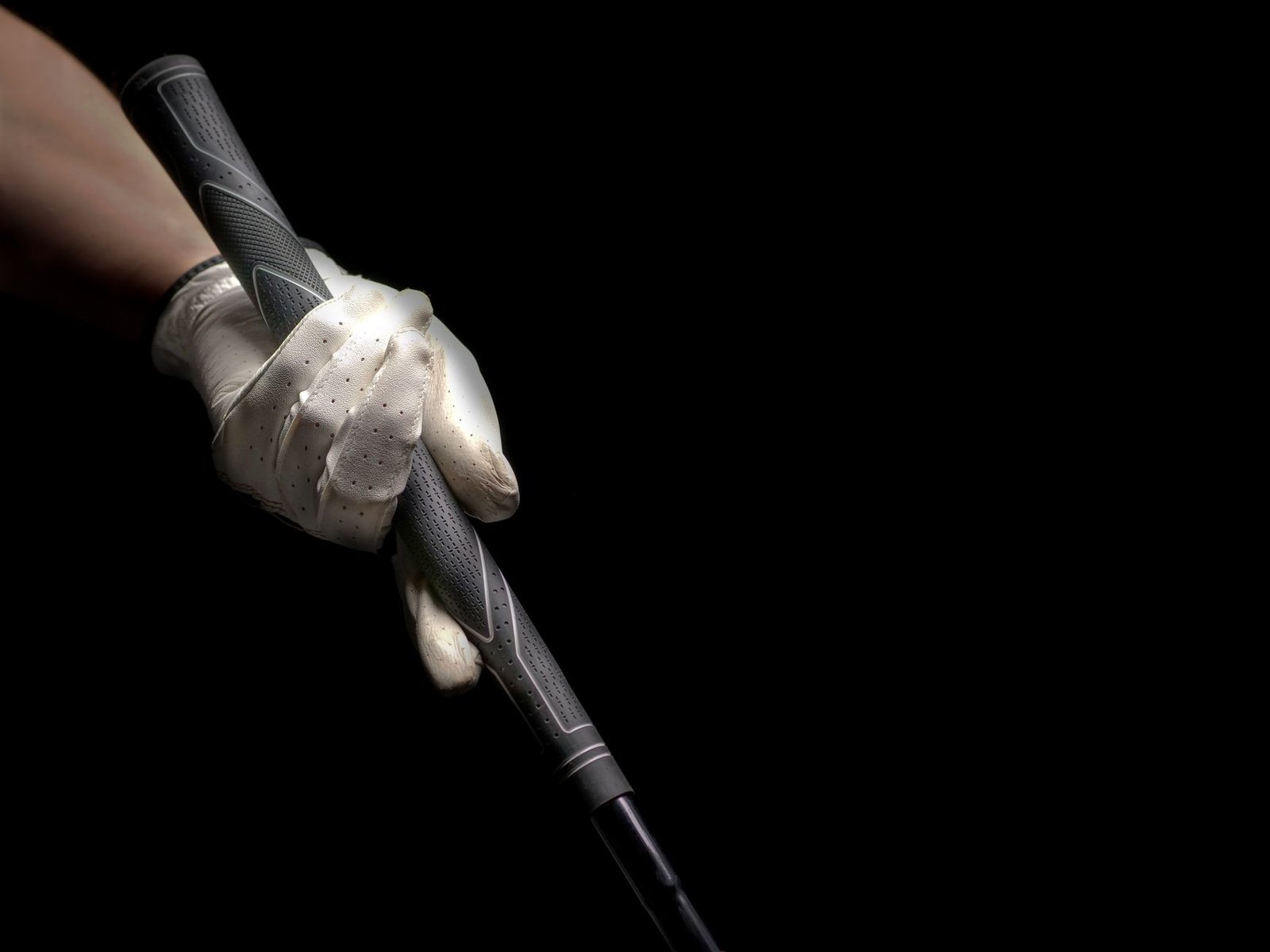
Photo by Kindel Media via Pexels
One GolfWRX poster summed up the tradeoff well, calling their MCC-style Champkey golf grips fine knockoffs — not quite as nice as the originals, but close enough that the savings make sense for a lot of golfers.
Champkey vs. Golf Pride and Lamkin: How They Actually Compare
If you’ve read our Golf Pride vs Lamkin comparison, you already know both of those brands charge a premium for decades of tour-proven materials science. Champkey isn’t trying to out-engineer either one — it’s trying to get you 80% of the way there for a fraction of the money.
On price, the gap is real. A genuine Golf Pride or Lamkin grip typically runs somewhere in the $8-$15 range per grip before you even start on tape, solvent, or labor. A 13-pack of Champkey golf grips — usually bundled with tape, solvent, a rubber vise clamp, and a hook blade — commonly sells for well under half of what the name-brand grips alone would cost, before you’ve bought a single piece of installation gear.
On durability, both brands hold up reasonably well for a season of normal play, though multiple forum reviewers note that Champkey golf grips run slightly heavier than their Golf Pride counterparts — worth knowing if you’re sensitive to swingweight changes across a full set of irons.
On traction, Golf Pride and Lamkin still edge Champkey out in wet or high-heat conditions, which tracks with what you’d expect from decades of R&D versus a newer value brand. But for dry-weather rounds and practice sessions, the difference is small enough that plenty of mid-and-high handicappers won’t notice it swing to swing.
Swingweight is the other variable worth flagging. Because Champkey grips tend to run a touch heavier than Golf Pride’s equivalent model, swapping a full set can shift your swingweight by a few points without you realizing it. That’s usually not enough to feel dramatic, but if you’re particular about swingweight — or you’ve had your clubs professionally fitted to a specific number — it’s worth weighing your old grips against the new ones before you commit to a full 13-club swap.
How Champkey Grips Held Up on the Range
I put a set of the Premium Rubber MCS-style grips on an old set of irons I keep around for lessons and testing, specifically to see how they’d hold up under repeated use. Fresh out of the box, the tack was noticeably good — close enough to a Golf Pride MCC that a few students didn’t clock the difference until I told them.
After a few weeks of daily lesson use, the surface texture started to smooth out slightly faster than I’d expect from a premium grip, which lines up with what other reviewers have reported. It didn’t become slick or unsafe, just slightly less crisp than day one. For a set that sees occasional weekend rounds rather than daily lesson-tee abuse, I’d expect that timeline to stretch out considerably.
The Champkey Grip Models Worth Knowing
Champkey’s lineup can look confusing because so many models share a similar look. Here’s how the main ones actually differ.
Traction-X is the entry-level rubber grip — a straightforward, all-rubber option built for golfers who just want reliable tack at the lowest price point in the lineup.
Premium Rubber (MCS-style) is the closest match to a Golf Pride MCC, using the three-texture rubber compound most reviewers are referring to when they compare Champkey to the “real thing.”
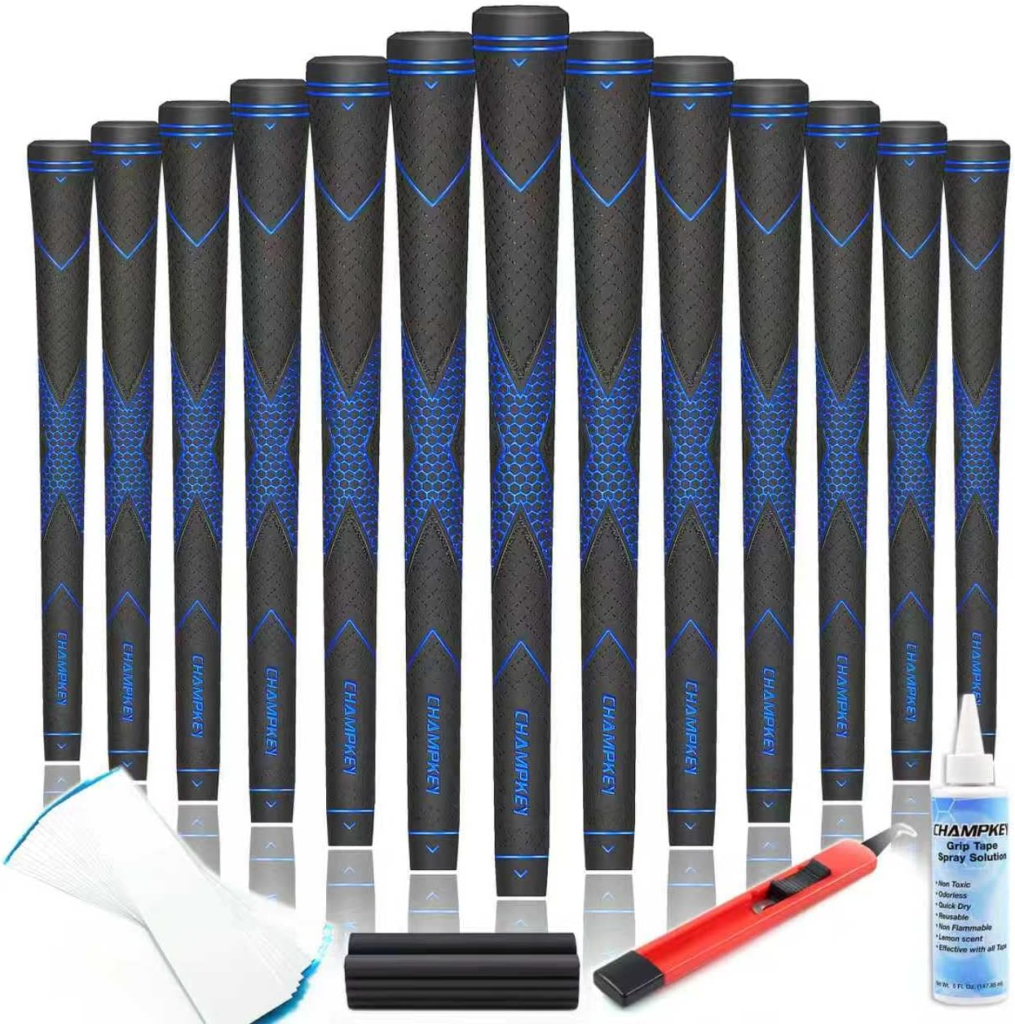
Premium Hybrid uses a half-corded construction for better all-weather traction, aimed at golfers who play through humidity, rain, or heavy sweat and want more grip security than straight rubber offers.
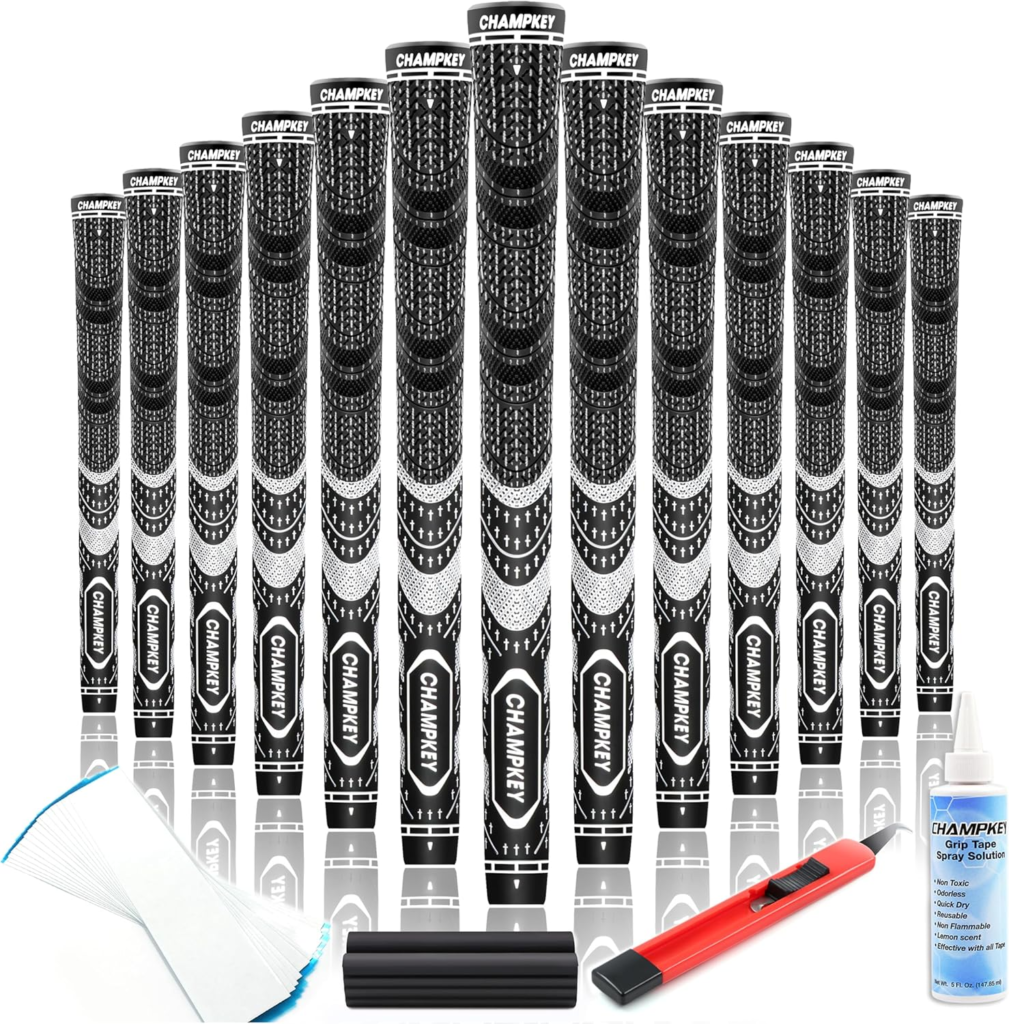
WRAP-Y leans into a wrapped, high-feedback texture for golfers who want more surface feel under their fingers, closer to a corded wrap grip than a smooth rubber one.
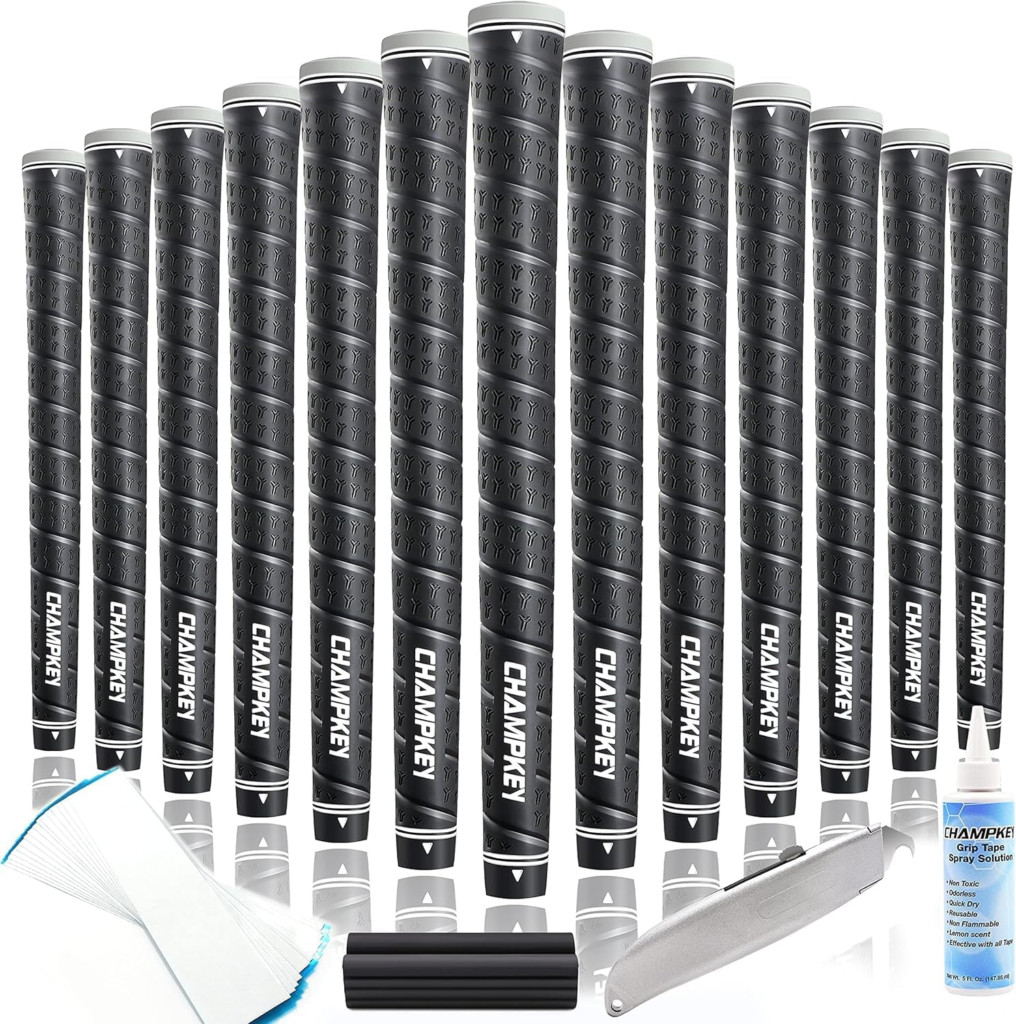
Y-PRO and Y-LITE round out the all-weather side of the lineup, both marketed around texture-control technology for control in variable conditions, with the Y-LITE positioned as the lighter-weight option of the two.
If you’re not sure which to start with, the Premium Rubber MCS-style model is the safest first purchase — it’s the one most directly comparable to the grip most of your foursome is probably already playing.
Installing Champkey Grips Yourself
Part of the appeal here is that Champkey kits almost always include everything you need for a full regripping job: 13 grips, tape, solvent, a rubber vise clamp, and a hook blade. That matters because regripping a full set professionally typically runs $110-$155 at a local shop — roughly $8-$12 per club once you add labor to the cost of the grips themselves.
Doing it yourself with a kit like this cuts that cost dramatically, often down to $35-$50 for a complete 13-club set, tools included. Budget 1-2 hours for a full bag if it’s your first time, longer if you’re being careful about alignment and cleanup.
The process itself isn’t complicated: cut off the old grip, wrap fresh double-sided tape around the shaft, soak the tape and the inside of the new grip with solvent, then slide the grip on fast before the solvent flashes off. We’ve covered whether golf grip tape can be reused if you’re trying to stretch a kit further, and it’s worth reading our breakdown on how long grips need to dry before you tee off on a freshly regripped set — rushing that step is the single most common mistake in DIY regripping.
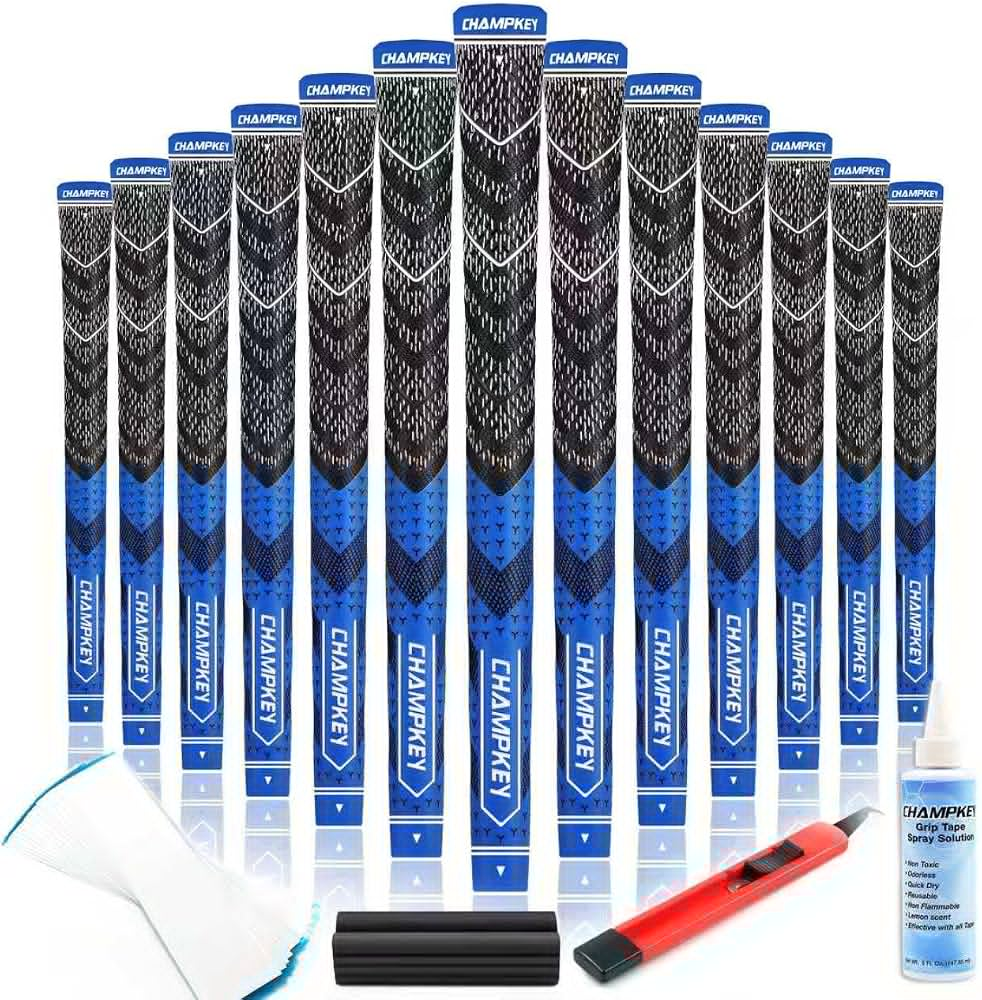
Photo by Kindel Media via Pexels
One thing worth double-checking: measure your existing grip size before ordering. Champkey sells in standard and midsize builds, and if your current grips have extra tape wraps under them for a custom fit, you’ll want to replicate that when you install the new ones or the feel will change more than you expect.
Who Should (and Shouldn’t) Buy Champkey Golf Grips
Champkey grips make the most sense for a specific type of golfer. If you’re regripping your own clubs to save money, testing whether a different taper or texture suits your hands before committing to a pricier name-brand set, or building a backup or practice bag, they’re a genuinely smart buy.
Beginners and juniors are also a good fit. You’re still figuring out your grip pressure and hand placement at that stage — there’s little reason to pay tour pricing for a grip you might replace again in a year anyway.
Where I’d steer you toward Golf Pride or Lamkin instead: if you’re a low-handicap or competitive player who’s sensitive to small changes in tack and feel, especially in hot or wet conditions, or if you’re chasing every bit of consistency you can get across a full competitive season. The gap between Champkey and the name brands is small, but it’s not zero, and at that level small gaps matter.
Photo by Kindel Media via Pexels
For everyone else — and that’s most recreational golfers — Champkey grips deliver genuinely solid performance for the price, and the savings are real enough to notice.
Frequently Asked Questions
Are Champkey golf grips any good?
Yes, for the price point. They won’t fully match the tack and weather performance of a genuine Golf Pride or Lamkin grip, but most recreational golfers find the gap small enough not to matter, especially for dry-weather play.
Are Champkey grips a knockoff of Golf Pride?
Several of their models, particularly the MCS-style Premium Rubber line, closely mirror the look, feel, and texture pattern of Golf Pride’s MCC grips. Champkey doesn’t market itself that way officially, but the resemblance is well documented across golf forums and reviews.
How long do Champkey grips last?
With regular play, expect a season or two of solid performance before the surface starts to smooth out and lose tack — similar to most mid-tier rubber grips. Heavy year-round players may notice wear a bit sooner than with premium name-brand grips.
Can you install Champkey grips yourself?
Yes, and most kits come with everything you need — tape, solvent, a vise clamp, and a hook blade. A full 13-club set typically takes 1-2 hours for a first-timer, and the savings over professional installation are significant.
Do Champkey grips work in wet weather?
The corded and half-corded models (Premium Hybrid, WRAP-Y) handle moisture reasonably well, though reviewers consistently note that genuine Golf Pride MCC Plus4 grips still edge them out once hands get seriously sweaty or wet.
Are Champkey grips worth it for beginners?
Very much so. Beginners are still developing grip pressure and hand placement preferences, and there’s little value in spending tour-level money on grips you may want to change again within a year or two.
What size Champkey grip should I buy?
Match whatever size your current grips are — standard or midsize is what most golfers play. If your existing grips have extra tape wraps underneath for a custom fit, replicate the same number of wraps when you install the new ones, or the diameter will feel noticeably different than what you’re used to.
Final Thoughts
Champkey golf grips aren’t trying to be the best grip on the market, and they don’t need to be. They’re trying to get budget-conscious golfers 80-85% of the way to a premium feel for a fraction of the cost, and based on the materials, the forum feedback, and what I’ve felt firsthand, they mostly deliver on that promise.
If you’re a weekend player regripping your own clubs, testing a new taper before committing to something pricier, or outfitting a practice or backup set, buy with confidence. If you’re chasing every last bit of consistency in competitive play, the small gap in tack and weather performance is worth paying the name-brand premium to close.
FAQ: Champkey Golf Grips
Are Champkey grips actually good, or just a cheaper alternative? For the price, Champkey grips perform well above their price point — tackiness and feel are close to mid-tier Golf Pride or Lamkin options, though long-term durability tends to fall off a bit sooner with heavy play.
How do Champkey grips compare to Golf Pride or Lamkin? Champkey is a budget-friendly alternative rather than a direct performance replacement — Golf Pride and Lamkin generally win on longevity and consistency across a full set, while Champkey wins on value if you’re regripping often or on a tight budget.
Can I install Champkey grips myself? Yes — they use standard grip tape and solvent installation just like any other grip brand, so any golfer comfortable with a regripping kit can install them at home.
How long do Champkey grips typically last? With regular play, expect roughly one season of consistent tackiness before they start to glaze over — similar to other budget grip lines, though results vary with climate and how often you clean them.
Related reading: Golf Pride vs Lamkin Grips, Best Golf Grip for Big Hands, and Types of Golf Grips: A Complete Guide.