In this Article
Most golf cart tires last about 3 to 6 years, or roughly 4,000 to 8,000 miles, but pressure, load, terrain and storage can cut that short. Here's how to read your tires and know when to replace them.
If you’re asking how long do golf cart tires last, the honest answer is somewhere between three and six years for most carts, or roughly 4,000 to 8,000 miles of driving. That’s a wide range, and where you land inside it depends far more on how you treat the tires than on the brand printed on the sidewall.
I’m Andrew James, and I’ve spent seven years teaching golf in Chicago. I’ve also watched a lot of club carts roll through our cold winters, and the tire problems I see are almost always the same few things. Low pressure, sun damage, and carts that sit for months without moving.
In this guide you’ll get realistic lifespan numbers, the five signs a tire is done, the PSI targets that matter, and a short list of habits that can stretch a set by a couple of years.
Table of Contents
How Long Do Golf Cart Tires Last? The Short Answer
Standard bias-ply golf cart tires typically last 3 to 6 years. In mileage terms, that works out to about 4,000 to 8,000 miles, with radial tires generally outlasting bias-ply construction.
Years and miles tell two different stories, and both matter. A cart that does 20 miles a week on a flat course will wear tread slowly, but the rubber still ages in the sun. A cart that hauls passengers up hills every day can chew through a set in under three years.
So don’t wait for a calendar date. Check the tread and the sidewalls twice a year, and replace based on what you see.
What Actually Decides Tire Life
Four things do most of the damage, and you control all of them.
Tire pressure
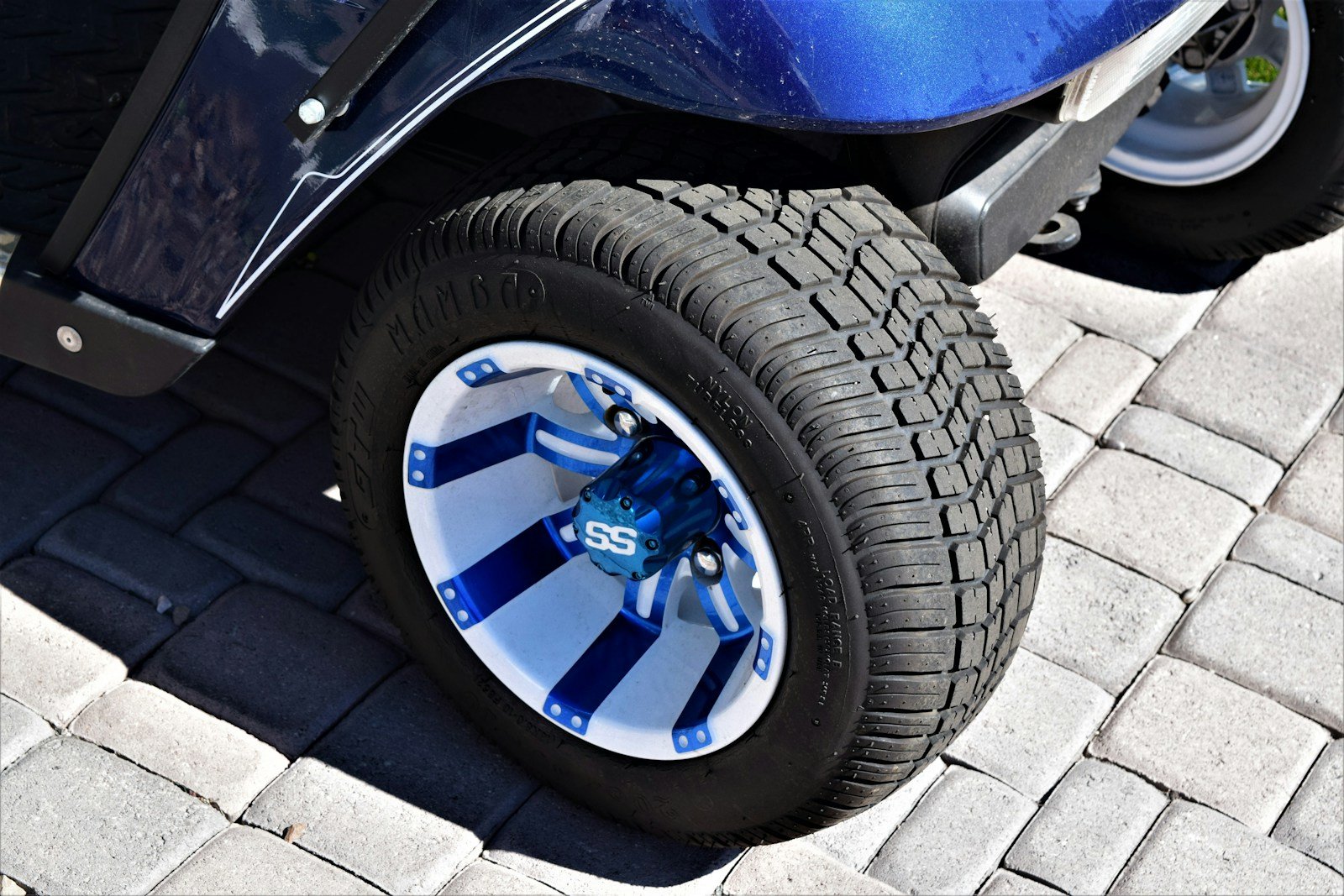
Pressure is the biggest single variable. Underinflated tires run hotter and wear unevenly on the shoulders, while overinflated tires wear down the center and are more likely to fail in hot weather.
Tires also leak slowly on their own. One supplier notes a pound or more of air can be lost every month through the rubber itself, so a tire you filled in spring can be several PSI low by summer.
Load and terrain
Overloading a cart past its weight rating builds heat and stress in the sidewalls. Rough ground matters too. Gravel, dirt paths and cart paths with broken edges wear tires faster than smooth pavement or fairway turf.
Sun and storage
UV light and temperature swings slowly harden rubber and cause dry rot. A cart parked outside all year ages its tires faster than one kept in a garage, even if neither moves much.
Alignment and driving habits
Bad toe or camber wears the inside or outside edge of a tire long before the center tread is gone. Hard stops, tight turns at speed and clipping curbs add to it. One tire retailer estimates that simply dodging potholes and impacts can add about 1,000 miles to a set.
How Long Do Golf Cart Tires Last for Different Kinds of Use?
Where the cart lives changes the math more than most owners expect. Here’s how I’d frame it.
Course and club fleet carts rack up miles quickly and spend a lot of time on paved cart paths. They often wear through a set faster than a private cart, simply because they never rest. Courses usually replace tires on a schedule based on tread, not age.
Neighborhood and street carts see steady pavement driving, which is hard on soft turf rubber but easy on a proper street tire. These carts tend to wear tread evenly, so age and dry rot often end the tire’s life before the tread does.
Utility and hunting carts carry heavy loads over gravel, dirt and brush. Expect cuts, punctures and sidewall damage to be the bigger problem, so inspect those tires more often than you would on a weekend course cart.
Carts that barely move are the surprise. A second cart that sits in the yard can age out in a few years without ever wearing its tread. If you’re wondering how long do golf cart tires last when the cart is mostly parked, the answer is closer to the low end of the range, because the sun and weather keep working on the rubber.
Lifespan by Tire Type
The type of tire you run changes both the lifespan and the right pressure. These are general ranges, so always check the sidewall of your own tire first.
| Tire type | Typical PSI | Best for | Lifespan outlook |
|---|---|---|---|
| Factory sawtooth (18×8.50-8) | 18-22 | Course use, mixed ground | Around 3-5 years with good care |
| Street / turf | 20-24 | Neighborhood and paved roads | Around 4-6 years, tread wears slowly |
| All-terrain | 18-20 | Dirt, gravel, hunting land | Around 3-5 years, more sidewall abuse |
| Full turf | 20 | Fairways and soft ground | Gentle on turf, wears quickly on pavement |
The PSI ranges come from Golf Cart Tire Supply’s tire pressure guide. The lifespan outlooks are my own rule-of-thumb estimates, not manufacturer guarantees, so treat them as a starting point.
5 Signs It’s Time to Replace Your Tires
Knowing how long golf cart tires last on paper is useful, but the tire itself is the final word. Walk around the cart and look for these five things.
1. Tread below 3/32 of an inch
Use a tread depth gauge in a few spots across the tire. Once you’re at or below 3/32 of an inch, traction on wet grass and slopes drops off quickly, and your braking distance grows.
2. Dry rot cracking
Fine, spider-web cracks in the sidewall or between the tread blocks mean the rubber is breaking down from UV and age. A tire can have plenty of tread left and still be unsafe if it’s dry rotted.
3. Bulges, deep cuts or punctures
A bulge in the sidewall means the internal structure has failed. Replace the tire right away. Deep cuts and sidewall punctures can’t be repaired reliably either.
4. Uneven wear
If one shoulder is bald and the other looks new, the cause is usually alignment or chronic low pressure. Replace the tire, then fix the cause, or you’ll repeat the problem on the new set.
5. Vibration or pulling
A new shake through the steering wheel, or a cart that drifts to one side on a flat path, can point to a damaged or separating tire. Inspect all four before blaming the steering.
How to Make Golf Cart Tires Last Longer
You can realistically add a year or two with a few cheap habits. None of them take more than ten minutes.
- Check pressure every four weeks. Use a quality personal gauge on cold tires, not the worn-out gauge at a gas station, and match the PSI to your tire type.
- Rotate when sizes allow. If all four tires are the same size and the tread isn’t directional, swapping front and rear evens out wear. Some carts run different front and rear sizes, so check before you swap.
- Respect the weight limit. Don’t treat the cart like a pickup. Extra passengers and gear add heat and wear.
- Protect the sidewalls. A UV-protectant tire dressing helps slow sun damage on carts that live outside.
- Get the alignment checked if you see edge wear or the cart pulls.
Storage matters just as much as driving. A cart that sits for months on soft, underinflated tires can develop flat spots, and cold weather makes it worse. Our guide to storing a golf cart for winter covers inflating the tires and getting the weight off them before the first freeze.
Hills are the other tire killer. Drive trains work harder on slopes and the drive tires scrub more, which is one reason our pick for the best golf cart for hills comes down to more than motor power alone.
How to Check How Old Your Golf Cart Tires Are
Tread tells you about wear, but not about age. If you bought the cart used, you may not know how old the tires really are.
Look on the sidewall of a DOT-rated tire for a code that starts with DOT. The last four digits are normally the week and year it was made, so 2321 would mean the 23rd week of 2021. Not every golf cart tire carries one, and cheaper turf tires often don’t, so if you can’t find a code, judge the tire by its sidewall condition instead.
As a simple rule, any golf cart tire that’s pushing six years old deserves a close look, even if it looks fine from across the garage. Squeeze the sidewall area with your thumb and check for hardness or tiny cracks near the bead and tread grooves.
Replacement Cost and What to Buy
Prices vary a lot by size, brand and whether you buy tires only or tire-and-wheel assemblies. As a rough budget, plan on somewhere around $50 to $150 per tire for common turf and street sizes, more for low-profile street tires or new wheels. Prices move, so check current listings before you order.
Buy for how you actually use the cart. Turf tires are kind to fairways but wear fast on pavement, while street tires last longer on asphalt but can tear up soft turf. If you plan to drive on public roads, look into the rules in our guide on how to make a golf cart street legal, since tire requirements can be part of it.
Replace tires in pairs at minimum, and ideally all four. Mixing a new tire with a badly worn one changes the rolling diameter and can make the cart handle oddly.
FAQ
How many years do golf cart tires last?
Most last 3 to 6 years. Carts stored outside in strong sun, or run at low pressure, tend to land at the short end of that range.
How many miles do golf cart tires last?
Roughly 4,000 to 8,000 miles depending on tire type, terrain and driving style. Radial tires usually go farther than bias-ply tires.
What PSI should golf cart tires be?
It depends on the tire. Common targets are 18 to 22 PSI for factory sawtooth tires, 20 to 24 for street and turf tires, and 18 to 20 for all-terrain tires. The sidewall of your tire is the final authority.
Can golf cart tires dry rot?
Yes. Tires that sit in the sun or go unused for long stretches develop fine cracks in the sidewall and tread grooves. Cracked tires should be replaced even if the tread looks deep.
Should I replace all four golf cart tires at once?
It’s best. At minimum replace them in pairs on the same axle so both sides match.
Final Thoughts
So, how long do golf cart tires last? Plan on three to six years, and let the tread depth and sidewall condition make the real call. Keep the pressure right, keep the cart out of the sun when you can, and a set of tires can quietly go the distance.