In this Article
Standard clubs are built for a 5'7" golfer. Here's what actually makes a golf club petite, the specs that matter, and which petite women's golf club sets are worth buying in 2026.
If you’re 5’3″ or under and you’ve ever finished a round feeling like you were wrestling your driver instead of swinging it, the problem probably isn’t your technique. It’s that you’re playing clubs built for a golfer four to six inches taller than you. The best petite women’s golf clubs fix that mismatch directly, with shorter shafts, lighter overall weight, and grips sized for smaller hands, and the difference in contact and control usually shows up in the first few swings. I see it constantly with students at my own club: a properly sized set does more for a short golfer’s ball-striking than another six months of lessons ever could.
This guide walks through what actually makes a golf club “petite,” the specs worth paying attention to when you shop, which sets are genuinely built for shorter golfers rather than just relabeled, and how to get properly fit if you’d rather skip the guesswork entirely.
What Makes a Golf Club “Petite”?
Standard women’s golf clubs are built around a 5’7″ golfer. If you’re 5’3″ or shorter, that length works against you before you even take the club back. Petite women’s golf clubs are typically built one to two inches shorter than standard, with lighter shafts and smaller grips to match a smaller frame, not just a shorter one.
Most manufacturers draw the petite line at 5’3″ and under, though a few go a step further. Callaway’s Reva set, for example, offers a standard petite length plus an even shorter build for golfers 5’1″ and under, according to Golf Monthly’s petite golf club buying guide. If you fall right around that 5’3″ boundary, don’t assume standard length is close enough. A one-inch difference changes your posture at address more than most golfers expect.
Signs Your Current Clubs Are Too Long
A few tell-tale signs show up long before you’d think to blame your equipment. Here’s what to watch for on your own scorecard and at address.
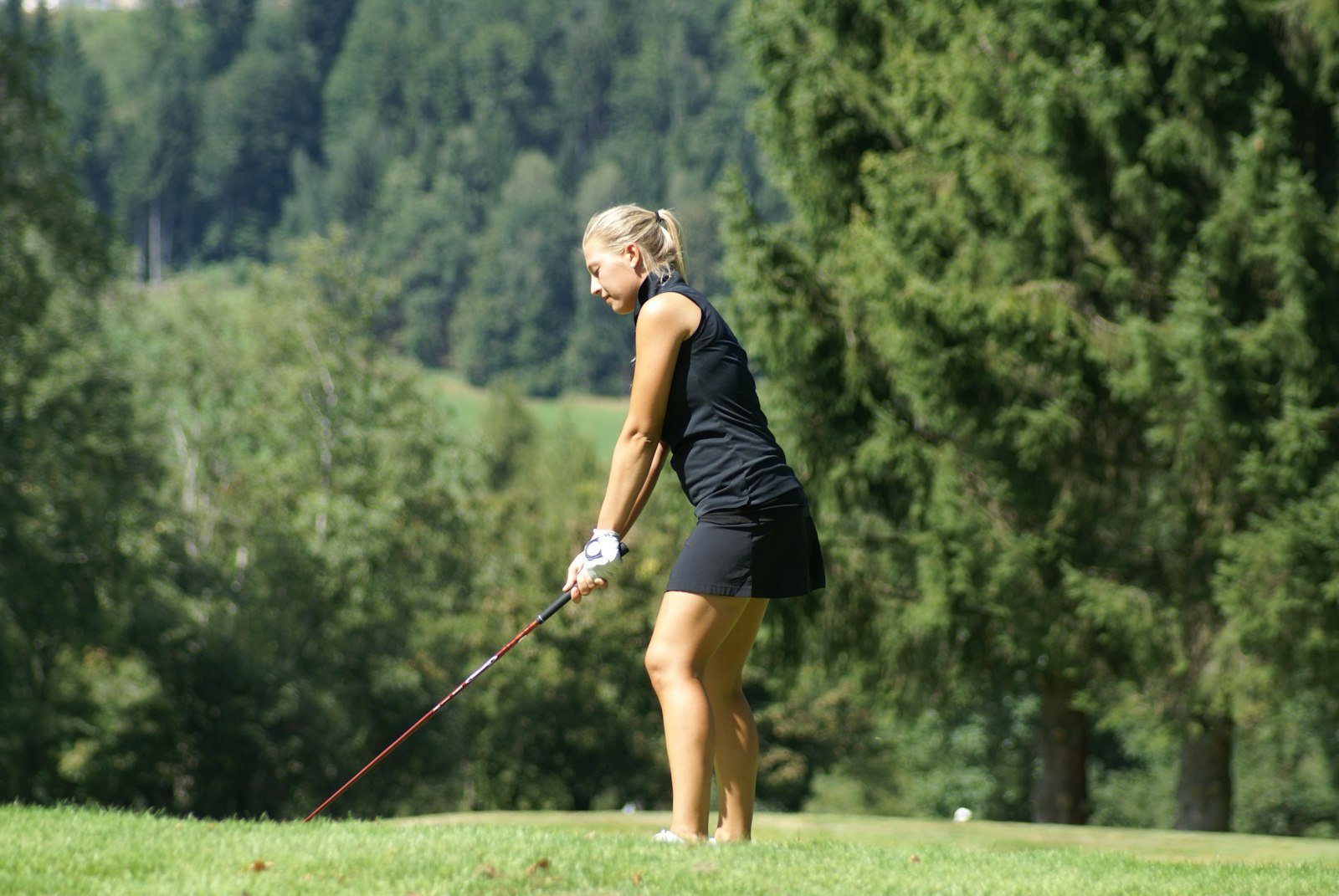
- Upright posture with little spine tilt. Clubs that are too long push you to stand taller at address instead of bending naturally from the hips.
- Reaching for the ball. If your arms are stretched out in front of you rather than hanging down naturally, the shaft is too long for your frame.
- Inconsistent contact. Heel or toe strikes that seem to happen at random are often a length and lie angle problem, not a swing flaw.
- Fatigue late in the round. Extra shaft length adds weight, and that weight adds up over 18 holes.
What to Look for in the Best Petite Women’s Golf Clubs
Once you know you need a shorter set, a handful of specs separate a genuinely petite-built club from a standard women’s club that just happens to be a little lighter.
Shaft Length
Petite golf clubs typically run 33 to 35 inches across the set, compared to a standard women’s driver at roughly 44 inches. That one-to-two-inch reduction sounds small on paper, but it changes where the clubhead meets the ground at address, which is exactly what fixes the posture and reach problems above.
Shaft Flex and Weight
Nearly every set of petite women’s golf clubs ships with a lightweight, ladies-flex graphite shaft, and for good reason. A softer, lighter shaft is easier to load and release at a moderate swing speed, which helps the ball get airborne without extra effort. The same principle behind lighter shafts helping generate more speed with less effort is the reasoning behind why swing weight for senior golfers gets adjusted separately from shaft flex, since total weight and weight distribution affect the swing in different ways.
If you carry a faster swing speed for your size, a standard petite ladies-flex set can actually feel too whippy. In that case, it’s worth asking a fitter about a stiffer shaft built into a shorter, lighter head instead of assuming softer is always better.
Grip Size
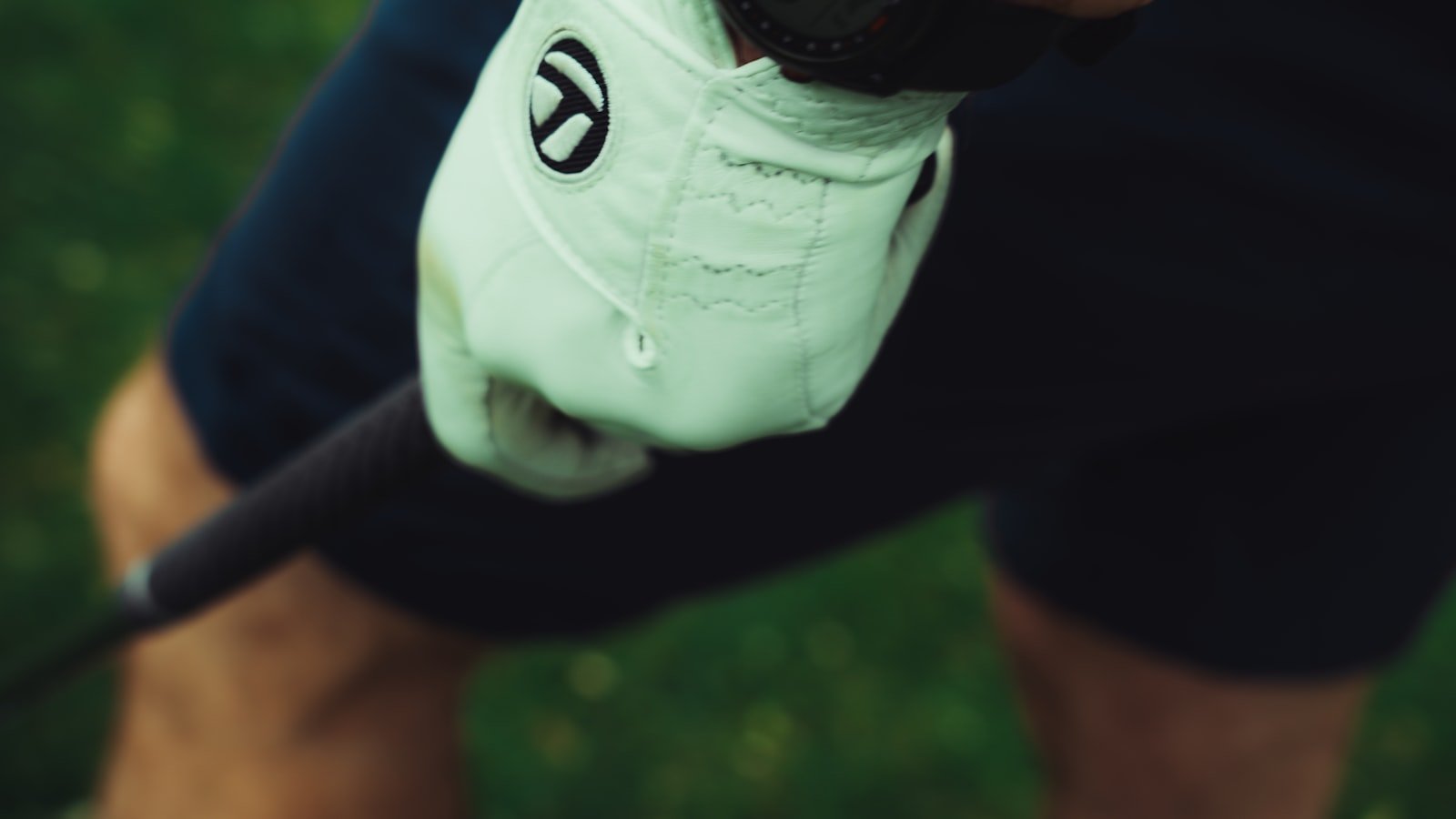
Grip size gets overlooked constantly, and it matters just as much as shaft length. A grip that’s too thick for a smaller hand reduces feel and encourages an overly active grip pressure, which shows up as inconsistent contact even when the shaft length is right. It’s the same sizing principle in reverse as fitting a golf grip for big hands, just working in the other direction toward a smaller, standard or “ladies” grip diameter.
Golf Pride’s official grip sizing chart is a quick, free way to cross-check what you’re buying against your glove size before you commit to a full set.
Club Set Makeup
A well-built set of petite women’s golf clubs should cover distance, gapping, and short game without obvious holes in the bag. At minimum, look for:
- A driver with 11-14 degrees of loft to help get the ball airborne at a moderate swing speed
- One or two fairway woods for tee shots and long approaches
- One or two hybrids to replace hard-to-hit long irons
- Mid and short irons, typically 6 or 7 through pitching wedge
- A sand wedge with a wide, forgiving sole
- A putter sized to match your height as well, not just the rest of the bag
Some brands also build their petite sets across sizing tiers the same way left-handed women’s golf clubs get offered in petite, standard, and tall lengths, so check whether petite is a genuine separate build for a given set or just a marketing label on the standard one.
Best Petite Women’s Golf Club Sets for 2026
Here’s where those specs actually show up on the shelf. These are the sets that consistently come up as genuinely built for petite golfers rather than a standard set with a shorter sticker.
Callaway Reva 11-Piece — Best Overall
The Reva is one of the most popular petite-friendly sets on the market, and for good reason: it’s available in a standard petite length plus a shorter build for golfers 5’1″ and under. The set includes eleven clubs from driver to putter, with lightweight graphite shafts throughout and an Odyssey Stroke Lab putter that punches above the set’s price point.
Cobra Fly-XL Complete Set — Best Lightweight Build
The Fly-XL leans hard into lightweight construction across the whole bag, aimed at generating clubhead speed without extra effort. It’s a strong option if you’ve tried a standard-weight set before and felt it wearing you down by the back nine.
Wilson Magnolia — Best for Beginners
The Magnolia set includes a high-lofted driver, 3-wood, 4-6 hybrids, mid irons through sand wedge, a putter, and a lightweight trolley bag. The hybrids in particular are worth noting: strong lofts and low head weighting make them versatile out of the rough, which matters more for shorter hitters who need every bit of forgiveness they can get.
Precise M5 — Best Ultra-Lightweight Option
The Precise M5 is engineered to be as light as possible without sacrificing durability, making it a solid pick for petite players who want to generate more clubhead speed without extra effort. It won’t match the feel of a premium set, but it’s a genuinely easy set to swing all day.
Ping G Le3 — Best Custom-Fit Route
Ping doesn’t sell an off-the-shelf petite complete set, but the G Le3 line is worth a mention because Ping’s fitting program is genuinely excellent. The G Le3 driver is built for swing speeds under 80 mph at a standard length of 44 3/4 inches, and Ping will cut it down and reshaft it to your exact measurements through a fitter. If you’d rather buy piece by piece and get every club dialed in, this is the route to take instead of a package set.
Petite Clubs vs. Junior Clubs: Which Should You Buy?
Junior golf clubs come up a lot in petite golfer forums, and they can genuinely work, especially as a cheaper starting point while you find out if the game is going to stick. Sets built around junior sizing, like the Ping Prodi G, are well made and Ping will send them back for a shaft swap as your game develops.
The catch is that junior clubs are generally built around a lighter, still-developing swing rather than an adult swing speed, even a moderate one. That can leave you underclubbed on distance and feeling like the clubhead is too light to control through impact. If you’ve been playing for a season or more and know the game is sticking, a genuine set of petite women’s golf clubs is almost always the better long-term buy over a junior set stretched past its intended use.
Getting Properly Fit: Why Height Isn’t the Whole Story
Height gets you in the right neighborhood, but it’s not actually the measurement that determines the correct shaft length. That’s your arm hang, the distance from your wrist to the floor when you’re standing naturally. Two golfers who are both 5’2″ can have noticeably different arm-hang measurements depending on their proportions, and that number is what a real fitting is built around.
Arm hang also determines your lie angle, the angle between the shaft and the ground at rest. Get it wrong and your shots will tell you before a fitter does. Divots that are deeper at the heel and point left usually mean your clubs are too upright for you, while deeper toe divots pointing right mean they’re too flat. A proper fitting checks this dynamically on a lie board, but reading your own divots is a decent free diagnostic in the meantime.
A local PGA professional fitting often runs anywhere from free to around $100, especially when it’s bundled with a purchase. It’s worth the cost if you’re buying a new set anyway, since a fitter nails down length, lie angle, shaft flex, and grip size together instead of guessing at each one separately.
Frequently Asked Questions
What height counts as “petite” for golf clubs?
Most brands define petite as 5’3″ and under, though a few, including Callaway’s Reva line, offer an even shorter build for golfers 5’1″ and under. If you’re right on the 5’3″ line, try both standard and petite before assuming either fits.
What happens if a petite golfer uses standard-length clubs?
Standard clubs push you into an overly upright posture with little spine tilt, which leads to reaching for the ball, inconsistent contact, and a real loss of control off the tee. None of that is a swing flaw. It’s a length mismatch.
Can junior golf clubs work for a petite adult woman?
They can, especially as a low-cost starting point for beginners. But junior clubs are generally built around a lighter, still-developing swing, not an adult swing speed, so most petite adult golfers outgrow them fairly quickly once the game sticks.
How much shorter are petite golf clubs than standard?
Typically one to two inches shorter than a standard women’s set, putting most petite clubs in the 33 to 35 inch range depending on the specific club and brand.
Is height the only thing that determines the right club length?
No. Arm hang, the distance from your wrist to the floor when standing naturally, is the more precise measurement, since two golfers of the same height can still need different shaft lengths and lie angles.
How do I know if my lie angle is right?
A fitter can test it dynamically on a lie board, but you can get a rough read yourself from your divots. Heel-deep divots pointing left usually mean your clubs are too upright; toe-deep divots pointing right usually mean they’re too flat.
The Bottom Line
The best petite women’s golf clubs aren’t just a shorter sticker on a standard set. They’re built around shorter shafts, lighter weight, and grips sized for a smaller hand, matched to your actual arm hang rather than height alone. Get those specs right, whether through a full set purchase or a proper fitting, and you’ll likely see cleaner contact and more control than another season of fighting equipment that was never built for your frame.
Where to Shop
Affiliate links – we may earn a small commission at no extra cost to you, and it never changes what we recommend.
- Petite women’s complete golf club sets
- Lightweight women’s drivers
- Undersize golf grips
- Junior golf club sets