In this Article
A practical, spec-first guide to the best golf clubs for seniors in 2026: the shaft flex, loft, and forgiveness that actually matter, plus which sets and models are worth buying.
If you’ve noticed your driver feels heavier than it used to, or your irons just don’t launch the way they did a decade ago, the fix usually isn’t more practice. It’s your equipment. Finding the best golf clubs for seniors comes down to matching a handful of specs, shaft flex, loft, weight, and forgiveness, to the swing you actually have today, not the one you had at 40. I see this play out with students at my own club constantly: a simple equipment change adds real distance and consistency without a single swing lesson.
This guide walks through exactly what changes about your swing as you age, what specs actually matter when you’re shopping, which sets and models are worth your money in 2026, and how to get properly fit without overspending.
Why Your Swing Needs Different Clubs as You Age
Swing speed drops steadily with age, and it’s not subtle. A strong amateur in his 30s or 40s might carry a driver swing speed of 95-110+ mph. For golfers in their 60s and 70s, that number typically falls to somewhere between 65 and 85 mph, according to swing speed data broken down by age. That’s not a small gap. It changes how a club needs to be built from the ground up, not just the flex sticker on the shaft.
A slower swing speed means the ball launches lower, spins less, and doesn’t carry as far unless the equipment compensates. Standard men’s clubs, built around 90+ mph swing speeds, work against you at this point. They’re too stiff to load properly, too heavy to swing at full speed by the back nine, and too low-lofted to get the ball airborne efficiently. None of that is a swing flaw. It’s a mismatch between the club and the golfer holding it.
The good news is that equipment technology has gotten a lot better at closing that gap. Modern senior-flex shafts, oversized forgiving heads, and higher-lofted drivers can add real yards back and tighten your dispersion, often more than another round of lessons would. That’s exactly why the best golf clubs for seniors look meaningfully different from a standard men’s set, not just lighter, but built around a completely different swing profile.
What to Look for in the Best Golf Clubs for Seniors
Every senior-friendly set worth buying gets a handful of specs right. Here’s what actually matters, in the order I’d prioritize them if you’re shopping today.
Shaft Flex and Weight
Shaft flex is the single most overlooked spec in senior club fitting. If your driver swing speed sits under 85 mph, a senior-flex (sometimes labeled “A” or “L” flex) shaft is almost always the right call over a regular or stiff flex. A shaft that’s too stiff for your swing speed won’t load and release properly, which kills both distance and feel.
Weight matters just as much as flex. Senior graphite shafts typically run 55-80 grams for irons and 40-60 grams for drivers, compared to 105-130 grams for a standard steel iron shaft. That lighter weight isn’t just about comfort late in the round. Counterintuitively, a lighter shaft often adds distance, since the energy transferred to the ball comes from clubhead speed, not the total weight of the club. A lighter shaft you can swing faster usually outperforms a heavier one swung slower.
Driver and Fairway Wood Loft
Most senior golfers are playing far too little loft on their driver. Younger, faster-swinging players use 9-10.5 degrees. At 65-85 mph swing speeds, 12-14 degrees of loft is usually the sweet spot, since higher loft gets the ball airborne earlier and maximizes carry distance at a slower clubhead speed. If your current driver is still the 9.5-degree head you bought fifteen years ago, that mismatch alone could be costing you 15-20 yards.

Forgiveness: Cavity Backs, Wide Soles, and Perimeter Weighting
Forgiveness matters more than raw distance for most senior golfers, and it’s the spec that gets ignored most often in favor of distance marketing. Cavity-backed irons, wide soles, and perimeter weighting all work together to reduce the distance and accuracy penalty when you catch a shot thin, toward the toe, or a groove low. A larger, more forgiving clubhead with a higher moment of inertia (MOI) keeps mishits playable instead of turning them into a scramble for bogey.
This is where a lot of senior golfers make the wrong call. They chase the “longest” driver or the “hottest” iron on the shelf instead of the most forgiving one, and end up frustrated by inconsistent contact instead of thrilled with a few extra yards on their best swing.
Hybrids Instead of Long Irons
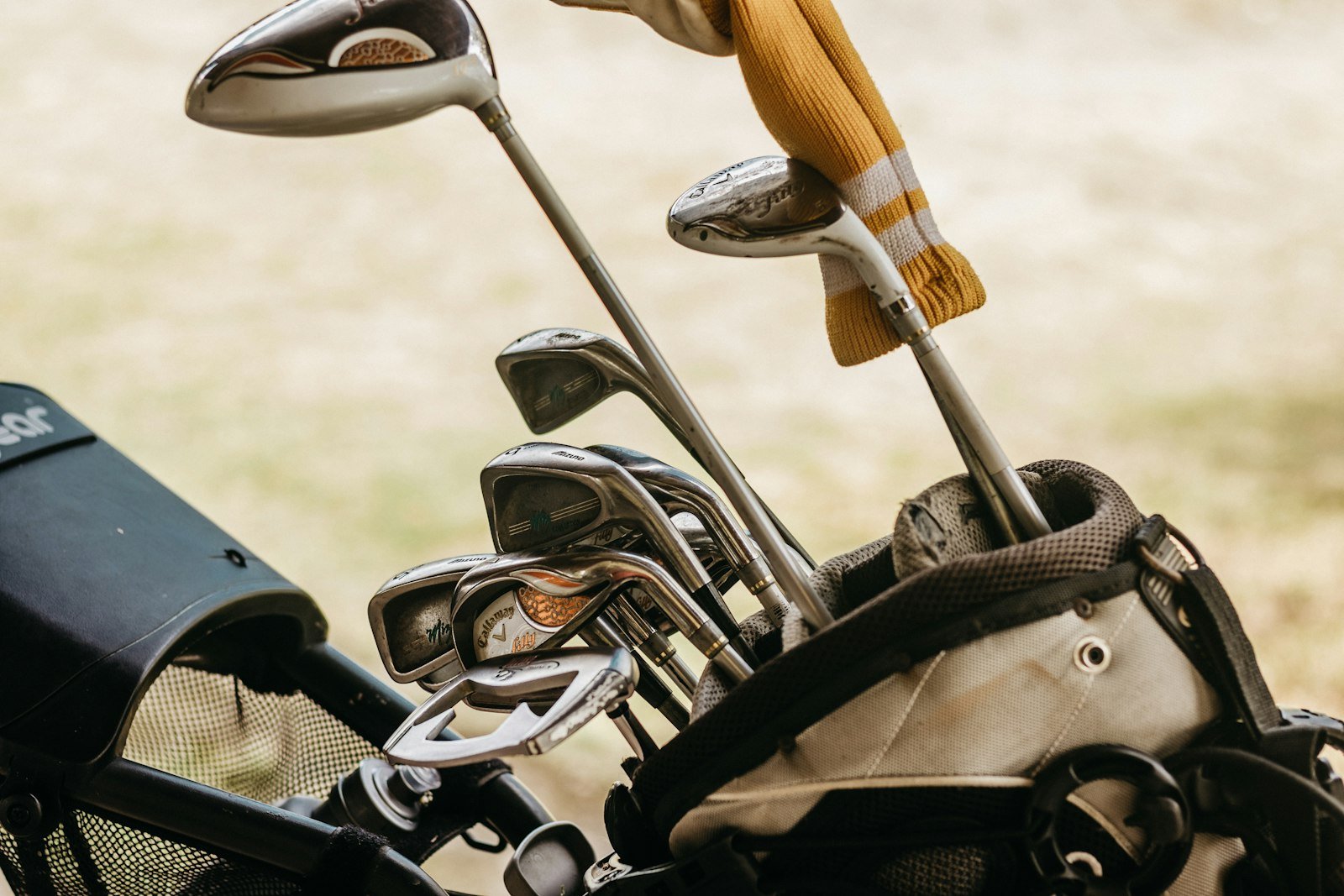
Long irons, your 3, 4, and even 5-iron, are genuinely hard to hit well at any swing speed, and they get harder as clubhead speed drops. Swapping them for hybrids is one of the highest-value changes a senior golfer can make. Hybrids launch higher, land softer, and forgive off-center strikes far better than a long iron with the same loft. Most of the best golf clubs for seniors on the market today replace the 3-iron through 5-iron entirely with a 3-hybrid and 5-hybrid, and keep the shorter irons where they’re easier to control.
Swing Weight
Swing weight, how the club’s weight is distributed rather than its total weight, is a spec most golfers never think about until it’s wrong. Most fitters start senior golfers in the C8 to D1 range for a driver, noticeably lighter than the D2-D4 range built for faster swingers. Get this wrong in either direction and you’ll feel it: too heavy and you’ll fatigue early with an open clubface at impact, too light and you’ll lose feel for where the clubhead is mid-swing. For a full breakdown of the numbers and how to adjust it without buying new clubs, see our guide to swing weight for senior golfers.
Best Golf Club Sets and Models for Seniors in 2026
Here’s where the specs above actually show up on the shelf. These are the sets and models that consistently come up as strong, purpose-built options rather than a repainted standard set.
Callaway Strata Complete Set — Best Overall Value
The Strata Complete Set is a consistent recommendation for seniors who want one purchase that covers the whole bag. It typically includes a 460cc titanium driver, 3-wood, 5-wood, 4 and 5-hybrid, 6-through-PW irons, a putter, stand bag, and headcovers, all built around forgiving, game-improvement designs. It won’t outperform a fully custom-fit premium set, but the balance of quality, forgiveness, and price is hard to beat for most senior golfers.
Wilson Profile SGI Senior Set — Best Budget Option
Wilson’s Profile SGI ships with a senior-flex graphite shaft in every club and a low center of gravity built into the clubheads specifically to help slower swings launch higher. It’s not the most refined feel on this list, but it’s dependable, genuinely forgiving, and priced well below the premium options.
Cobra Fly-XL Complete Set — Best Lightweight Build
The Fly-XL leans hard into lightweight construction across the whole set, aimed squarely at generating clubhead speed without extra effort. It’s a strong option if you’ve already tried a heavier set and felt it wearing you down by the back nine.
Ping G440 / G740 Irons — Best If You Want to Buy Piece by Piece
If you’d rather upgrade individual clubs instead of a whole set, Ping’s G740 is a super game-improvement iron built for maximum forgiveness, while the G440 offers similar forgiveness in a cleaner-looking package for golfers who don’t want their irons to look overtly “game-improvement.” Both pair well with a senior-flex graphite shaft and are worth a look through a proper club fitter rather than off the rack.
Tour Edge Bazooka 370 Senior Set — Best for Beginners and Returning Players
If you’re a senior golfer just picking up the game or coming back to it after years away, the Bazooka 370 keeps things simple: forgiving heads, senior-flex shafts, and a price point that doesn’t ask you to commit real money before you know the game is going to stick.
If You’re Not Replacing the Whole Bag: What to Upgrade First
Not every senior golfer needs, or wants, to replace an entire set at once. If budget is a factor, upgrade in this order for the biggest impact per dollar.
Driver first. It’s the club where loft and shaft weight mismatches cost you the most distance, and a modern 12-14 degree driver on a lightweight senior shaft is often the single biggest improvement you can buy.
Long irons second, replaced with hybrids. If your bag still has a 3-iron and 4-iron gathering dust, swapping them for hybrids is a near-guaranteed improvement in both distance and consistency, especially from the rough.
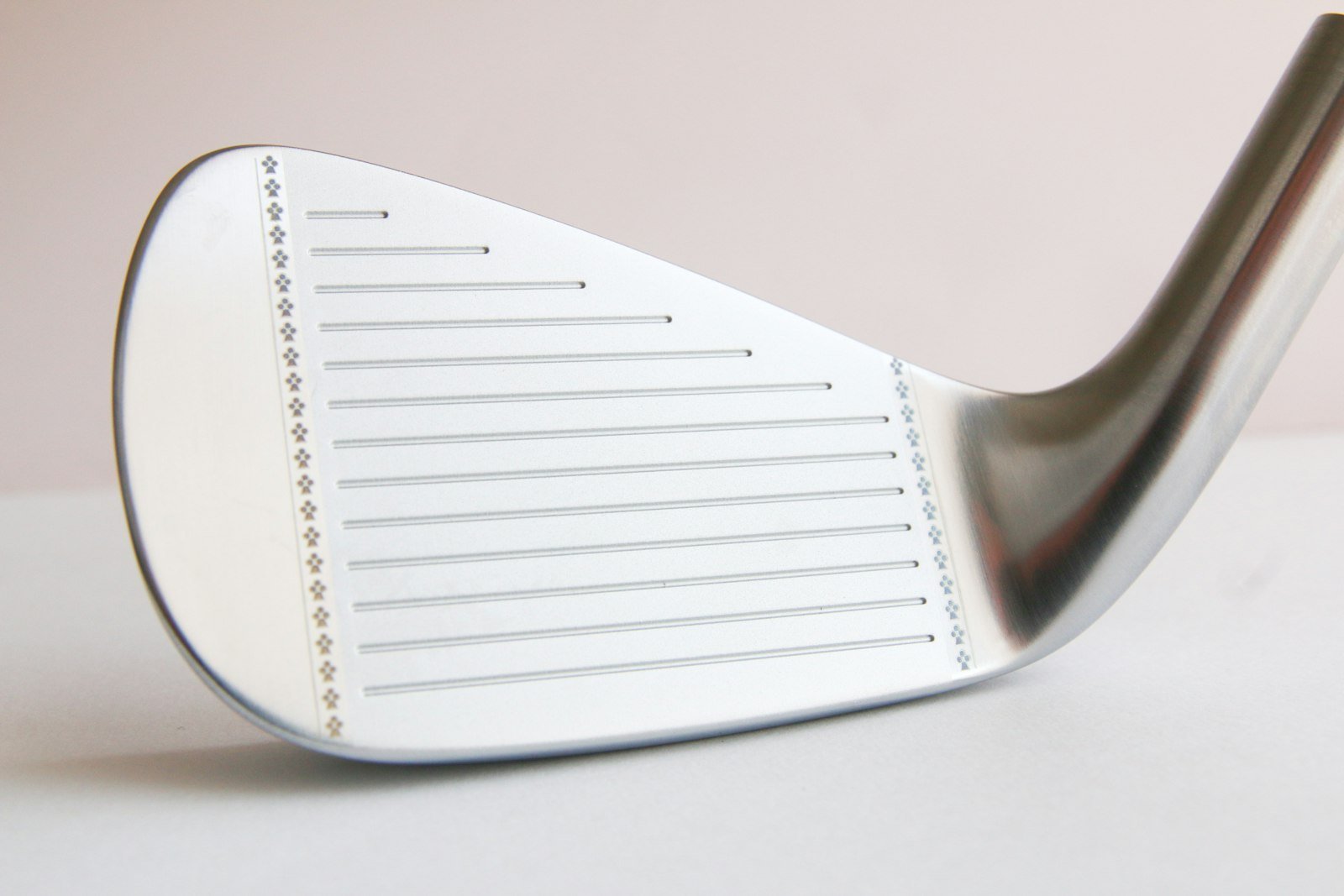
Mid and short irons third. A cavity-backed, wide-sole iron with real perimeter weighting keeps mishits playable in a way that older blade-style irons never will. Look closely at the clubface design here: wider grooves and a larger sweet spot make a bigger difference on off-center strikes than most golfers expect.
Putter last, and differently. Putters are the one club where the usual “lighter is better” senior logic flips. A touch more head weight in a putter actually dampens excess hand and wrist action during the stroke, which often improves distance control on longer putts. Don’t chase “lighter” here just because it worked everywhere else in the bag.
Getting Properly Fit Instead of Guessing
Everything above is a solid starting point, but a real fitting session removes the guesswork entirely. A local PGA professional fitting often runs anywhere from free to $100, especially bundled with a purchase, while specialty clubfitters testing multiple shaft and head combinations typically charge more for a full-bag fitting. It’s worth the cost if you’re buying new clubs anyway, since a fitter nails down shaft flex, loft, length, and swing weight together instead of guessing at each spec in isolation.
Before you book a fitting, it’s worth getting an actual number on your swing speed rather than estimating it. Every recommendation in this guide, from driver loft to shaft flex to swing weight, is built around swing speed ranges, and knowing whether you’re at 70 mph or 85 mph off the tee changes where you should land on each of those scales.
If you’re also working around a physical limitation, recovering from something like a hip replacement, for example, a fitting becomes even more valuable. A fitter can factor swing weight, shaft flex, and even grip size into a broader set of adjustments built around what your body can actually do right now, not what a generic senior set assumes. Golfers aged 65 and older now average close to 40 rounds a year according to National Golf Foundation research, more than almost any other age group, so for players logging that much time on the course, dialed-in equipment isn’t a luxury. It’s just efficient.
Frequently Asked Questions
What is the best golf club brand for seniors?
There’s no single best brand, since the right pick depends on your swing speed, budget, and how much forgiveness you need. Callaway, Wilson, Cobra, Ping, and Tour Edge all make strong senior-specific sets or models. Prioritize the specs (shaft flex, loft, forgiveness) over the logo on the bag.
Do seniors really need senior-flex shafts?
If your driver swing speed is under 85 mph, yes, in most cases. A shaft that’s too stiff for your swing speed won’t load and release properly, which costs you distance and control. If you’re not sure where your swing speed lands, get it measured before assuming either way.
What loft driver should a senior golfer use?
Most senior golfers do best with 12-14 degrees of loft on their driver, higher than the 9-10.5 degrees common on younger players’ drivers. The extra loft helps get the ball airborne earlier, which matters more at lower swing speeds.
Are lighter golf clubs always better for seniors?
Not always, but usually a net positive. Lighter shafts and lower swing weight help most senior golfers generate more clubhead speed with less effort, which often adds distance. Go too light, though, and you can lose feel for the clubhead during the swing, which hurts contact and control. Putters are the one clear exception, where a bit more head weight often helps.
Should seniors carry hybrids instead of long irons?
In almost every case, yes. Hybrids are easier to launch, more forgiving on off-center strikes, and more consistent than a 3, 4, or 5-iron at senior swing speeds. Most well-built senior sets replace long irons with hybrids by default.
How much should I expect to pay for a good senior golf club set?
Budget complete sets like the Tour Edge Bazooka 370 or Wilson Profile SGI generally run a few hundred dollars, while premium options and custom fittings for individual clubs can run well beyond that. A proper fitting session adds a modest cost but usually pays for itself by preventing an expensive mismatch.
The Bottom Line
The best golf clubs for seniors aren’t about chasing a marketing claim on a shelf tag. They’re about matching shaft flex, loft, weight, and forgiveness to the swing speed you actually have right now. Get those specs right, whether through a full set purchase or upgrading a few clubs at a time, and you’ll likely see more distance and cleaner contact than another season of lessons alone would deliver.
Where to Shop
Affiliate links – we may earn a small commission at no extra cost to you, and it never changes what we recommend.
- Senior flex complete club sets
- Senior flex drivers
- Hybrid iron sets
- Oversize grips for arthritic hands