In this Article
Wondering how long does mini golf take before you book a family outing or a date night? Here's what actually determines your pace by hole count, group size, and course type.
Someone in your group asks how long does mini golf take right before you buy tickets, and the honest answer changes depending on who’s playing. A quick round with two adults on a quiet weekday afternoon looks nothing like a Saturday evening outing with three kids under ten who want a second try at every hole with a windmill. I’ve taken my own nephews to a course near Chicago more times than I can count between actual lessons, and I’ve timed just about every version of this outing. Here’s what actually determines how long a round of mini golf takes, broken down by hole count, group size, and the small decisions that add or save real minutes.
How Long Does Mini Golf Take, on Average?
For a standard 18-hole course, most groups of two to four players finish in 45 to 60 minutes at a comfortable, unhurried pace. A fast-moving pair can be done in 30 minutes on an empty course, while a large group or a busy Friday night crowd can stretch that same round past 75 minutes. Course length changes the math directly, so here’s a realistic breakdown by hole count for a typical group of three or four:
| Course Length | Typical Time (group of 3-4) | Fast Pace (1-2 players, empty course) |
|---|---|---|
| 9 holes | 20-30 minutes | 12-18 minutes |
| 18 holes | 45-60 minutes | 30-40 minutes |
| 27 holes | 60-75 minutes | 45-55 minutes |
| 36 holes | 75-95 minutes | 60-70 minutes |
That works out to roughly 2 to 3.5 minutes per hole depending on how busy the course is and how many players are putting before the group moves on. It’s still a much shorter commitment than real golf — for comparison, even a quick nine holes on a full-size course typically runs an hour and a half or more once you factor in walking or riding between shots, which I break down in my guide to how long 9 holes of real golf takes.
What Actually Affects How Long Mini Golf Takes
Ask ten different courses how long does mini golf take and you’ll get ten different answers, because the number depends on variables that have nothing to do with the course map itself.
- Group size. Each additional player adds roughly 8 to 12 minutes to an 18-hole round, since every hole now involves more putts, more ball retrievals, and more time waiting for a turn. A twosome moves noticeably faster than a family of six.
- Skill and age. Younger kids and first-timers take more strokes per hole and often want a second or third attempt at the tricky obstacles, which is part of the fun but adds real time. Experienced players who know to putt firmly past a break finish holes in one or two shots more often.
- Course difficulty. Elevated ramps, water hazards, loop-de-loops, and multi-tier greens slow everyone down, including good putters, simply because there’s more to read before committing to a shot.
- Crowd levels. Peak evening hours, weekends, and holidays create backups at popular holes, the same way a slow group ahead of you on a real course caps everyone’s pace behind them. Visiting during off-peak hours can shave 15 to 25 minutes off a typical round.
- Course rules. Many courses cap strokes per hole, often at six or seven, specifically to keep pace of play reasonable when a group gets stuck on a hard hole. Courses without a stroke limit can run noticeably longer with beginners in the group.
Notice that only one or two of these actually come down to how well anyone putts. The rest is about when you show up and who you’re playing with, which means a slow round is usually a scheduling issue more than a skill issue — the same pattern that shows up in real golf too. In other words, how long does mini golf take usually says more about your tee time than your talent.
9 Holes vs. 18 Holes: Which Should You Play?
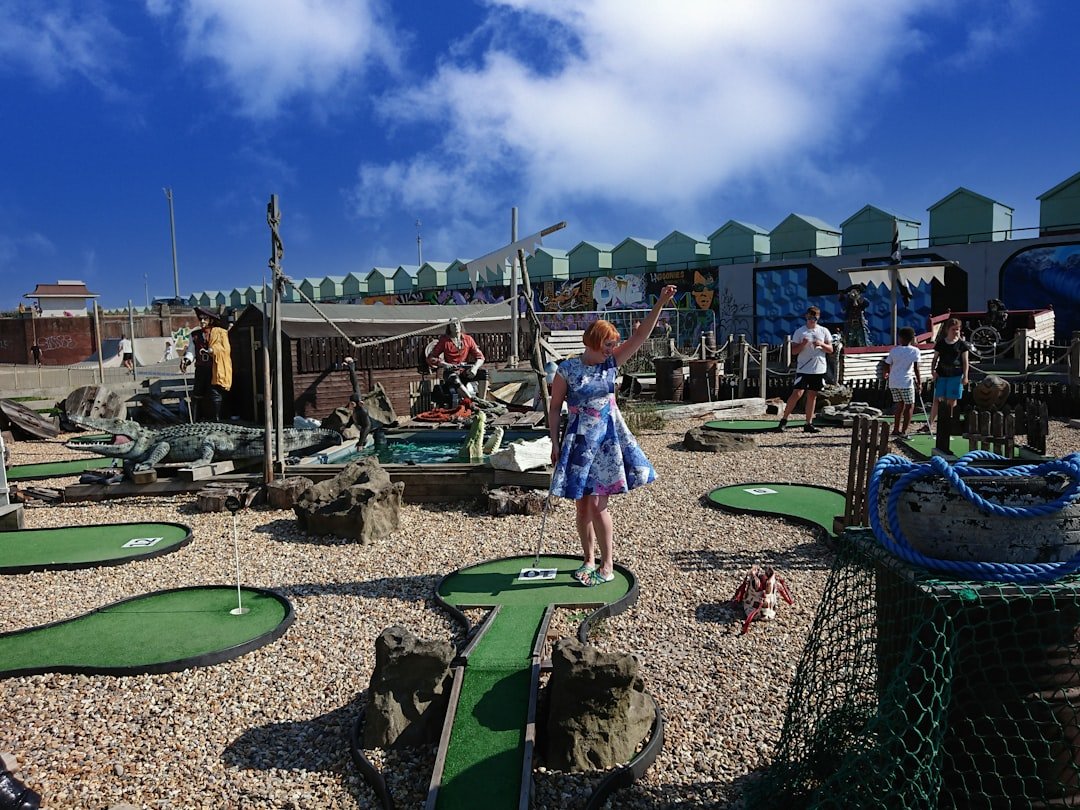
Most standalone mini golf venues only offer one course length, but plenty of larger entertainment centers let you choose, and the decision comes down to your group’s patience and your schedule. A 9-hole round is the better call for young kids, a first date, or anyone squeezing in a quick game before dinner reservations — you’ll typically be done in 20 to 30 minutes and everyone leaves before attention spans wear thin.
An 18-hole round is the standard “full round” experience most people picture when they think of mini golf, a format that has stuck since miniature golf’s earliest courses borrowed the 18-hole structure from real golf a century ago. It’s worth the extra 20 to 30 minutes if your group actually enjoys the game rather than tolerating it. If a venue offers 27 or 36 holes across multiple themed courses, treat that as two separate outings mentally — back-to-back rounds add up fast, and even enthusiastic kids tend to fade somewhere around the 60-minute mark. If you’re specifically trying to figure out how long does mini golf take on one of these bigger combo courses, plan for two separate hour-long sessions rather than one long marathon round.
How to Play Mini Golf Faster
You don’t need to rush your putting to trim real time off a round, and none of these tips change how long does mini golf take by rushing anyone’s swing. Most of the savings come from what happens between shots, the same principle that speeds up a real round of golf.
Putt When You’re Ready, Not in Strict Order
Waiting for the person “farthest away” to putt first on every hole is a real-golf habit that slows mini golf down for no real benefit. If your ball is closer to the hole and you’re set up and ready, go ahead and putt. Most courses don’t enforce strict order, and skipping it saves several seconds on every single hole.
Agree on a Stroke Limit Before You Start
If your course doesn’t already cap strokes per hole, set an informal limit as a group — six strokes is standard, and it’s close to what the World Minigolf Sport Federation’s own rules of play use to keep competitive rounds moving. Once someone hits the limit, they pick up, write down the max score, and the group moves on. This single rule does more to keep a round moving than anything else on this list, especially with a mixed-skill group.
Skip the Extra Practice Putts
One practice stroke before a tricky windmill or loop is fine. Three or four turns everyone’s hole into a five-minute production. Save the extra attempts for holes where nobody’s waiting behind you.
Go During Off-Peak Hours
Weekday afternoons and early evenings are consistently the lightest traffic windows at most mini golf venues. If finishing quickly matters more than the exact time slot, booking off-peak does more for your pace than any putting tip will.
Playing Mini Golf with Kids or Beginners
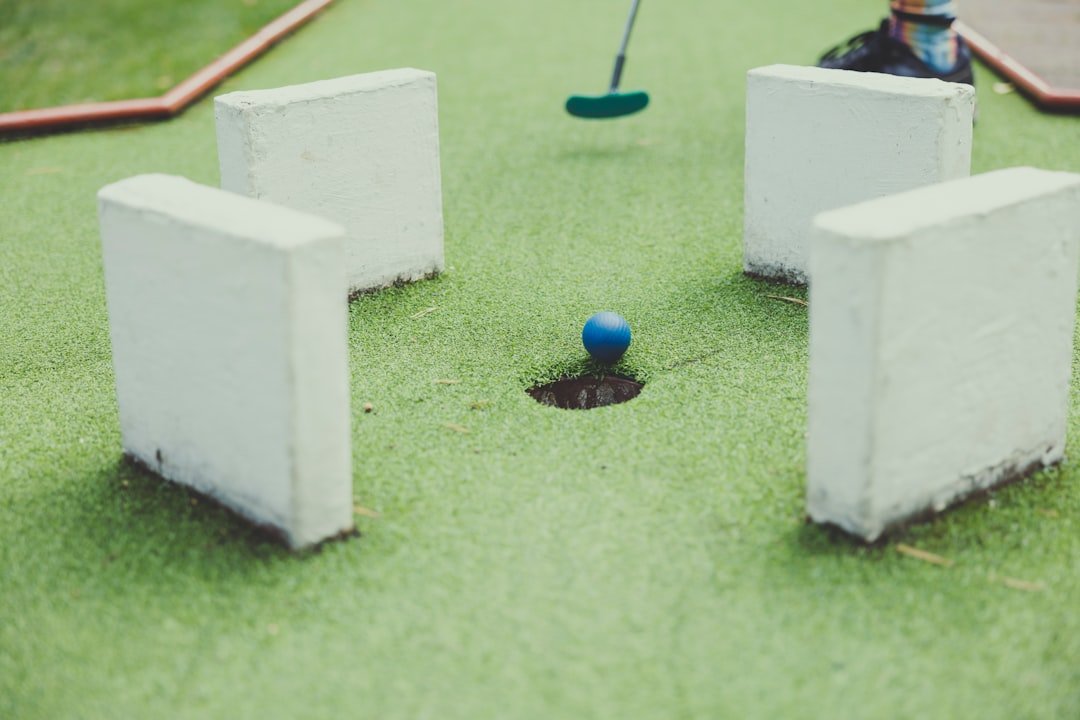
If you’re introducing young kids to mini golf, or using it as a low-pressure way to get a beginner comfortable holding a club before their first real lesson, expect the slower end of every range above — and plan for it instead of fighting it. Knowing how long does mini golf take with a young or first-time group in advance makes it much easier to set expectations before you even buy tickets. A few things help keep the outing fun instead of frustrating:
- Let younger kids place the ball closer on tough holes rather than insisting on a full attempt from the start — most courses and other groups don’t mind, and it keeps the round moving.
- Skip the running score for kids under six or seven. Counting strokes matters far less than letting them enjoy hitting the ball and watching where it goes.
- Pick a course with a reasonable mix of easy and hard holes. An 18-hole course that’s uniformly difficult burns patience fast; one with a few simple straight putts mixed in keeps momentum up.
- If mini golf turns into a genuine interest, a real set of junior or beginner clubs is a natural next step — our guide to picking a beginner golf clubs set covers what actually matters when you’re ready to move from the windmill course to the driving range.
Mini Golf vs. Real Golf: How the Time Actually Compares
As someone who teaches real golf for a living, I get asked more often than you’d expect whether mini golf is “good practice.” It isn’t, mechanically — putting on carpet with fixed breaks doesn’t translate to reading a real green. But the time comparison is worth knowing if you’re deciding how to spend an afternoon. An 18-hole mini golf round taking 45 to 60 minutes is roughly a third of the time a full round of real golf takes, and it’s actually a bit shorter than a quick nine holes for a beginner golfer, which usually runs closer to 90 minutes to two hours for a typical group. If you’re trying to introduce someone to golf without the time investment of a real course, mini golf is a genuinely reasonable first step for building interest before you commit to lessons or a first tee time. Either way, how long does mini golf take is rarely the reason to skip it — the bigger question is whether it gets someone excited enough to try the real thing.

Frequently Asked Questions About Mini Golf Timing
Is 18 holes of mini golf a full round?
Yes, 18 holes is the standard length most people mean when they say a “full round” of mini golf, mirroring the 18 holes of a real golf course. Some venues only offer 9 or 18 holes, while larger entertainment centers may offer 27 or 36 across multiple themed courses.
How long does 9 holes of mini golf take?
A 9-hole mini golf round typically takes 20 to 30 minutes for a group of three or four playing at a normal pace, or as little as 12 to 18 minutes for one or two players moving quickly on an empty course.
Does group size really change how long mini golf takes?
Yes, noticeably. Each additional player adds roughly 8 to 12 minutes to an 18-hole round because every hole involves more putts and more waiting for a turn. A group of two moves meaningfully faster than a group of six.
What’s the average time per hole in mini golf?
Most rounds average 2 to 3.5 minutes per hole, depending on course difficulty and how busy the venue is. Simple straight holes go by in under a minute, while elevated or multi-tier holes with tricky breaks can take several minutes per group. Multiply that per-hole figure by the number of holes and you have a quick way to estimate how long does mini golf take before you even step up to the first tee.
Can you play mini golf faster if you’re short on time?
Yes. Putting when you’re ready instead of waiting for strict turn order, agreeing on a six-stroke limit per hole, and visiting during off-peak hours are the three changes that save the most time without rushing anyone’s actual putting.
Is mini golf a good activity for young kids?
Generally yes, especially on a 9-hole course or an 18-hole course with a mix of easy and hard holes. Expect a slower pace than the averages above, and consider skipping strict scorekeeping for kids under six or seven so the focus stays on fun rather than strokes.
Bottom Line: Plan for an Hour, Expect Less
So, how long does mini golf take in the end? If you need one number to plan around, use an hour for a standard 18-hole round with a typical group, and adjust down for fewer players, a shorter 9-hole course, or an off-peak visit. The biggest variable isn’t anyone’s putting — it’s group size, course length, and how crowded the venue is when you show up. Pick your time slot with that in mind, agree on a stroke limit before the first hole, and an evening of mini golf ends up being exactly what it should be: a quick, low-pressure round that still leaves time for whatever you had planned afterward.