In this Article
A practical guide to choosing a beginner golf clubs set in 2026: the specs that actually matter, how many clubs you need, and which sets are worth buying.
If you’re standing in a pro shop staring at a wall of drivers and irons, picking the right beginner golf clubs set can feel more complicated than the game itself. The good news is that a solid beginner golf clubs set doesn’t require you to understand shaft frequency charts or clubhead metallurgy. It comes down to a handful of specs that genuinely matter, and a long list of marketing claims that don’t. I’ve fit dozens of new students into their first set of clubs over seven years of teaching, and the same few mistakes show up again and again.
This guide walks through exactly what to look for in a beginner golf clubs set, how many clubs you actually need to get started, which sets are worth buying in 2026, and the mistakes that quietly cost new golfers money without helping their game.
What Actually Matters in a Beginner Golf Clubs Set
Every manufacturer will tell you their beginner set is “engineered for maximum performance.” Most of that is marketing copy. That said, the market for a first set has never been better, since the National Golf Foundation tracks a steady stream of new golfers picking up the game every year, and manufacturers have responded by building entire product lines around exactly this kind of buyer. Here’s what genuinely changes how easy a club is to hit when you’re just starting out.
Forgiveness Comes Before Distance
A forgiving clubhead is the single biggest factor in how good you’ll feel on the course this season. Look for cavity-back irons, wide soles, and a low center of gravity in the woods, all design choices that keep a mishit playable instead of turning it into a shot you have to explain to your playing partners.
Bigger clubheads with perimeter weighting spread mass around the edge of the face instead of concentrating it behind the center. That raises what’s called the moment of inertia, or MOI, which is just a technical way of saying the clubface resists twisting when you catch the ball off-center. For a new player, the gap between a forgiving iron and a compact “player’s” blade is often the difference between a playable shot and a shank.
Graphite Shafts Are Usually the Right Call
Most complete beginner sets ship with graphite shafts in the woods and irons, and for good reason. Graphite is lighter than steel, which means you can generate more clubhead speed with less physical effort, a real advantage before you’ve built consistent swing mechanics. It also dampens vibration better than steel, so a mishit stings less in your hands.
Steel shafts still have a place, mainly for golfers who already generate solid, repeatable swing speed and want more control and a lower ball flight. But if you’re buying your very first beginner golf clubs set, start with graphite in regular flex, then adjust from there once a fitting or a season of rounds tells you more about your actual swing speed.
Loft Gets the Ball in the Air
New golfers consistently play too little loft, usually because low-lofted clubs look more like what tour pros use. A driver in the 10.5 to 12 degree range, rather than the 9 to 9.5 degrees common on tour, gets the ball airborne earlier at a slower swing speed. The same logic applies to your irons and hybrids: more loft launches easier, and launch is what turns a topped ball into a shot that actually travels somewhere useful.
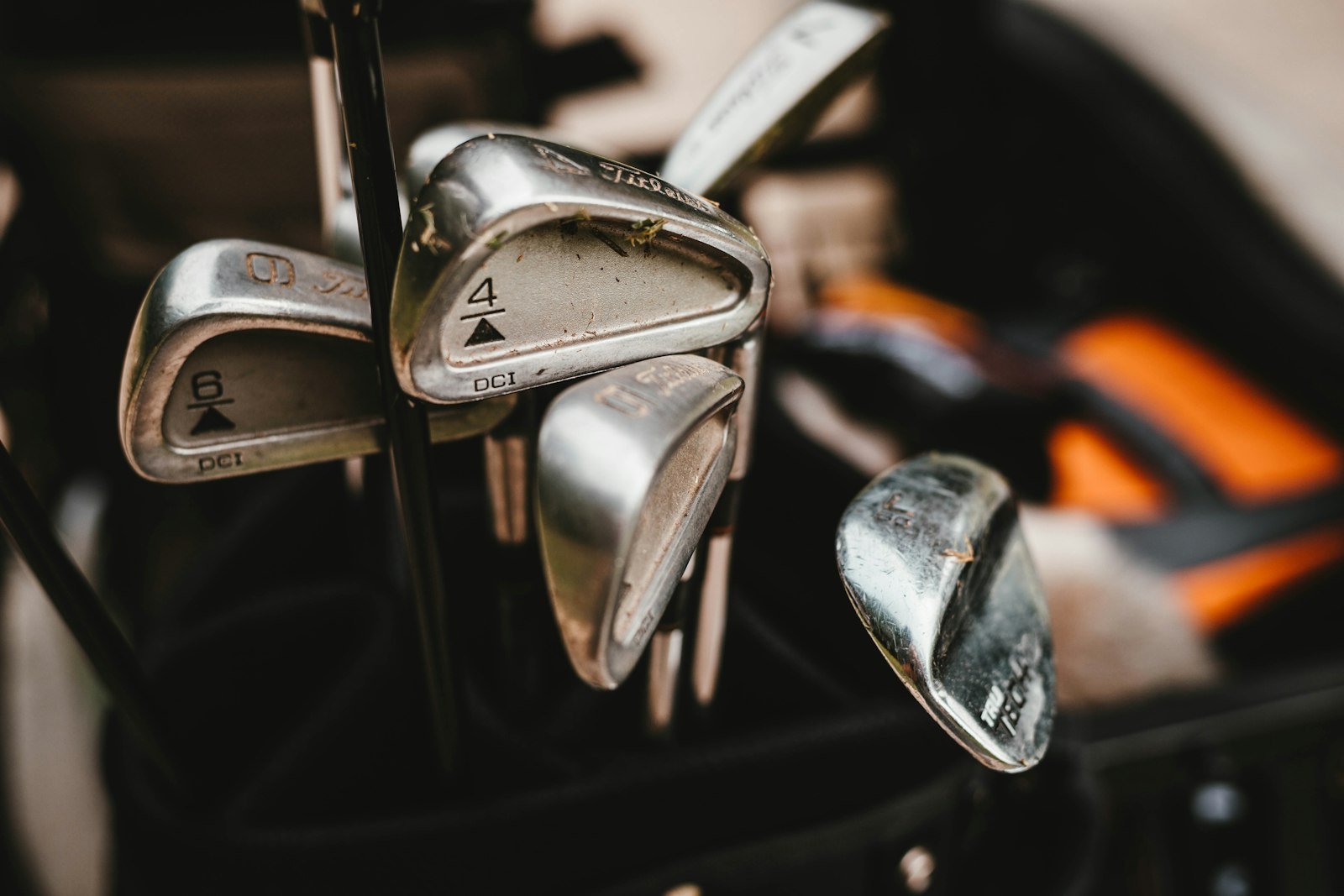
How Many Clubs Does a Beginner Golf Clubs Set Actually Need?
You don’t need all 14 clubs the rules allow to play a decent round. The USGA’s Rule 4.1b caps a bag at 14 clubs, but that’s a ceiling, not a requirement, and most beginner golf clubs sets ship with 9 to 11 clubs for exactly that reason. That’s plenty while you’re still learning which shots you actually hit well.
If you had to build a starter bag from scratch, five clubs cover almost every situation you’ll face on the course:
- A driver, for tee shots on longer holes
- A hybrid or fairway wood, easier to launch than a long iron from the fairway or rough
- A 7-iron, the workhorse club for learning a repeatable full swing
- A pitching or sand wedge, for anything inside 100 yards
- A putter, the club you’ll actually use most often per round
A complete boxed set fills in the gaps around those five clubs with a fuller run of irons, an extra wedge or two, and usually a stand bag, which is the simplest way to start if you don’t want to think about club selection while you’re still learning where the ball is going. You can always add specialty wedges or swap in better irons once you know your game well enough to know what’s missing.
Best Beginner Golf Clubs Sets in 2026
These are the sets that consistently show up as strong, purpose-built options for new golfers rather than a repainted set from a decade ago.
Callaway Strata Complete Set — Best Overall
The Strata line is the most recommended complete set for beginners, and for good reason. It typically bundles a titanium driver, a fairway wood, a hybrid, a full run of cavity-back irons, a mallet putter, and a stand bag, all built around forgiveness rather than a tour profile. It won’t outperform a custom-fit premium bag, but for a first purchase, it covers everything you need without a second trip to the pro shop.
Wilson Prostaff SGI — Best Budget Option
Wilson’s Prostaff/Profile SGI line trades a little refinement for a genuinely low price point, without cutting corners on the forgiveness that actually matters for a beginner. It’s a sensible pick if you’re not yet sure the game is going to stick and don’t want to commit real money before you know.
Cobra Fly-XL Complete Set — Best Lightweight Build
The Fly-XL leans into a lightweight build across the entire set, aimed at generating clubhead speed without extra physical effort. It’s worth a look if you’ve swung a heavier set and felt it working against you rather than for you by the back nine.
MacGregor CG3000/CG4000 — Best for Casual or Occasional Play
If you’re picking up clubs purely for casual rounds with friends rather than a serious hobby, MacGregor’s CG-series sets are dependable and inexpensive, and they don’t ask for a big financial commitment before you know how often you’ll actually play.

Beginner Sets for Specific Golfers
Not every beginner fits the same mold, and a handful of the specs above change depending on who’s actually swinging the club.
Junior and teenage golfers need clubs scaled to their height and strength, not a cut-down adult set. If you’re shopping for a growing player, our guide to golf clubs for a teenager walks through sizing and how often to expect to upgrade as they grow.
Left-handed golfers have a smaller selection to choose from, and specialty retailers usually carry a better range than a big-box store. Petite players and women new to the game also do best with shorter, lighter-shafted sets built around their actual swing speed rather than a scaled-down men’s set.
Golfers starting the game later in life, whether recovering from an injury or just picking up a new hobby in retirement, benefit from many of the same specs as any senior player. Our guide to the best golf clubs for seniors covers shaft flex and loft adjustments that apply just as much to a 60-year-old beginner as a 60-year-old with 30 years of experience.
New vs. Used: Which Is the Better Value for a First Set?
A quality used set is often the smarter first purchase, not a compromise. Golfers upgrade equipment constantly, which keeps a steady supply of barely-worn, forgiving beginner golf clubs sets moving through pro shops and online marketplaces well below retail price. As long as the grips aren’t cracked and the shafts aren’t bent or corroded, a used cavity-back iron performs almost identically to a brand-new one.
New sets make more sense once you know you’ll play regularly and want a specific fit, a warranty, or the latest forgiveness technology. For a first set, though, put the money you save toward lessons instead. A handful of lessons early on will lower your scores faster than any equipment upgrade will, and they’ll help you avoid ingraining habits that are harder to fix later.
Common Mistakes Beginners Make When Buying Their First Set
Spending too much before knowing the game will stick is the single most common mistake. A $1,500 premium bag doesn’t make you a better golfer than a $400 complete set will in your first season, and the extra money is better spent on range time and lessons than on marginal equipment gains you won’t be able to feel yet.
Buying tour-style blades or a low-lofted driver because they look like what the pros use is another classic misstep. Those clubs are built for golfers with fast, consistent, repeatable swings, and they punish mishits far more severely than a forgiving beginner set does. A blade iron and a game-improvement iron can share the same loft and still play completely differently on an off-center strike.
Ignoring shaft flex is a quieter mistake with the same effect on your scores. A shaft that’s too stiff for your swing speed won’t load and release properly, which costs you both distance and consistency, even if every other spec on the club is right for your game.
Getting Fit as a Beginner (Yes, Even Now)
You don’t need a full launch-monitor fitting before you’ve swung a club, but a basic fitting is worth doing even for a first beginner golf clubs set. Many golf retailers offer a free or low-cost fitting bundled with a purchase, and it takes the guesswork out of length, lie angle, and grip size, three specs that are easy to get wrong buying straight off the rack.
If you’re notably tall, short, or have larger or smaller hands than average, a basic fitting matters even more. A club that’s the wrong length changes your posture at address, which changes your swing plane before you’ve even started building good habits. It’s also worth getting a rough read on your swing speed once you’ve played a few rounds, since that single number drives almost every other equipment decision you’ll make from here.

Frequently Asked Questions
How many clubs should a beginner have in their bag?
Nine to eleven clubs is plenty for a new golfer: a driver, a hybrid or fairway wood, a handful of irons, a wedge, and a putter. You can build toward the full 14-club limit later, once you know which clubs you actually reach for.
Is graphite or steel better for a beginner golf clubs set?
Graphite, in most cases. It’s lighter, helps generate more clubhead speed with less physical effort, and dampens vibration on off-center hits better than steel does. Steel becomes more attractive once your swing speed and contact become more consistent.
Should I buy a new or used beginner golf clubs set?
Used is usually the better value for a first set, as long as the grips and shafts are in good condition. Save the brand-new, premium purchase for once you know you’ll keep playing regularly.
What loft driver should a beginner use?
Somewhere in the 10.5 to 12 degree range. The extra loft compared to a tour-spec 9 to 9.5 degree driver helps get the ball airborne at a slower swing speed, which usually means more carry distance, not less.
How much should a beginner spend on their first set of golf clubs?
A solid complete beginner golf clubs set typically runs somewhere in the low hundreds of dollars. That covers real forgiveness and decent components without the premium pricing of a fully custom-fit bag, which is worth saving for once you know golf is a sport you’ll stick with long-term.
Do I need a custom club fitting before I start playing?
No, not before your first round. A basic fitting for length, lie angle, and grip size is worth doing even on a beginner set, but a full custom fitting is better saved until your swing has settled into something repeatable.
The Bottom Line
The best beginner golf clubs set isn’t the one with the flashiest name stitched on the bag. It’s the one that matches forgiving clubheads, a manageable shaft weight, and enough loft to your actual swing, at a price that doesn’t punish you for still learning the game. Get those basics right, whether you buy new or used, and you’ll spend your first season improving your scores instead of fighting your equipment.
Where to Shop
Affiliate links – we may earn a small commission at no extra cost to you, and it never changes what we recommend.
- Complete beginner golf club sets
- Graphite-shaft iron sets
- High-loft beginner drivers
- Stand bags for a new set