In this Article
Wondering how long does 9 holes of golf take? Here's what actually determines your pace by group size, walking vs. riding a cart, and how to trim real time off your round.
If you’re trying to squeeze in a round before work, after the kids are dropped off, or in the two hours of daylight left after your Saturday chores, the question is always the same: how long does 9 holes of golf take? The honest answer is “it depends,” but not in a way that’s hard to plan around. A solo golfer moving with intent can be done in under 90 minutes, while a full foursome on a crowded Saturday morning might not walk off the ninth green for close to three hours. I’ve taught lessons that ran long into the evening and then squeezed in a quick nine before the light went, so I’ve timed just about every version of this round. Here’s what actually determines your pace, and how to plan a 9-hole round you can trust.
How Long Does 9 Holes of Golf Take, on Average?
On a moderately busy public course, 9 holes of golf takes about 1 hour 45 minutes to 2 hours 15 minutes for a foursome playing at a normal recreational pace. Smaller groups move faster since there are fewer shots and less waiting between them. Here’s a realistic breakdown by group size, assuming a standard par-35 to par-36 course and typical weekend traffic:
| Group Size | Walking | Riding a Cart |
|---|---|---|
| Solo | 1 hr 30 min – 1 hr 50 min | 1 hr 10 min – 1 hr 30 min |
| Twosome | 1 hr 45 min – 2 hr 10 min | 1 hr 25 min – 1 hr 50 min |
| Threesome | 2 hr – 2 hr 20 min | 1 hr 45 min – 2 hr 5 min |
| Foursome | 2 hr 15 min – 2 hr 45 min | 1 hr 55 min – 2 hr 20 min |
Those numbers assume normal course traffic and reasonably experienced players. On a wide-open course early on a weekday morning, a foursome moving efficiently can knock 20 to 30 minutes off the high end of that range. On a packed Saturday tee sheet, you can add just as much back on, no matter how fast your group plays, because you’re waiting on the group ahead more than you’re actually swinging.
Group size matters more than most golfers expect, and it’s not just about extra swings. Every additional player adds a full turn to each shot: more time reading putts, more time picking clubs, more time simply walking or driving to a different ball. A twosome is often the sweet spot for a quick 9-hole round — fast enough to feel brisk, but social enough that it doesn’t feel like you’re racing the course. If you’re playing with three friends and speed is the priority, agreeing to play ready golf before you tee off on the first hole matters more than anything you’ll do with your swing.
Walking vs. Riding a Cart: Which Is Actually Faster?
This surprises a lot of golfers: walking doesn’t necessarily slow you down as much as people assume, but riding almost always saves time, especially in a larger group. The gap is usually 15 to 30 minutes over a 9-hole round, not the hour some players expect, and it’s one of the biggest single variables in how long does 9 holes of golf take.
Walking 9 Holes
Walking 9 holes covers roughly 2.5 to 3 miles depending on the course’s layout and how far the greens sit from the next tee box. A single walking golfer with a push cart moves nearly as fast as someone riding, because you’re not waiting for a cart partner to finish their shot before you can drive to yours. Where walking costs real time is in a group: four players walking means four sets of footsteps between every shot, and that adds up hole after hole. If you want to walk without losing much pace, a push cart or pull cart is worth the investment — it keeps you moving at your own speed instead of waiting on a shared cart.
Riding in a Cart
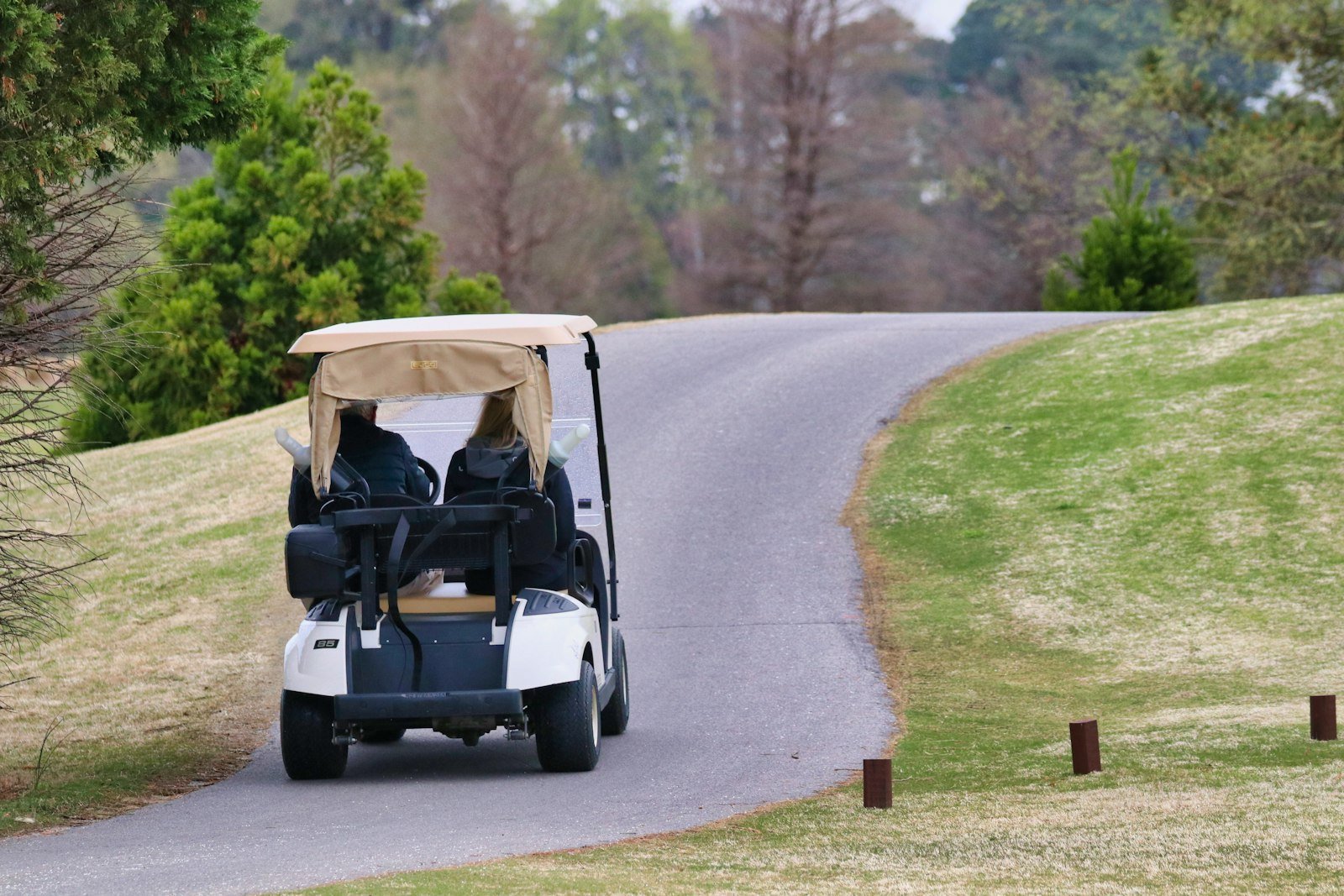
A cart’s real advantage isn’t speed between shots, it’s efficiency: two players share one vehicle, so you’re covering ground together instead of each walking your own line to the ball. On a hilly course or one with long walks between greens and tees, this difference is even bigger. If you’re choosing a course specifically to play fast, a layout built for cart golf with connected paths will almost always beat a walking-only course on time, and it’s part of why terrain matters as much as distance when you’re picking where to play.
What Actually Slows Down a 9-Hole Round
Most golfers blame slow play on “the group ahead,” and sometimes that’s fair. But how long does 9 holes of golf take really comes down to a mix of factors, and most of them are things you can plan around.
- Skill level. Beginners and high handicappers often need 15-20 minutes per hole between extra shots, longer searches for stray balls, and more putts, while experienced players average closer to 10-12 minutes a hole.
- Course difficulty. Hazards, forced carries, and thick rough add real time. A course with tight fairways and deep bunkers can add 5-10 minutes per hole compared to a wide-open layout.
- Weather. Wind changes club selection and adds practice swings; a wet course after rain slows cart access and green speeds. Either can add a couple of minutes per hole without anyone doing anything wrong.
- Day and time. Weekday mornings are consistently the fastest tee times available. Weekend mid-mornings are the slowest, since that’s when tee sheets are the fullest and every group is waiting on the one in front.
- Course traffic. This is the big one. Once you’re stuck behind a slow group with no one ahead of them to blame, your pace is capped at their pace, no matter how quickly your foursome plays.
Notice that only one or two of these are actually about how well you play golf. The rest come down to when you tee off and which course you choose, which means a slow round is often a scheduling problem more than a skill problem.

How to Play 9 Holes Faster (Without Rushing Your Swing)
You don’t have to rush your actual swing to shave real time off a round. Most of the savings come from what happens between shots, not during them.
Play “Ready Golf”
Ready golf means hitting when you’re prepared, rather than strictly following honors or waiting for the person farthest from the hole. If your ball is sitting closer to your cart and you’re ready first, go ahead and hit. It’s one of the fastest, easiest changes a group can make, and most public courses actively encourage it.
Book Early or Twilight Tee Times
A 7 a.m. weekday tee time and a 5 p.m. Saturday twilight slot both share the same advantage: fewer groups on the course ahead of you. If getting through 9 holes quickly matters more to you than the exact tee time, this single decision does more for your pace than any swing tip will.
Limit Ball Searches and Practice Swings
The Rules of Golf give you three minutes to search for a lost ball, but you rarely need anywhere close to that on a recreational round. Give it a genuine look, take a drop under the applicable rule if you can’t find it quickly, and keep moving. The same goes for practice swings: one or two is plenty before a shot that isn’t a make-or-break moment.
Choose a Course Built for Speed
Executive courses and par-3 layouts are built around shorter holes and less walking between them, which makes them naturally faster regardless of how well you’re playing that day. If your goal is simply to get outside for a quick round, picking the right course matters more than trying to play faster on a course that isn’t designed for it.
Executive and Par-3 Courses: The Fastest 9 You’ll Play
A 9-hole par-3 or executive course can typically be finished in a little over an hour, even with a full group, because every hole is short and greens sit close to the next tee. How long does 9 holes of golf take on a standard championship-length par-35 or par-36 course? Longer than an executive layout by design; longer holes mean more shots, more walking or driving between them, and more time overall. If your main goal on a given day is speed rather than testing every club in your bag, an executive course is the most reliable way to guarantee a fast round no matter how the tee sheet looks.
For context on just how fast 9 holes can theoretically go: competitive speedgolfers have completed 9 holes in under 13 minutes, and recent U.S. Speedgolf Open winners have averaged around 23 minutes for 9 holes while still holing every putt. You’re not trying to match that pace on a Tuesday evening round, but it’s a good reminder that the course itself rarely forces a 2.5-hour round — traffic and group size usually do.
Frequently Asked Questions
Do 9-hole rounds count toward my handicap?
Yes. Under the World Handicap System, a 9-hole score is combined with another 9-hole score, or entered on its own with an estimated score for the holes not played, and posted to your scoring record. You don’t need to play a full 18 for the round to count.
Can you play 9 holes in under an hour?
It’s possible solo or as a twosome on a short executive or par-3 course, especially early in the morning with no one ahead of you. On a standard-length course, under an hour is realistic only for very skilled, fast-moving players, or actual speedgolfers.
How many miles do you walk in 9 holes?
Most golfers walk about 2.5 to 3 miles over 9 holes, depending on the course’s layout and how far apart the greens and tees are placed. Hilly courses or ones with long walks between holes push that number higher.
Is playing 9 holes worth it instead of 18?
Absolutely, especially on a weeknight or when time is tight. Nine holes still gives you a full warm-up, real course management decisions, and a complete scoring record under the handicap system, in roughly half the time commitment of 18.
What’s a normal pace of play per hole?
Most courses target somewhere around 12-14 minutes per hole for a group moving at a reasonable pace, which is a big part of how long does 9 holes of golf take for a foursome and works out to roughly 2 hours. Slower groups often run 15-20 minutes a hole without realizing it.
Should I book a twilight tee time for a faster round?
Yes, if speed is your priority. Twilight tee times sit behind the day’s traffic, so there are typically fewer groups ahead of you and more open fairway to move through. The tradeoff is you’re racing daylight instead of other golfers, so it’s worth checking sunset time before you book.
Is 9 holes faster on a weekday than a weekend?
Almost always. Weekday tee sheets, especially mornings, tend to run lighter, so there’s less waiting between shots and fewer bottlenecks at the tee box. Weekend mornings are the busiest window at most public courses, which is exactly when a 9-hole round is most likely to stretch toward the high end of the ranges above.
Bottom Line: Plan for Two Hours, Hope for Less
So, how long does 9 holes of golf take in the end? If you need one number to plan around, use two hours for a 9-hole round with a foursome, and adjust down for a smaller group, a cart, or an early tee time. The biggest variable isn’t your swing, it’s when you tee off and how crowded the course is when you do. Book smart, play ready golf, and 9 holes becomes exactly what it should be: a real round of golf that still fits into a weeknight.