In this Article
If your golf cart keeps blowing fuses no matter how many times you replace it, the fuse isn't the problem — here's how to find the real short and fix it for good.
If your golf cart keeps blowing fuses every time you turn the key or step on the pedal, swapping in a fresh fuse and hoping for the best isn’t a plan — it’s just delaying the same failure by a few minutes. I hear this one from readers and students a few times every season, on gas carts and electric carts alike, and it’s almost never actually the fuse’s fault. A fuse is designed to blow. It’s the one part of the electrical system that’s supposed to fail on purpose, sacrificing itself so something more expensive behind it doesn’t fry.
When a golf cart keeps blowing fuses over and over, something else in that circuit is pulling more current than the fuse is rated for, and no amount of replacement fuses fixes that until you find what’s actually causing it. Below is exactly how I walk through that diagnosis: where to find your fuse box by brand, the seven real causes I see most, and a simple multimeter test you can run yourself before calling a technician.
Table of Contents
Table of Contents
Why a Fuse Blows in the First Place
A golf cart fuse has exactly one job: break the circuit before a short or an overload turns into a melted wire or a fire. Every fuse position is rated for a specific number of amps, chosen to match what the wire and component behind it can safely handle.
Push more current through that circuit than the fuse is rated for — a short to the frame, a stuck switch, a failing part drawing too much power — and the fuse’s internal strip burns through on purpose. That’s the fuse doing exactly its job. It’s just telling you about a problem somewhere else.
Common amp ratings on a cart’s fuse panel: roughly 10 amps for light-duty circuits like the solenoid or key switch, 30 to 50 amps for accessory or charging-port circuits, and 60 amps or higher on the main motor circuit. Installing a higher-amp fuse “to stop it from blowing” is one of the more dangerous habits I see — it removes the safeguard protecting that wire, and by the time it fails you’re looking at melted insulation instead of a two-dollar fuse.
Start Here: Find the Fuse Box (By Brand)
Before you can diagnose anything, you need to know which fuse is blowing and what it protects. Fuse box locations vary by brand, model year, and whether the cart is gas or electric:
| Brand | Common Fuse Box Location | Typical Amp Range |
|---|---|---|
| Club Car | Black electrical box near the battery pack (older DS models), or fuse holders under the seat (Precedent and newer) | 10A (solenoid/ignition), 50-60A (motor/accessory) |
| E-Z-GO | Inline fuse at the key switch (TXT), or below the driver’s seat (electric models) | 10A (ignition), 30-50A (accessory) |
| Yamaha | Left side of the controller under the seat (Drive2), or below the cup holder (G29) | 10A (control circuits), 40-60A (motor) |
These vary by model year, so if yours isn’t in the spots above, check your owner’s manual or look near the battery compartment — the single most common location across every brand. Once you find the blown fuse, note its position and amp rating: that tells you which circuit is shorting and narrows down where to look next.
7 Real Reasons a Golf Cart Keeps Blowing Fuses
These are the causes I actually see behind a golf cart that keeps blowing fuses, in roughly the order I’d check them:
1. A Chafed Wire Touching the Frame
This is, by a wide margin, the most common reason a cart’s fuse keeps blowing over and over. Wiring harnesses get zip-tied along the frame at the factory, and over years of vibration, heat, and flexing, the insulation on one wire wears through right where it rubs against bare metal.
The moment that bare copper touches the frame, you’ve got a dead short to ground, and the fuse blows almost instantly — often within seconds of turning the key. One owner working through this exact problem on an older Club Car eventually traced it to a bare spot on an ignition wire touching the frame, after already ruling out a new solenoid and ignition switch. The fix was as simple as re-taping the wire and re-routing the harness — the hard part was finding it.
Look everywhere a harness passes through metal, over an edge, or gets zip-tied tight: those are the spots insulation wears through first.
2. A Solenoid That’s Stuck or Shorted
The solenoid is the heavy-duty relay that connects battery power to the motor circuit when you step on the pedal. When its internal contacts weld together or short internally, it can send full battery current through a circuit that isn’t built to carry it continuously, and the fuse protecting that circuit blows.
A solenoid going bad often shows other symptoms alongside the blown fuse — an odd-sounding click, the cart lurching instead of accelerating smoothly, or creeping forward even off the pedal. If you’re already checking the solenoid, our guide to how a golf cart motor actually works covers a few adjacent failure points worth ruling out at the same time.
3. A Failing F&R Switch or Pedal Micro-Switch
The forward/reverse switch and the pedal’s micro-switch both complete circuits every time you use them, and both wear out. A worn switch can short internally or arc in a way that eventually welds its contacts together, pulling more current than the circuit is rated for.
These switches are cheap and straightforward to test with a multimeter, or simply to swap for a known-good replacement, which makes them worth checking before you assume something more expensive has failed.
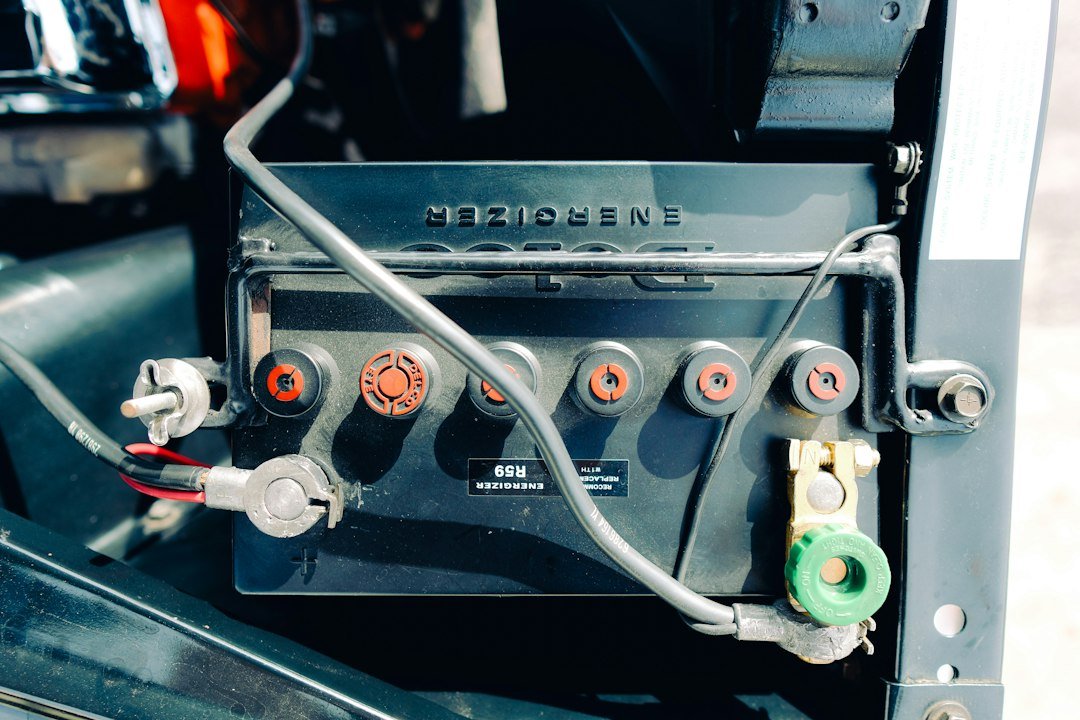
4. Reversed or Loose Battery Terminal Connections
A battery cable connected backward, or a terminal loose enough to arc under load, can send unexpected current through circuits never designed for it. This is more common than it sounds right after battery service — a new battery installed with cables swapped, or a terminal that wasn’t torqued down properly.
Check every terminal for tightness and correct polarity any time you’ve recently worked on the batteries, and watch for the telltale signs of a loose connection: a warm terminal, a faint burning smell, or greenish-white corrosion buildup around the post.
5. The Wrong-Amperage Fuse Installed
Sometimes the fuse really is just the wrong part. If a previous owner, a mechanic, or you grabbed whatever fuse was on hand instead of matching the exact amp rating stamped on the original, an undersized fuse will blow under completely normal loads that have nothing to do with an actual fault.
Pull the fuse and read the amp rating printed on it, then compare that against your owner’s manual for that position. It’s a five-second check that rules out an entire category of “phantom” blown-fuse complaints.
6. A Failing Controller or Voltage Regulator
On electric carts, the speed controller manages how much current reaches the motor, and a failing one can dump excessive current into that circuit without warning. On gas carts, a bad voltage regulator can send abnormally high voltage back through the charging circuit, with the same effect on its fuse. This is less common than a wiring short, but worth suspecting once the fuse still blows instantly after a fresh fuse and a clean wiring check. Comparing symptoms against our breakdown of Club Car, E-Z-GO, and Yamaha electrical systems can help narrow down the likely component on your specific brand.
7. Water Intrusion and Corroded Connectors
Carts that see rain, dew, or a pressure wash aimed at the wrong spot can develop corrosion inside a connector that eventually bridges two pins that were never meant to touch. That intermittent short can blow a fuse only in wet conditions, which makes it one of the more frustrating causes to track down. Look for a greenish or white crust inside connector housings mounted low near the battery compartment or motor, and apply dielectric grease after cleaning any suspect connector to prevent a repeat.
How to Test for a Short Yourself (Multimeter Method)
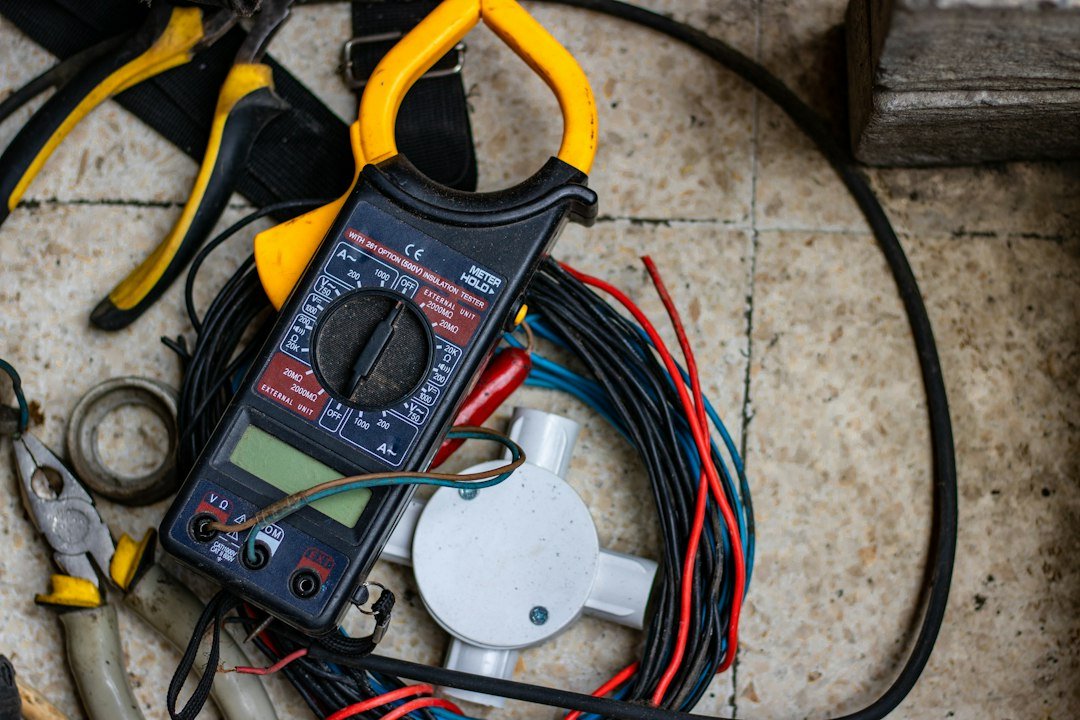
You don’t need a shop to find most of these shorts — a basic multimeter and about twenty minutes gets you there. Fluke’s guide to continuity testing covers the fundamentals if you’ve never used one, and OSHA’s overview of basic electrical safety practices is worth a skim before you start probing anything, even on a low-voltage cart.
- Disconnect the batteries completely before you touch anything. You’re testing a dead circuit, not a live one, and this step protects the multimeter too.
- Pull the blown fuse and set your multimeter to continuity mode (the setting with the sound-wave or diode symbol) or its lowest ohms range.
- Test one leg of the fuse holder to the cart’s frame or chassis ground. A continuous beep, or a reading near zero ohms, means you’ve got a short to ground somewhere in that circuit — exactly what a chafed wire or shorted switch produces.
- Work backward along the harness, testing sections of wire to ground as you go, until the beep stops. The short sits between your last “no continuity” point and your first “continuity” point.
- Inspect that isolated stretch closely for chafing, pinch points, or a connector sitting in standing water.
- Make the repair, then reconnect the battery, install a correctly-rated fuse, and test the circuit under normal use before you call it fixed.
If a wire tests clean end to end with no continuity to ground anywhere, and the fuse still blows, move on to testing the component that circuit powers directly — the solenoid, switch, or controller — rather than continuing to chase wiring that’s already checked out.
Gas vs Electric: Where the Short Usually Hides
Electric carts most often blow fuses somewhere between the battery pack, the solenoid, and the speed controller — the high-current path that does the actual work of moving the cart. Chafed harness wire near the motor mount and a stuck solenoid account for most of what I see on electric models.
Gas carts route power differently: ignition wiring, the starter-generator, and the voltage regulator are the more common trouble spots, since the electrical system there mostly starts the engine and runs accessories rather than driving the wheels. A bare ignition wire touching the frame near the engine, like the case above, is a classic gas-cart failure. Either way, the diagnostic process is the same: isolate the circuit, test for continuity to ground, and follow the short to its source.
When to Stop and Call a Technician
Most causes behind a golf cart that keeps blowing fuses are within reach of a confident DIYer with a multimeter and an afternoon. Call in a professional if you smell burning insulation, see melting or scorch marks in the harness, or you’ve worked through every cause above and the fuse still blows instantly on a fresh, correctly-rated replacement. A short that resists this level of diagnosis sometimes lives inside a sealed component — a motor winding or an internal controller fault — that needs equipment beyond a basic multimeter to isolate safely.
How to Stop It From Happening Again
- Inspect the harness annually where it passes near the frame, motor mount, or any sharp edge, and re-tape or re-route any wire showing wear.
- Keep a couple of correctly-rated spare fuses in the cart, matched to the exact amp rating for each position — never substitute a higher rating “to see if it holds.”
- Check battery terminals for tightness and corrosion every few months, especially after any battery service.
- Keep connectors near the battery compartment and motor covered and dry, and apply dielectric grease after cleaning any that show early corrosion.
- Address a fuse that blows once, right away, rather than waiting for it to become a pattern — the earlier you catch a chafing wire, the smaller the repair.
Frequently Asked Questions
Why does my golf cart fuse blow immediately when I turn the key?
An instant blow, within a second or two of powering on, almost always points to a dead short rather than an overload — most often a chafed wire touching the frame or a shorted solenoid. A short that only shows up under load or after a few minutes of driving points more toward a failing controller or a connection that loosens with vibration.
Can I just install a higher-amp fuse so it stops blowing?
No — that’s one of the more dangerous shortcuts here. The fuse is rated to protect the wire behind it, and a higher-amp fuse lets more current through than that wire can safely carry. If the fuse keeps blowing, the wire or component causing the short needs to be fixed, not the fuse upgraded.
How much does it cost to fix a golf cart that keeps blowing fuses?
A fuse itself costs next to nothing. A chafed wire or loose terminal is usually a DIY fix costing little more than tape and a multimeter. A failed solenoid typically runs $30 to $80 in parts, and a full controller replacement is the most expensive likely outcome at $200 to $600 depending on the cart.
Is it safe to keep driving my cart if a fuse keeps blowing?
No. Continuing to replace the fuse and drive the cart means running current through a circuit with a known short every time it’s used, which risks melted wiring or, in rare cases, a fire. Stop driving the cart until you’ve traced the short.
Why does my cart only blow a fuse when it’s wet outside?
That pattern points to water intrusion rather than a mechanical short — moisture bridges two pins that are normally isolated, and the fault disappears once things dry out. Check connectors near the battery compartment and motor for corrosion, and reseal or replace any that show it.
Does a blown fuse mean my battery is bad?
Not directly. A blown fuse protects the wiring; a failing battery usually shows up as weak acceleration or poor range instead. A reversed or loose terminal can cause both problems at once, though, so it’s worth checking your battery terminals while you’re troubleshooting.
Bottom Line
A golf cart that keeps blowing fuses is telling you something specific: current is going somewhere it shouldn’t, and the fuse is the only thing standing between that short and a bigger repair. Nine times out of ten, the culprit is a chafed wire, a shorted solenoid, or a switch that’s worn past its useful life, and all three are findable with a multimeter and some patience.
Skip the temptation to install a bigger fuse or keep feeding the fuse box replacements. Find the short, fix it once, and get back to actually using the cart instead of troubleshooting it.