In this Article
AC or DC, 3 HP or nearly 7 — here's how a golf cart motor actually works, what the brand specs mean, and how to tell when yours needs help before you're stranded on the course.
A golf cart motor is a simple thing right up until it stops working, and then it’s the only part of the cart you care about. I get some version of this question from students and neighbors almost every summer: is my cart’s motor AC or DC, how much horsepower does it actually have, and is that new grinding noise something to worry about. This guide walks through how a golf cart motor works, what separates AC from DC, what the major brands actually put in their carts, and how to tell when a motor is genuinely failing before it strands you mid-round.
The Short Answer
Most modern golf carts run on an electric motor, either DC (brushed, simple, budget-friendly) or AC (brushless, more efficient, and standard on higher-end models). A healthy golf cart motor should last 15 to 20 years under normal use — it’s one of the longest-lived parts on the cart.
If your cart is struggling on hills, losing power, or making new noises, the problem is more often the batteries, wiring, or controller than the motor itself. When it genuinely is the motor, replacement typically runs $500 to $1,500 for a standard consumer cart, more for high-performance AC systems.

How a Golf Cart Motor Actually Works
Every electric golf cart motor does the same basic job: it turns stored battery power into spinning motion at the axle. Press the accelerator pedal, and a controller sends current to the motor, which creates a magnetic field that spins the motor’s shaft. That shaft connects through a gear reduction to the differential, which turns the rear wheels.
Where golf cart motors differ is in how they handle that current, and it splits into two families.
DC Motors: The Old Standard
A DC golf cart motor draws power directly from the battery pack through a set of carbon brushes and a commutator. It’s mechanically simple, which is exactly why it’s been the default in golf carts for decades. DC motors deliver immediate torque the moment you touch the pedal, they’re straightforward to diagnose with a multimeter, and they tend to handle low-RPM hill climbing surprisingly well.
The tradeoff is the brushes. They’re a physical wear point that needs periodic replacement, and a worn commutator is one of the more common reasons an older motor starts losing power gradually rather than failing all at once.
AC Motors: The Newer Standard
An AC golf cart motor uses an inverter to convert the battery’s DC power into three-phase alternating current before it ever reaches the motor windings. There are no brushes and no commutator, which removes the main wear point entirely.
AC motors generally run more efficiently, accelerate more smoothly, and last longer with less maintenance than DC motors. Many also support regenerative braking: when you brake or let off the pedal going downhill, the motor briefly runs in reverse as a generator and feeds energy back into the battery pack, which stretches your range a little further between charges. The catch is cost — AC motors and their matching controllers cost noticeably more than a comparable DC setup, which is why they still show up mostly on mid-range and premium carts rather than base models. The U.S. Department of Energy’s overview of how electric motors convert stored energy into motion is a good primer if you want the underlying physics.
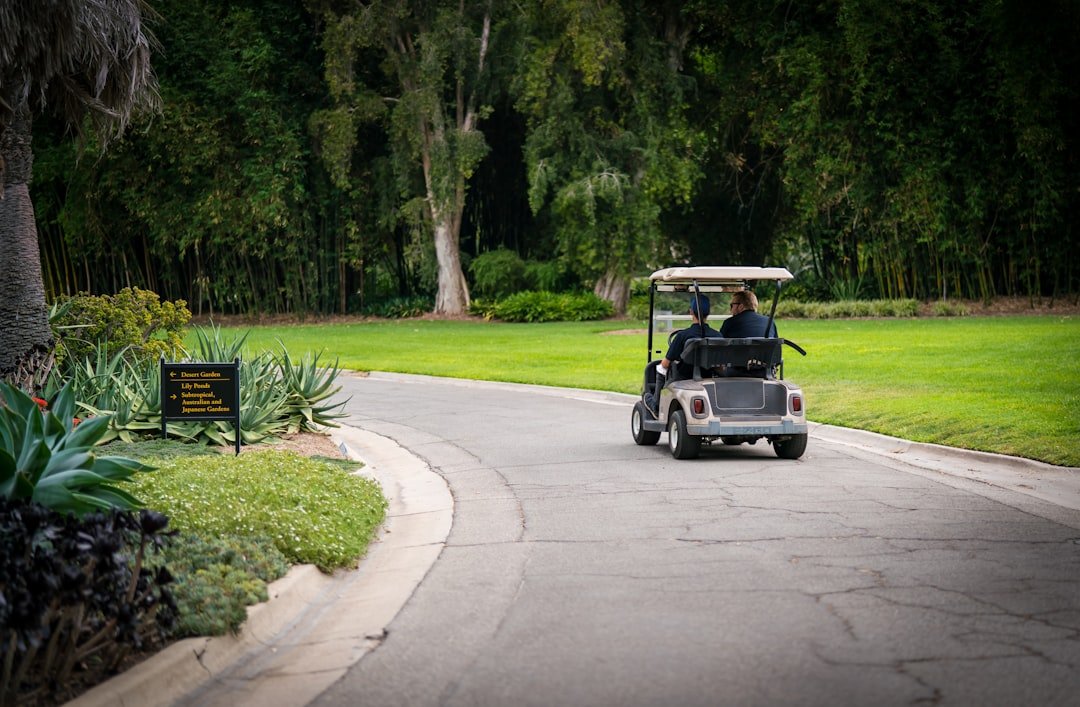
Gas Engines vs. Electric Golf Cart Motors
Not every cart runs on an electric motor. Gas carts use a small internal combustion engine instead — usually a single-cylinder four-stroke in the 9 to 13 horsepower range — and they trade the electric motor’s quiet, low-maintenance operation for more range and towing torque, which is why they’re common on hunting leases, farms, and job sites.
The tradeoff runs the other way too: gas engines need oil changes, spark plugs, and air filters, they’re louder, and plenty of golf courses and gated communities don’t allow them on the property at all. If you’re comparing the two for course use specifically, an electric golf cart motor is almost always the better fit.
Golf Cart Motor Specs by Brand
Stock motor specs vary more between brands than most shoppers expect. Here’s roughly what you’ll find on current production carts from the big three, based on standard trim levels:
| Brand | Motor Type | Typical Power | Notes |
|---|---|---|---|
| Club Car | DC or AC (model-dependent) | 3-5 HP stock DC, higher on Onward/Tempo AC trims | Widest range across the lineup |
| E-Z-GO | DC standard, AC on ELiTE trims | 3-4 HP DC, roughly 6 HP on AC ELiTE models | The TXT’s DC motor is the weakest stock motor from any major brand |
| Yamaha | AC standard on current models | Around 6.7 HP (5.0 kW PowerTech AC) | Most powerful stock electric motor among the big three |
If you’re cross-shopping brands rather than just motors, our Club Car vs E-Z-GO vs Yamaha comparison covers the rest of what separates them — frame quality, suspension, and long-term reliability.
Older 36-volt carts commonly found in EZGO TXT, Club Car DS, and similar classic models run noticeably less power than current 48-volt systems. Converting from 36V to 48V is a common upgrade that typically adds 3 to 4 mph and noticeably more low-end torque, without necessarily requiring a full motor swap.
Signs Your Golf Cart Motor Is Failing
Golf cart motors rarely fail without warning. Watch for these patterns:
- Noticeably less power, especially on hills. A cart that used to climb a slope without complaint and now bogs down is a classic early sign.
- Grinding, whining, or metallic scraping noises. This usually starts as a light grinding from worn bearings and gets louder over days or weeks as the armature runs off-center.
- Overheating. A healthy motor shouldn’t run hotter than about 140°F even under load. If it’s too hot to comfortably touch after a short drive, something’s wrong.
- A burning smell. This points to overheating windings or worn brushes and shouldn’t be ignored.
- Intermittent operation or stalling. Power that cuts in and out, especially under load, often traces back to a partial short in the winding.
Rule These Out Before You Blame the Motor
Most “dead motor” complaints turn out to be something cheaper. Before you assume the worst:
- Check the batteries first. A weak or unevenly charged pack mimics motor failure almost perfectly — it can’t deliver the current the motor needs under load. Our lithium vs lead-acid battery guide covers how to test a pack before replacing anything.
- Inspect wiring and connections. Loose or corroded terminals disrupt current flow and can look exactly like a weak motor from the driver’s seat.
- Check the brushes on a DC motor. Worn brushes are a cheap, DIY-friendly fix that’s often mistaken for a motor that needs full replacement.
If you’ve ruled those out and the symptoms persist, it’s worth having a technician measure current draw against torque output — normal current with weak torque usually confirms a genuine motor fault rather than an electrical one.
How Long Golf Cart Motors Last, and What Replacement Costs
A well-maintained electric golf cart motor is one of the most durable parts on the vehicle. Under normal recreational use, expect 15 to 20-plus years before it needs replacing — most carts go through two or three battery packs and a charger or two before the motor itself gives out. Gas engines have a shorter clock: most run 1,500 to 2,500 hours before needing a rebuild, which works out to roughly 6 to 10 years at typical recreational use.
When it does need replacing, expect to pay:
- $500 to $1,500 for a standard DC motor replacement on a consumer cart, including basic labor.
- $1,500 to $3,500 for AC motor and controller replacements, which cost more in parts and usually require more setup.
- $350 to $900 for a rebuild rather than full replacement, when the housing and core are still sound.
Rebuilding is worth asking about before you commit to a new motor — a worn commutator or bearing set is often cheaper to repair than replace outright, especially on older DC units where parts are still widely available.
Upgrading Your Golf Cart Motor
If your cart feels underpowered rather than actually broken, upgrading it is a realistic option, and swapping in a stronger motor is one of the more popular modifications among owners chasing more speed or better hill performance. A few common paths:
- High-speed or high-torque aftermarket motors. Series-wound replacement motors in the 8 to 9 peak-horsepower range are widely available for EZGO, Club Car, and Yamaha platforms and can add several mph over a stock DC motor.
- 36V to 48V conversions. Stepping up system voltage is often the highest-value upgrade for hill performance — see our guide to the best golf carts for hills for how voltage, gear ratio, and motor type each affect climbing power.
- DC-to-AC conversions. Possible, but it’s a bigger job than swapping a motor alone — you’ll need a matching AC controller, and often new wiring, so budget for the whole system rather than just the motor.
Whatever you upgrade, confirm the new motor’s voltage matches your battery pack and that your controller is rated for the extra current. Mismatched components are the most common reason an upgrade underperforms or fails early. If you’re working around exposed wiring or a controller during any of this, basic electrical safety practices apply just as much to a 48V cart system as anything else with exposed terminals.
Keeping Your Motor Running Longer
- Don’t run the battery pack too low. Deep, repeated discharges force the motor to draw more current for the same output, which adds heat and wear over time.
- Keep vents and housing clear of grass clippings and debris. Airflow around the motor housing matters more than most owners realize, especially in summer.
- Check brushes on DC motors every couple of seasons. Catching wear early is a five-minute inspection that prevents a much bigger repair.
- Don’t overload the cart. Hauling more weight than the cart is rated for — extra passengers, heavy accessories — makes the motor work harder on every hill and shortens its working life.
- Keep terminals and connections clean. A corroded connection forces the motor to compensate for voltage drop, which shows up as heat and reduced performance over time.
Frequently Asked Questions
Are golf cart motors AC or DC?
Both exist. Older and budget carts typically run DC motors; newer mid-range and premium models increasingly run AC motors, which cost more but offer better efficiency and smoother power delivery. Check your cart’s spec sheet or the motor’s nameplate to be sure which one you have.
How much horsepower does a golf cart motor have?
Stock motors typically range from about 3 horsepower on base DC models up to roughly 6.7 horsepower on the strongest current AC motors. Aftermarket high-speed motors can reach 8 to 9 peak horsepower.
Can I upgrade a DC golf cart motor to AC?
Yes, but it’s a system upgrade, not a simple swap. You’ll need a compatible AC controller and typically new wiring alongside the new motor, so most owners budget for the whole conversion rather than treating it as a drop-in part.
Why does my cart’s motor smell hot or burnt?
That’s almost always overheating, either from an undersized motor working too hard, a weak battery pack forcing it to draw excess current, or worn brushes generating extra heat. Stop driving and let it cool, then check the battery pack and brushes before assuming the motor itself has failed.
How do I know if it’s the motor or the batteries?
Test the batteries first. A weak or unevenly charged pack produces symptoms — sluggish acceleration, poor hill performance, sudden power loss — that look almost identical to a failing motor. If the pack tests healthy under load and the problem persists, the motor or controller is the more likely culprit.
Can a golf cart motor get wet?
Most are reasonably sealed against light rain and morning dew, which is normal exposure on a course. Driving through standing water or pressure-washing directly into the motor housing is a different story and can force water past seals that weren’t designed for submersion.
Bottom Line
A golf cart motor is one of the more reliable parts of the cart, and most of what looks like motor trouble actually starts somewhere else — a tired battery pack, a corroded connection, or worn brushes that are a cheap fix if you catch them early. Learn the difference between AC and DC, know your cart’s stock specs, and rule out the electrical basics before you spend money on a replacement.
When it’s really time for a new one, matching voltage and controller compatibility matters more than chasing the highest horsepower number you can find. Get that right, and a new motor should outlast almost everything else you’ll ever replace on the cart.