In this Article
What is a sandie in golf? It is a side bet won by making par or better after hitting into a bunker. Here are the rules, how it differs from a sand save, and five tips to earn more of them.
You are standing on the 14th tee when someone in your group asks whether anybody has a sandie yet. If you nodded along without knowing the answer, you are not alone. So, what is a sandie in golf? It is a simple side bet that rewards you for making par or better on a hole after you visit a bunker.
I hear this term all the time from students in Chicago, usually right after a weekend round with friends. The rules are easy, but the details trip people up, especially the difference between a sandie and a sand save. Here is everything you need to play it correctly, plus how to actually make more of them.
Table of Contents
Table of Contents
What Is a Sandie in Golf? The Short Answer
A sandie, also spelled sandy, is a golf side bet awarded to a player who makes par or better on a hole after hitting into a bunker. MyGolfSpy’s explainer on sandies describes it the same way: the ball goes in the sand, you get it out and onto the green, and you finish the hole in par or better.
That is the whole idea. It is a reward for turning a mistake into a good score. Anyone can make par from the fairway, but making it from the sand takes a real shot and a real putt.
So when someone asks what is a sandie in golf, the best one-line answer is this: it is par or better after the sand. Everything else, including the payout and which bunkers count, is something your group decides together.
The word itself is old golf slang for sand, and you will also hear it called a sandy or a sand save around the clubhouse. It shows up most often in casual weekend games, skins matches, and member-guest events where the side bets are half the fun.
Sandies belong to a family of extra bets that golfers call junk or dots. These sit on top of your regular match, so they give everyone in the group something to play for even when the main match is already decided.
How a Sandie Works, Step by Step
There are only three requirements. Miss one and the sandie does not count.
- Your ball finds a bunker. Most groups mean a bunker near the green, which is where the term comes from.
- You get out and onto the green. The shot from the sand has to land you on the putting surface.
- You finish the hole in par or better. Par is the minimum, so a birdie from the sand also earns it.
Here is a real example. You hit your approach on a par 4 into the front bunker. You splash out to eight feet, then hole the putt. That is four strokes on a par 4, so you earned a sandie.
A par 3 works the same way. Your tee shot trickles into the bunker, you blast out, and you make the putt for a three. Sandie. If you blast out and two-putt, you made bogey and the bet does not pay.
Sandie vs Sand Save: Is There a Difference?
This is where most of the confusion comes from. Golf News Net explains that a sand save is an up-and-down from a bunker, meaning the ball gets out in one shot and is holed in the next. A sandie is essentially the same thing, and golfers usually reach for that word when the up-and-down produces a par.
The difference is mostly about context. Sand save is the statistic. It measures how often a player gets up and down from a greenside bunker, whatever score ends up on the card. Sandie is the side bet, and it needs par or better to pay.
In practice, you can use the two words interchangeably around your buddies. Just remember that when money is on the line, par is the number to hit.
Sandies and Other Golf Side Games
A sandie rarely travels alone. Most groups that play it also track a few other junk bets. Golf News Net’s guide to junk in golf lists the common ones.Side game What earns it Birdie Making a birdie or better on a hole Greenie Reaching a par 3 green in regulation and finishing closest to the pin, usually with a par or better Sandie Making par or better after hitting into a bunker Chippie Chipping in or holing out from off the green Barkie Making par or better after hitting a tree Sharkie Making par or better after hitting into a water hazard
Some groups also award a double sandie when you visit two bunkers on one hole and still make par, and a triple sandie for three. A bunker shot that goes straight in the hole can earn a sandie and a chippie at the same time.
If your group plays net scoring as the main game, our guide to low net golf explains how handicaps fit in. Junk bets work nicely alongside it because they do not depend on strokes given.
How to Score a Sandie Bet in Your Group
There is no official scoring system for a sandie. Most groups pick a fixed amount, often $1 or $5, and settle up after the round. Junk bets are also not always weighted equally, so you can make a birdie worth more than a sandie if you like.
The arguments start when nobody agreed on the details first. I tell every group I play with to settle these questions on the first tee:
- Which bunkers count. Greenside only, or fairway bunkers and waste areas too? Some golfers argue a fairway bunker par should count, so decide before the round.
- Whether the ball must stay on the green. A strict group wants you out in one shot and holed in the next. A loose group only cares about the final score.
- Whether doubles and triples pay extra. Two bunkers and a par is a great hole, so many groups reward it.
- What a sandie is worth. Pick a number and write it on the scorecard.
Agree on those four points and the bet runs itself. Skip them and you will spend the back nine debating a bunker on the sixth hole.
How Often Do Golfers Actually Make a Sandie?
Less often than you think. MyGolfSpy, citing Shot Scope data, reports these sand save rates by handicap.
| Handicap | Sand save rate |
|---|---|
| 0 | 37% |
| 5 | 23% |
| 10 | 20% |
| 15 | 18% |
| 20 | 15% |
| 25 | 10% |
Even a scratch golfer converts only about one in three. Golf News Net also notes that many professionals make sand saves less than half the time. So if you hit one out of five, you are doing fine.
That is exactly why the sandie feels so good. It is a rare result, and your group knows it. If you are still figuring out what a good round looks like, our breakdown of a good score for 9 holes shows how a single bogey from the sand fits into a strong round.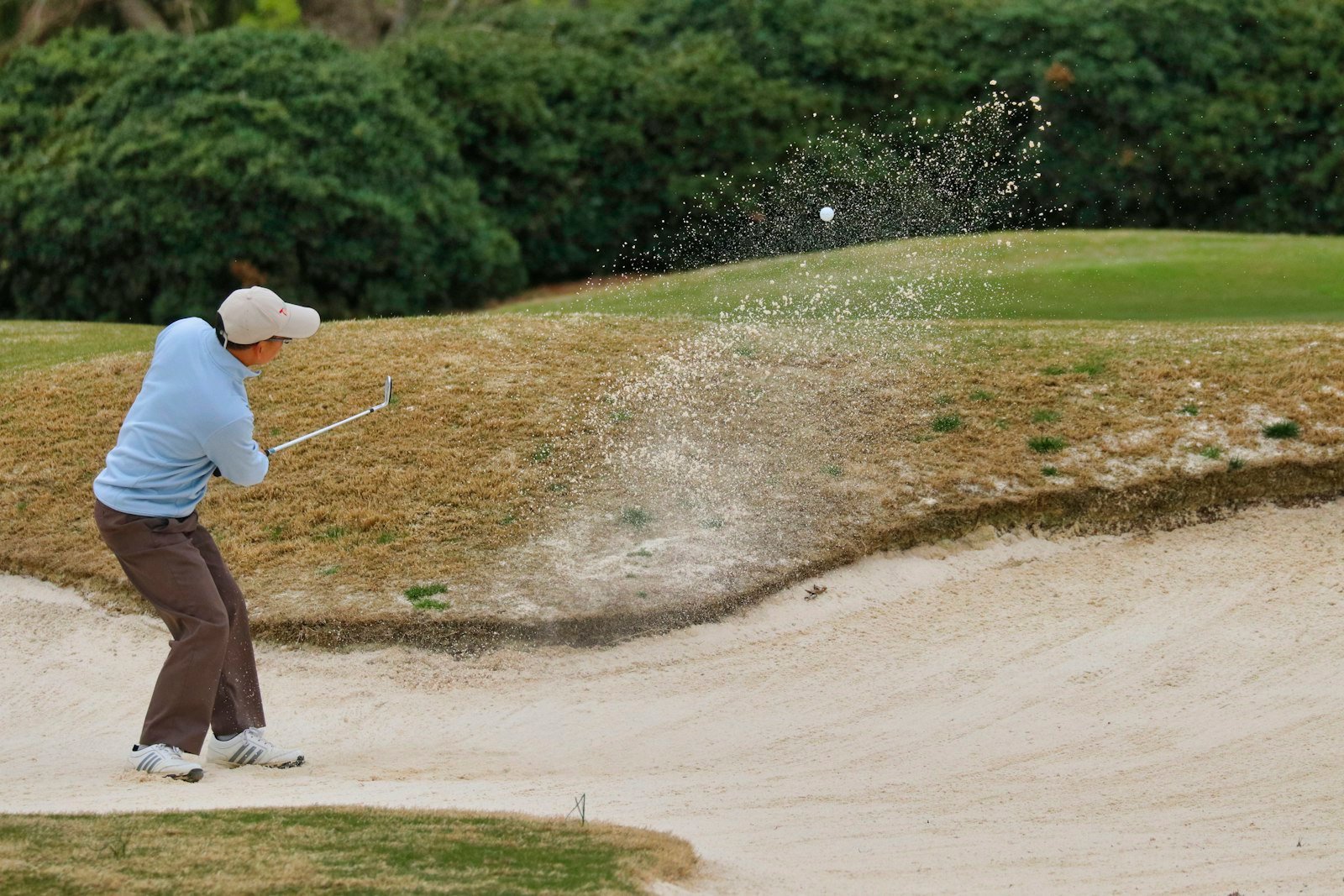
5 Ways to Make More Sandies
Knowing what a sandie is in golf is the easy part. Making one is harder. These are the five things I teach my students, in the order they matter.
1. Aim for the middle of the green
Your first goal is simply to get out and onto the green. Pin hunting from the sand is how you leave the ball in the bunker twice. Pick the fat part of the green and take your two-putt par chance.
2. Hit the sand, not the ball
A bunker shot works by sending a thin layer of sand under the ball. Aim to enter the sand a couple of inches behind the ball and let the club slide through. If you try to pick the ball cleanly, you will thin it across the green.
3. Open the face and keep accelerating
Open the clubface so the bounce on your wedge can do its job, then swing through to a full finish. The most common bunker mistake I see is a swing that slows down at impact. The club gets stuck in the sand and the ball barely moves.
4. Do not touch the sand before you swing
Rake the bunker after you finish, and keep your club out of the sand right behind the ball until you start your swing. Touching the sand there can cost you a penalty stroke, and a penalty ruins any chance at a sandie.
5. Practice the first putt
A sandie needs two good strokes, and the second one is a putt. Most bunker shots finish at medium range, so your lag putting decides whether you walk away with par. Spend as much practice time on the five-footers as on the bunker shot itself.
New to the sand game altogether? Our golf for beginners guide covers the basics of the short game before you start worrying about side bets.
Frequently Asked Questions
What is a sandie in golf, and is it the same as a sand save?
Nearly. A sand save is an up-and-down from a bunker, and a sandie is the side-bet version that needs par or better. Most golfers use the words interchangeably.
Does a sandie have to come from a greenside bunker?
Usually, yes. The standard version uses a bunker near the green. Some groups also count fairway bunkers, so agree on it before you tee off.
Does a birdie from the bunker count as a sandie?
Yes. A sandie is par or better, so a birdie from the sand easily qualifies. Some golfers call it a sandy birdie.
How much is a sandie worth?
There is no official value. Groups usually agree on a fixed amount such as $1 or $5 per sandie and settle after the round.
Is it spelled sandie or sandy?
Both spellings are common. Sandie and sandy mean the same thing on the course, so use whichever your group prefers.
The Bottom Line
Now you know what a sandie is in golf and how to win one. It rewards the one skill that separates good short games from average ones: getting up and down from the sand. Agree on the rules on the first tee, aim for the middle of the green, and practice the putt that follows. Do that and you will win more of them than your friends expect.