In this Article
Learn how to use a golf half swing to control distance, clean up your full-swing sequencing, and hit more consistent wedge shots — with clock-based drills, real yardages, and the most common mistakes to avoid.
If you’ve ever watched a low-handicap player hit a crisp 70-yard wedge shot that stops dead next to the pin, there’s a good chance a golf half swing was doing the work behind the scenes. It’s one of the simplest moves in the game to learn, and one of the most under-practiced. Most golfers spend all their range time on the full swing and treat anything shorter as an afterthought.
That’s backwards. The half swing isn’t a lesser version of your full swing — it’s the building block underneath it. Get the half swing right and you’ll hit better wedges, control your distance on in-between shots, and even clean up flaws in your full motion along the way.
What Is a Golf Half Swing?
A golf half swing is exactly what it sounds like: a swing that covers roughly half the length of your full motion. Picture your swing as a clock face, with 12 o’clock directly above your head. On a half swing, your hands stop around 9 o’clock going back and finish around 3 o’clock coming through.
At the top of a half swing, your lead arm sits roughly parallel to the ground. There’s no big shoulder turn, no wrist cock building into a full hinge, and no long, sweeping follow-through. It’s a compact, controlled motion — but it still uses your body, not just your arms.
A half swing typically produces about 70-75% of your full-swing distance. That number moves around depending on club and tempo, but it’s a useful baseline. With a pitching wedge, a lot of golfers see roughly 50 yards from a half swing; the same motion with a 9-iron often lands closer to 65 yards.
Why the Half Swing Matters More Than You Think
Sequencing is the real value here. In a full swing, your hips, torso, arms, and hands all have to fire in the correct order, and any breakdown gets amplified by the extra length and speed. A half swing removes a lot of that room for error.
With fewer moving parts, you can actually feel whether your lower body is leading the downswing or whether your hands and arms are racing ahead of your turn. That’s why so many instructors — including plenty of PGA teachers — start beginners here before ever letting them make a full pass at the ball.
It’s not just a beginner tool, either. Tour players lean on the half swing constantly for punch shots, knockdowns, and any approach where accuracy matters more than raw distance. Golf Digest’s breakdown of tour-level half-wedge technique notes that even elite ball-strikers treat these shorter shots as a distinct skill worth deliberate practice, not just a smaller version of the full swing. Once you’ve got a full swing you’re happy with, the half swing becomes your go-to for the shots that actually save strokes.
How to Set Up and Execute a Golf Half Swing
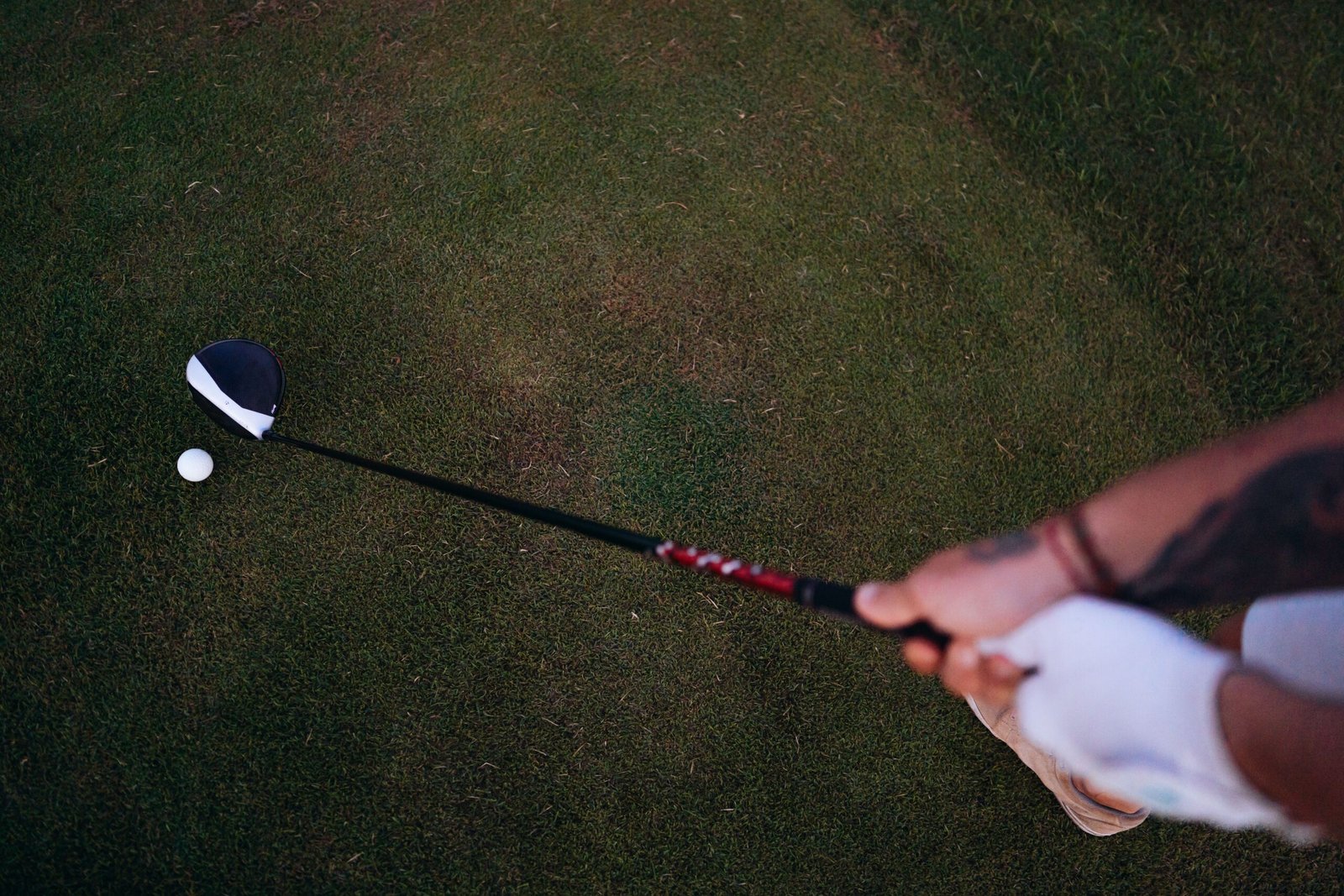
Start with a mid-iron or wedge — something forgiving, like a pitching wedge or 9-iron. Set up like you normally would, but lean slightly onto your front foot, roughly 60/40 in favor of your lead side. That small weight bias helps the club bottom out in the right spot instead of catching the ground early.
Take the club back using your arms and shoulders together, not just your hands. Stop when your lead arm is parallel to the ground — that’s your 9 o’clock checkpoint. Your wrists should have hinged naturally by this point, but you’re not forcing extra wrist action to make up for a short backswing.
The Clock Drill for the Golf Half Swing
The clock drill is the fastest way to build feel for swing length. Picture the numbers 7 through 5 around your body, with 12 overhead. A swing from 8 to 4 produces your shortest shots — think 20-30 yards with a wedge. A swing from 9 to 3 is your standard half swing, good for 50-65 yards depending on club. Stretch to 10 and 2 and you’re into three-quarter territory.
Practice hitting to specific numbers on the range instead of just swinging “medium.” Most players find each clock-hour difference is worth roughly 10-15 yards. Once you’ve calibrated those numbers to your own swing, you’ve got a built-in yardage system that doesn’t rely on guessing how hard to swing.
Let Your Body Lead the Downswing
The biggest technical key in a golf half swing is changing direction with your hips and torso, not your hands. As you transition from backswing to downswing, turn your hips toward the target and let that rotation pull the club down and through. Your weight shift in the downswing should mirror what happens in your full swing — just on a smaller scale.
Resist the urge to help the ball into the air with your hands. A half swing with a passive lower body and active hands is exactly how you end up with the classic weekend-golfer chunk-or-skull combo. Let the body turn, and let the club follow it.
How Far Should a Half Swing Go?
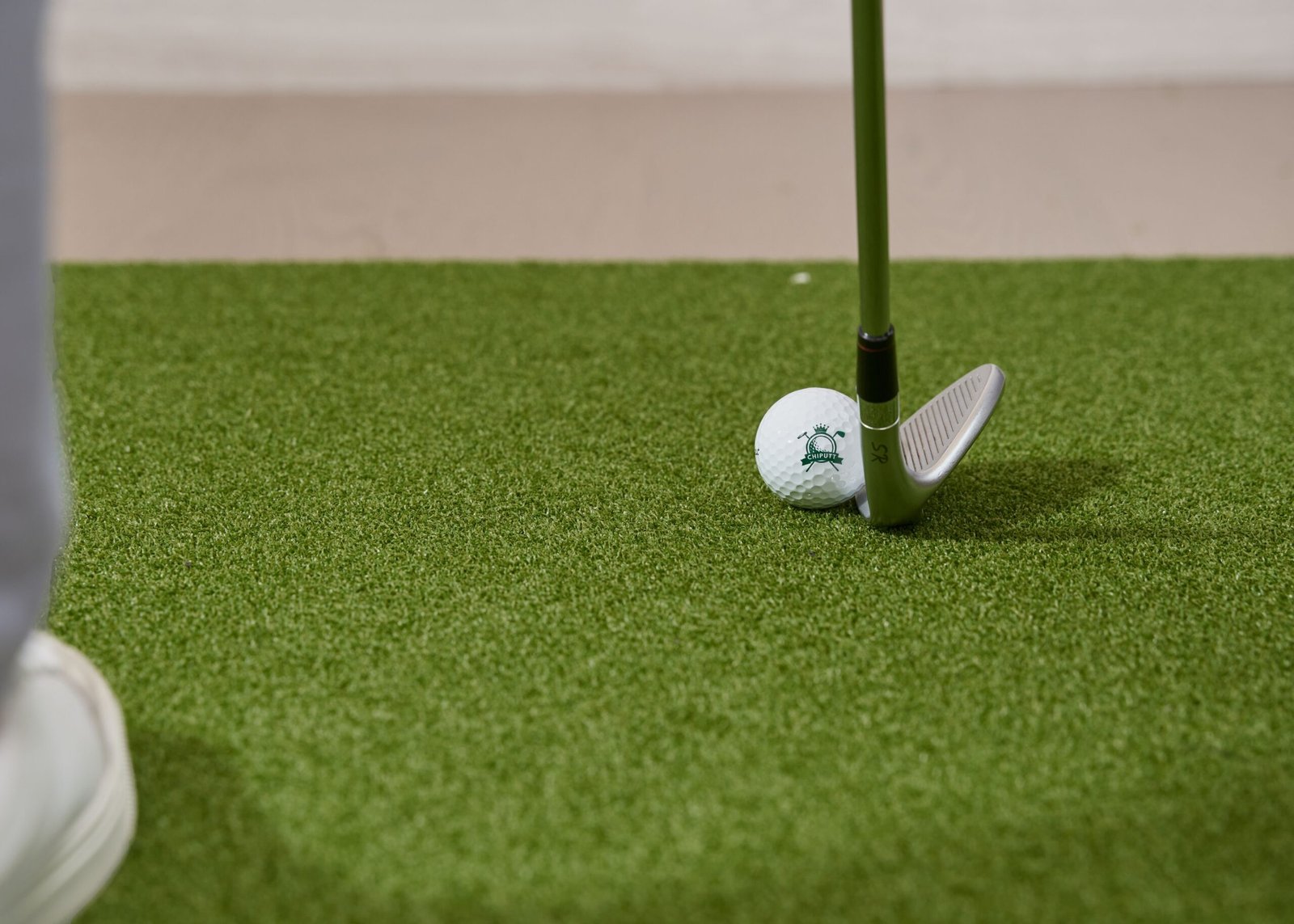
There’s no single number, since it depends on the club, your swing speed, and how solidly you strike it. But as a rough guide, most mid-handicap golfers see something like the numbers below with a smooth 9-to-3 half swing.
- Pitching wedge: roughly 45-55 yards
- Gap or approach wedge: roughly 40-50 yards
- Sand wedge: roughly 30-40 yards
- 9-iron: roughly 60-70 yards
Here’s the counterintuitive part: a solid, centered strike on a half swing will often out-fly a mishit full swing. Distance comes from contact quality first and swing length second. If your full swing is inconsistent, spending more time on half swings can actually add yards, not just accuracy.
Golf Half Swing Drills to Build Consistency
These three drills cover the setup, the sequencing, and the distance control piece — work through all three and you’ll notice the carryover into your full swing within a few range sessions.
1. The Freeze Drill
Take your normal setup and make a half swing backswing, stopping fully at the 9 o’clock position. Hold it for a full three seconds before continuing through to impact. This forces you to actually check your position — lead arm parallel, clubface square, weight still balanced — instead of rushing past it the way you would in a live swing.
Do six to eight reps before hitting any balls. It feels slow and a little awkward at first. That’s the point; you’re building a checkpoint your body can find on its own later.
2. The Wrist Control Drill
Tuck a tee or a credit card under the strap of your trail-hand glove, or just wedge it against your wrist. Make half swings while keeping the card from falling out. This keeps your trail wrist from flipping or bowing too early, which is one of the most common ways golfers lose control of the clubface on shorter shots.
If the card keeps popping loose, your hands are getting too active through impact. Slow down and let your body rotation do more of the work.
3. The Three-Length Wedge Drill
Pick one wedge and hit three shots at three different clock lengths — say, 8-to-4, 9-to-3, and 10-to-2 — without changing your tempo between them. The goal is distance separation purely from swing length, not from swinging harder or softer.
Track your yardages for each length. Within a session or two you’ll have three reliable numbers for that club, which turns guesswork on approach shots into something closer to a yardage chart.
Common Golf Half Swing Mistakes
The most frequent mistake is an overly long backswing that sneaks past the 9 o’clock mark without you noticing, which usually forces a deceleration into impact to keep the ball from flying too far. A shorter, disciplined backswing actually frees you up to accelerate through the shot with confidence.
The second mistake is trying to control distance by swinging at different speeds instead of different lengths. Varying your tempo is far harder to repeat under pressure than varying how far back you take the club. Keep your tempo constant and let swing length do the distance work — the same principle covered in our guide to forearm rotation in the golf swing, where timing consistency matters more than raw effort.
Finally, watch your grip pressure. A death grip on a half swing shot is one of the fastest ways to lose feel entirely, since these shots depend on touch more than power. If you’re unsure whether your grip is contributing to tension, that’s worth checking before you blame your swing mechanics.
When to Use a Half Swing on the Course
The obvious spot is anywhere inside 100 yards where you don’t need a full-swing wedge shot. But experienced players also reach for a half swing when the situation calls for control over distance — punching under wind, hitting from an awkward stance, or playing a knockdown shot under tree branches.
According to PGA of America’s instruction archive, the half swing is also one of the most efficient shots to practice under time pressure, since the shorter motion lets you get in more quality reps per range session than full swings do.
It’s also simply lower risk. A half swing that goes slightly off-plan tends to produce a mediocre shot; a full swing that goes off-plan can produce a disaster. When the round is on the line and you need to just get the ball in play, a controlled half swing is often the smarter choice over a hero full swing.
Frequently Asked Questions
What is a half swing in golf?
A half swing is a shortened golf swing where your hands travel from roughly 9 o’clock on the backswing to 3 o’clock on the follow-through, using a clock-face analogy with 12 o’clock overhead. It uses the same fundamentals as a full swing — body rotation, weight shift, a stable clubface — just compressed into a smaller motion.
How far should a golf half swing go?
It depends on the club, but a half swing typically produces 70-75% of your full-swing distance. With a pitching wedge, that’s often somewhere around 45-55 yards for a mid-handicap golfer; with a 9-iron it’s commonly 60-70 yards.
Is the half swing good for beginners?
Yes. Instructors frequently start new golfers with half swings because there’s less that can go wrong mechanically, and it’s easier to build solid contact before adding the speed and length of a full swing. It’s also a great shot to fall back on any time your full swing feels shaky mid-round.
Does practicing half swings help my full swing?
It can, quite a bit. Because a half swing has fewer moving parts, it exposes sequencing problems — like an over-active upper body or hands racing ahead of the hips — that get masked or amplified in a full swing. Many golfers find flaws are easier to fix at half speed and half length first.
How do I control distance with a golf half swing?
Change the length of your swing, not the speed. Using a consistent tempo and varying only how far back and through you swing — the clock drill is the easiest way to practice this — gives you far more repeatable distance control than trying to swing “a little softer” or “a little harder.”
What’s the difference between a half swing and a three-quarter swing?
A half swing stops around 9 and 3 o’clock, with the lead arm roughly parallel to the ground at the top. A three-quarter swing extends further, typically to 10 and 2 o’clock, producing more distance and requiring slightly more wrist hinge and body rotation. Both are shorter than a full swing and both are used for the same reason: added control over raw distance.
Final Thoughts
The golf half swing doesn’t get the attention a booming driver or a buttery-smooth full iron swing gets, but it’s arguably more valuable to your scorecard. It’s the shot you’ll use most often once you get inside scoring range, and it’s the drill that will quietly clean up flaws in your full motion at the same time.
Spend even fifteen minutes a range session on half swings at different clock lengths, and you’ll start to see two things happen: your wedge distances get a lot more predictable, and your full swing starts feeling more connected too. That’s a good trade for such a small, simple motion.
FAQ: Golf Half Swing
When should I use a half swing on the course? Half swings are ideal for approach shots inside a full-swing yardage gap, punch shots under trees, and any situation calling for extra control over raw distance.
Does a half swing really improve contact consistency? Yes — the shorter, more controlled motion reduces timing variables, which is exactly why it’s a standard practice drill for building solid center-face contact before adding full speed back in.
How much distance do you lose with a half swing? Roughly 60-70% of your full-swing distance with the same club, though this varies by player — it’s worth calibrating your own half-swing yardages on the range rather than guessing on the course.
What’s a good drill to practice the half swing? The “9-to-3” drill (backswing to a 9 o’clock position, through to a 3 o’clock finish) is the standard way to groove a repeatable half swing and build a foundation for the full motion.
Related reading: Reverse C Golf Swing, Golf Spine Angle Too Upright, and Caitlin Clark’s Golf Swing.