In this Article
Which golf clubs actually count as a low lofted golf club? Here's how drivers, fairway woods, hybrids, and long irons compare on loft, and when less loft actually helps your game.
If you’ve ever stood on the tee wondering why your driver launches so low compared to your wedge, you’ve already bumped into the idea behind a low lofted golf club. It’s simply a club built with a flatter face angle — think drivers, fairway woods, hybrids, and long irons — designed to send the ball out low and let it run rather than climb high and stop fast. Understanding which clubs fall into that category, and when to actually reach for one, changes how you manage distance, trajectory, and mis-hits on the course.
I’ve been teaching golf in the Chicago area for seven years now, and loft is one of those topics that trips up even golfers who’ve played for decades. They know their 7-iron goes higher than their 5-iron, but ask them why their 3-wood keeps rolling into the second cut and they draw a blank. So let’s clear it up: what loft actually is, which clubs count as low lofted, and how to use that knowledge to hit smarter shots.
What “Loft” Actually Means
Loft is the angle between the clubface and an imaginary vertical line running straight up from the ground. A flatter face — closer to vertical — has less loft. A more tilted-back face has more loft. That single number, stamped right on the sole of most clubs, is doing more work than golfers give it credit for.
More loft launches the ball higher and adds backspin, which is why a lob wedge pops the ball almost straight up. Less loft launches the ball lower, produces less spin, and lets it travel farther before gravity and drag pull it down. That’s the entire logic behind a low lofted golf club: minimize the tilt on the face so more of your swing speed turns into forward distance instead of height.
One thing worth knowing before you go compare clubs by the number stamped on them: there’s no universal industry standard. A “7-iron” from one brand might carry 33 degrees of loft, and a game-improvement 7-iron from another brand might sit at 28 degrees. Manufacturers have quietly strengthened lofts for years to make distance claims look better. So when we talk about which clubs are low lofted, think in terms of categories and rough ranges, not exact numbers stamped on a sole.
Which Clubs Are Low Lofted Golf Clubs?
Every low-loft club in a typical bag falls into one of four groups: drivers, fairway woods, hybrids, and long irons. Here’s how they break down and roughly where each one sits on the loft scale.
The Driver: The Lowest Lofted Club in Your Bag
Besides the putter, the driver carries the least loft of any club you’ll swing — typically 8 to 12 degrees, though a handful of low-spin models go as low as 7 degrees. That flat face is built for one job: cover as much ground as possible off a tee, where you can set the ball up on a perfect lie and swing as hard as you comfortably can.
Driver loft isn’t a “lower is better” situation, though. If your swing speed is under 85 mph, a 10.5- to 12-degree driver will actually carry farther than an 9-degree head, because you need the extra loft to get the ball airborne long enough to travel. Faster swingers with a slightly upward angle of attack can drop down to 8 or 9 degrees and still launch it plenty high. This is exactly the kind of gearing decision that matters if you’re chasing more swing speed — the loft on your driver has to match the speed you’re actually generating, not the speed you wish you had.

Fairway Woods: The Next Step Down in Loft
A 3-wood typically sits between 13 and 16.5 degrees, with a 5-wood running 18 to 21 degrees. These clubs are still low lofted relative to your irons, but they’re built with a wider sole and more forgiveness than a driver, which makes them useful off the deck as well as the tee. If you carry a specialty high-lofted fairway wood, our breakdown of the heavenwood vs 7 wood debate covers where those sit relative to standard woods.
The reason a lot of mid-handicap golfers lean on a 3-wood off the tee instead of a driver isn’t really about loft — it’s about the shorter shaft and smaller head giving them more control. But make no mistake, a 3-wood is still a low-loft club at heart, and it will run out low and hot compared to anything in your iron set.
Hybrids and Long Irons: Low Loft With More Forgiveness
Hybrids were built to replace long irons that most recreational players struggle to get airborne. A 2-hybrid runs roughly 16 to 18 degrees, a 3-hybrid sits around 19 to 21 degrees, and a 4-hybrid lands near 22 to 25 degrees. Compare that to the irons they replace — a traditional 2-iron sits around 18 degrees and a 3-iron around 21 degrees — and you can see why hybrids caught on. Same low loft, much easier to hit solid.
Long irons themselves — the 2-, 3-, and 4-iron — technically belong in this low-loft category too, but they’ve mostly fallen out of favor outside of better players and pros. If you want to see how loft numbers have shifted across an entire iron set over the decades, our Ping irons by year timeline is a good real-world example of manufacturers gradually strengthening those lofts.

Low Loft vs. High Loft: What Actually Changes in Your Shot
Swap a low lofted golf club for a high-lofted one and three things change immediately: launch angle, spin rate, and roll-out. A driver at 10 degrees launches low and flat and keeps rolling once it lands. A 60-degree lob wedge launches almost straight up, grabs the green with backspin, and stops within a couple of feet of where it lands.
That inverse relationship — less loft, less spin, more roll; more loft, more spin, more stop — is the whole reason your bag has 14 different clubs instead of one. Low-loft clubs are built to cover ground efficiently. High-lofted clubs are built to control exactly where the ball finishes. Neither is “better.” They’re tools for completely different jobs.
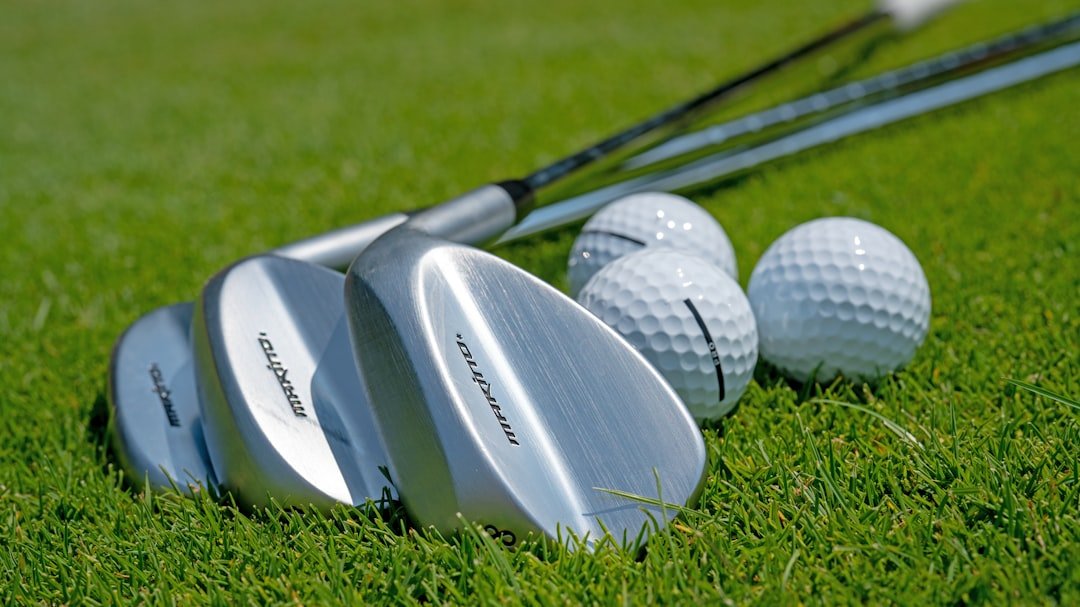
Wind is where this really shows up on the course. A penetrating, low-launching shot from a low lofted golf club barely gets pushed around in a headwind, because it never climbs high enough to catch much air resistance. A high, spinny wedge shot in the same wind can balloon and come up well short. That’s why you’ll hear better players say “take an extra club and choke down” into the wind instead of swinging harder — they’re managing loft and trajectory, not just distance.
Do You Actually Need a Lower-Lofted Club in Your Bag?
Most recreational golfers are already carrying plenty of low loft between their driver and fairway woods. Where it gets interesting is the gap between your fairway woods and your irons — the 3-, 4-, and 5-iron territory that a lot of players genuinely struggle to launch.
- If you’re leaving your long irons in the garage because you can’t get them airborne, a hybrid in the same loft range will solve that without sacrificing distance.
- If you’re consistently short on approach shots into greens with your mid-irons, check your actual loft gapping rather than assuming you need a lower-lofted club — loft inflation across brands means your “6-iron” might already be doing a 5-iron’s job.
- If you’re fighting a big slice, adding more low-lofted clubs won’t fix it. A stronger clubface path and grip matter more than the loft number stamped on the sole.
- If you play in consistently windy conditions, a stronger-lofted 3-wood or driving iron can be a smart addition for keeping the ball flight down.
A simple gut check: hit a few balls with your current 4- or 5-iron on the range. If contact feels thin, the ball flies low and left (for a right-hander) more often than not, or you’re just not getting the club off the ground consistently, that’s a sign a hybrid at the same loft will serve you better than another low-loft option with a smaller face and less forgiveness.
Common Mistakes Golfers Make With Low Lofted Clubs
The biggest one I see on the range: golfers try to “help” a low lofted golf club into the air by scooping at impact, flipping their wrists early to add loft manually. It backfires every time — you lose compression, add spin you don’t want, and usually thin or top the shot. A driver or long iron is designed to launch the ball with almost no manual assistance from you. Trust the loft that’s already built into the face.

Another common mistake is ball position. Move the ball too far back in your stance with a low lofted golf club and you effectively deloft it further, sending shots low and hooky. Play it too far forward and you can add loft you didn’t want, ballooning the shot. For a driver, that means teeing it forward, roughly off the inside of your lead heel. For fairway woods and hybrids, a couple inches back from that, closer to center.
Last one: assuming every “3-wood” or “2-hybrid” performs the same across brands. Because there’s no loft standard in the industry, the only way to really know what you’re working with is to have your clubs measured — most golf shops and clubfitters have a loft-and-lie gauge and can check it in a couple of minutes per club. If the USGA’s equipment rules are new to you, their equipment standards page is a solid primer on what’s actually regulated and what isn’t (loft happens to be one of the things brands have wide latitude on).
Frequently Asked Questions
What is the lowest lofted golf club you can carry?
Outside of the putter, the driver is the lowest lofted golf club in a standard bag, typically ranging from 8 to 12 degrees. Some low-spin tour models go as low as 7 degrees, but most recreational golfers play something between 9 and 10.5 degrees.
Is a low lofted golf club harder to hit than a high-lofted one?
Generally yes, for two reasons. A flatter face gives you less margin for error on strike quality, and it’s naturally harder to get the ball airborne with a lower launch angle. That’s exactly why hybrids replaced long irons for most golfers — same low loft, but a wider sole and lower center of gravity make solid contact much more forgiving.
What’s the crossword answer for “low-lofted golf club”?
If you landed here from a crossword puzzle, the answer that shows up most often in NYT-style clues is TWOIRON (two iron), a seven-letter answer referencing the classic long iron with roughly 17 to 20 degrees of loft. On the course, though, most golfers today play a hybrid or driving iron instead of an actual 2-iron for that same low-loft, long-distance role.
Should beginners use low lofted golf clubs?
Beginners generally do better avoiding extremely low-lofted clubs like a 2- or 3-iron, since those demand precise, fast contact to get airborne. A driver with 10.5 to 12 degrees of loft and a set of hybrids in place of long irons gives new golfers the distance benefits of low loft without the punishing learning curve.
Does lower loft always mean more distance?
Not automatically. Distance depends on matching loft to your swing speed and angle of attack, not just picking the lowest number available. A slower swing speed paired with too little loft produces a low, weak shot that doesn’t carry — you actually need more loft, not less, to maximize distance at lower swing speeds.
How do I know the actual loft of my clubs, not just the number on the sole?
The only reliable way is to have them measured on a loft-and-lie machine, which most clubfitters and many golf shops have on hand. It takes about two minutes per club and tells you the real angle instead of the marketing number stamped on the sole — especially useful if you’re building out a set with a mix of brands.
Putting It Together
A low lofted golf club isn’t a special category you need to chase — it’s just the group of clubs, driver through long irons and hybrids, built to move the ball a long way with a low, penetrating flight. Knowing where each one sits on the loft scale helps you understand why your driver rolls forever and your wedge stops on a dime, and it makes gapping your bag a lot less confusing.
If you take one thing from this: stop fighting your low-lofted clubs into the air. Trust the loft that’s already built into the face, get your ball position right, and let the club do the job it was designed for. That’s the difference between fighting your driver every round and actually trusting it off the tee.
Where to Shop
Affiliate links – we may earn a small commission at no extra cost to you, and it never changes what we recommend.
- Adjustable drivers – lets you change loft without buying another club.
- Strong-lofted fairway woods – the usual alternative off the tee.
- Driving irons – low loft with far more control in wind.
- Launch monitors – loft decisions are guesswork without launch and spin numbers.