In this Article
Learn how to throw forehand in disc golf with the right grip, stance, wrist snap, and follow-through — plus the drills and disc choices that stop the wobble and add real distance.
If you’ve only ever thrown backhand, learning how to throw forehand in disc golf can feel like starting the sport over from scratch. Your hips move differently, the disc sits differently in your hand, and the release timing is nothing like what your body already knows. But once it clicks, a forehand throw gives you a shot shape a pure backhand player simply doesn’t have, and it can save your scorecard on holes that bend the wrong way.
I’ve spent the last seven years teaching golfers here in Chicago, and more of them than you’d expect end up on a disc golf course with their kids on the weekend. The forehand throw, also called the sidearm, is almost always the shot they get stuck on. The good news is that the mechanics are teachable in an afternoon if you build them in the right order: grip first, then stance, then the throwing motion itself.
What Is a Forehand Throw in Disc Golf?
A forehand throw is any throw made with the disc on the same side of your body as your throwing arm, released with a whipping, sidearm motion instead of the across-the-body pull of a backhand. Ultimate players call the same motion a flick. Both names describe the same basic action: the disc is pushed out from the hip like you’re skipping a stone, not pulled across your chest.
Right-handed players use forehand to curve shots right-to-left off the release, which makes it the natural choice for doglegs that bend that direction, tight wooded gaps, and low approach shots under branches. It’s also just a different set of muscles and angles than backhand, so a lot of players learn it purely to reduce arm fatigue over an 18-hole round.
You don’t need to replace your backhand to add this shot. Most experienced players carry both and pick whichever one matches the hole in front of them. The Professional Disc Golf Association’s official rules don’t favor one throwing style over the other, so there’s no competitive downside to being genuinely two-handed with your technique.
The Grip: Where a Reliable Forehand Throw Starts
Grip is where most beginners sabotage themselves before they even start the throwing motion. For forehand, the most common and easiest to learn is the power grip: your index and middle fingers rest along the inside rim of the disc, your ring finger and pinky curl underneath for support, and your thumb sits flat on top of the flight plate to keep the disc stable through the swing.
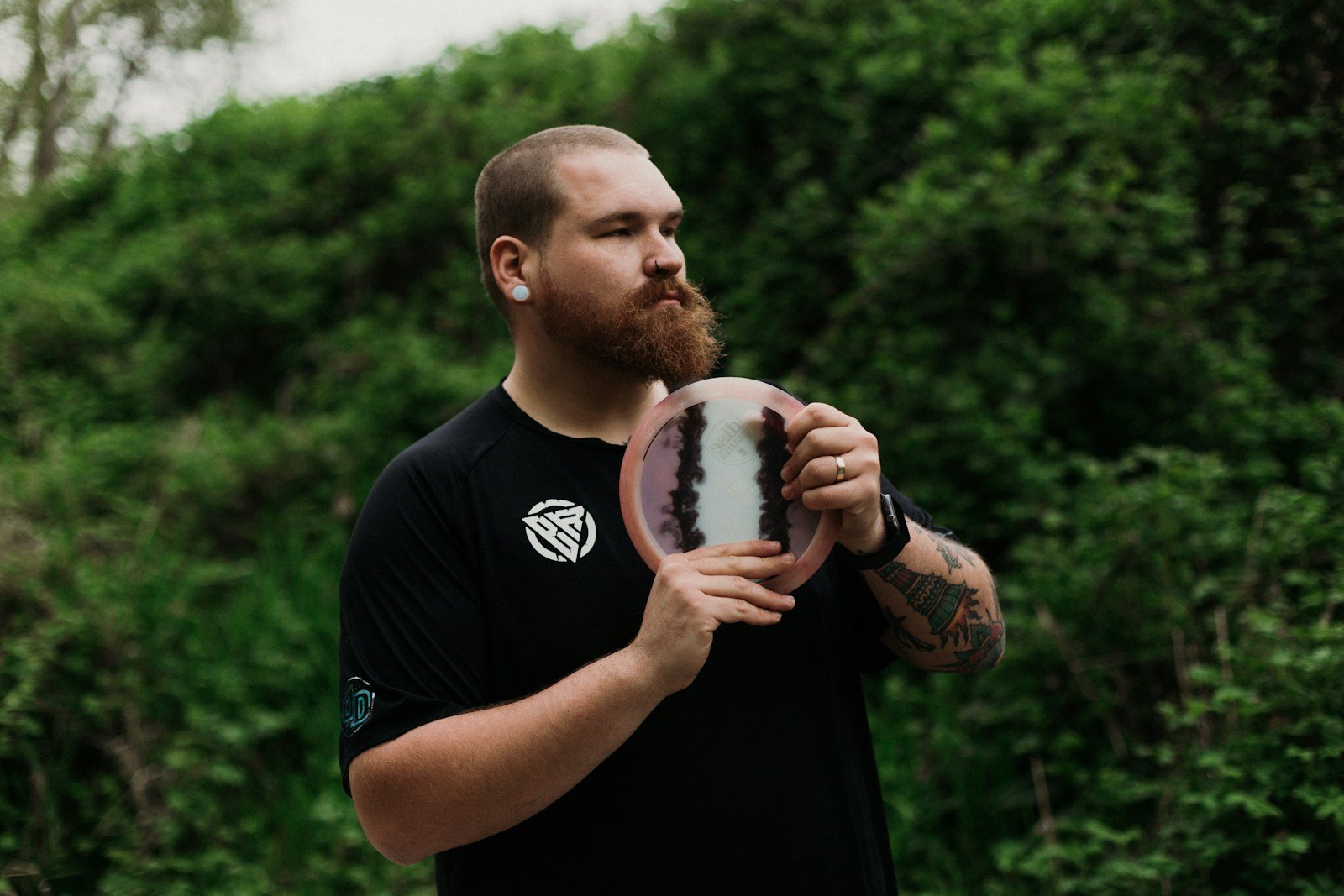
Two other grips are worth knowing once the power grip feels natural. A stacked-finger grip, where your middle and ring fingers sit directly beneath your index finger, trades a little power for a more compact, repeatable release. A fan or split grip spreads your fingers wider along the rim for extra touch on shorter approach shots, at the cost of raw distance.
None of these grips need to be crushing. The instinct is to squeeze the disc tight so it doesn’t fly out of your hand early, but a death grip actually tenses your forearm and kills the wrist snap you need later. The same idea applies to golf clubs, as we cover in our guide to types of golf grips: small changes in hand placement change everything downstream, and tension is almost always the enemy of a clean release.
Setting Up Your Stance and Body Position
Stand with your body turned roughly perpendicular to the target, so your non-throwing shoulder points down the fairway, not your chest. Feet start about shoulder-width apart, with your throwing-side foot slightly back. This closed-off position is what lets your hips rotate into the throw instead of just your arm swinging on its own.
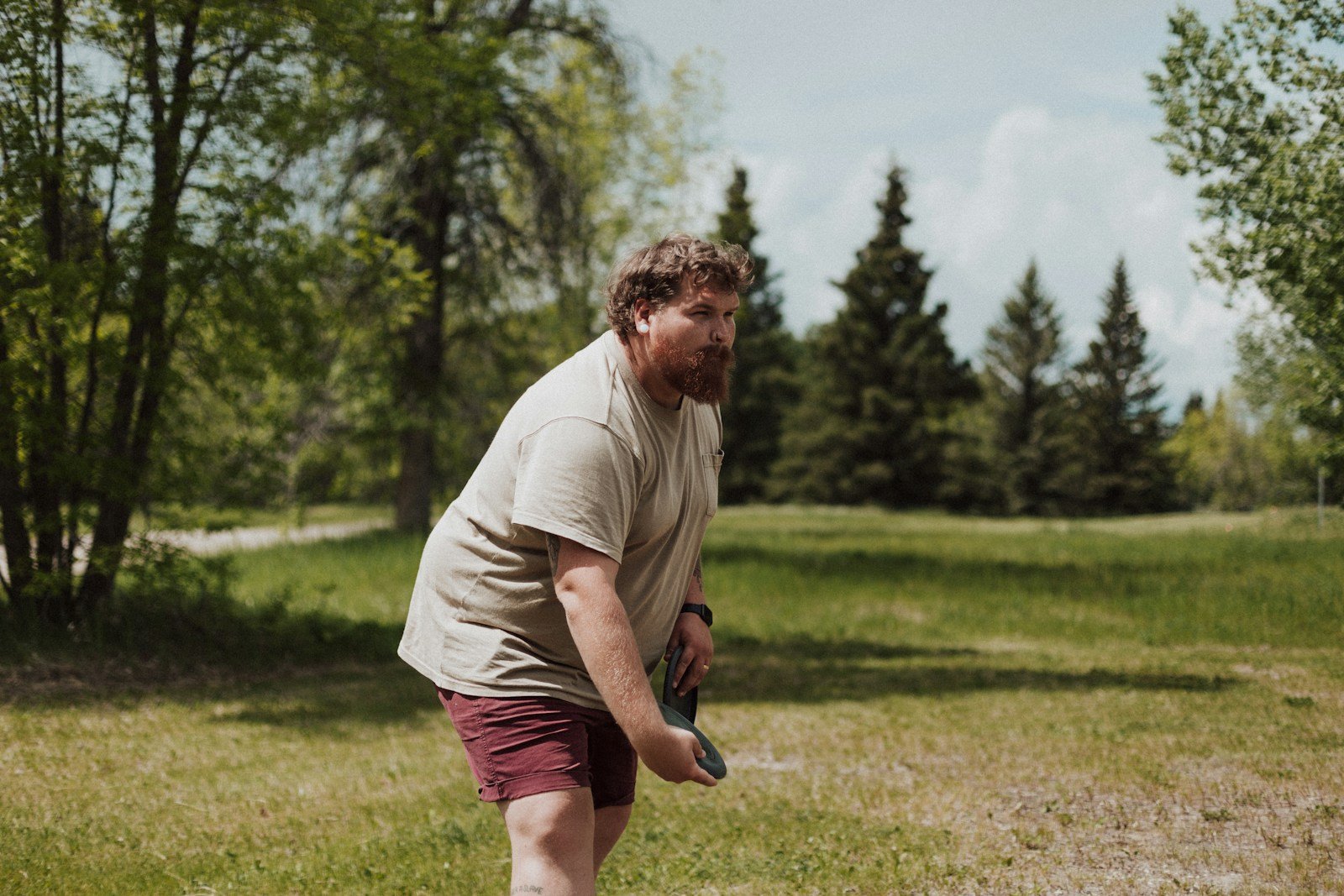
Keep your knees soft and your weight loaded onto your back foot at address. A lot of new throwers stand too upright and too square to the target, which flattens the whole motion into an arm-only push. Bending slightly at the hips and staying athletic through your stance gives your lower body something to actually rotate against.
If you’re adding footwork later for distance, a simple two-step approach, right foot then left foot for a right-handed thrower, works better while you’re learning than trying to copy a pro’s full run-up. Start standing completely still. Footwork only adds value once the arm and hip mechanics are already reliable.
How to Throw Forehand in Disc Golf: Step-by-Step Mechanics
Once your grip and stance are set, the actual throw breaks down into four connected pieces. Rushing any one of them is the single biggest reason forehand throws feel inconsistent, so it’s worth walking through each phase slowly the first few dozen times you practice.
The Reachback and Wrist Load
Pull the disc back so your arm is bent roughly ninety degrees at the elbow, with the disc pointed slightly away from the target. As you reach back, cock your wrist so the back of your hand angles toward your forearm. This is the load that gets released later, and skipping it is why a lot of beginner throws come out flat and powerless.

Hip Rotation and Weight Transfer
Power starts from the ground, not the shoulder. Push off your back foot and let your hips rotate open toward the target first, ahead of your arm and shoulders. Your elbow should lead the disc forward, almost like you’re throwing a ball, rather than your hand and wrist arriving first.
This sequencing, hips before arm, is the same kinetic chain idea behind a lot of rotational golf swings, and it’s driven largely by forearm rotation through the release. We break that motion down in more depth in our guide to forearm rotation in the golf swing, and the underlying joint action transfers surprisingly well between the two sports.
The Wrist Snap and Release
As your arm swings forward, snap your wrist from its cocked position through to full extension right as the disc leaves your hand. This snap is what puts spin on the disc, and spin is what stabilizes its flight. A weak or late wrist snap is the number one cause of a disc that wobbles instead of flying flat.
Try to make contact with the rim through your finger pads, not just the side of your fingers, as you release. It sounds like a small detail, but it changes how cleanly the disc comes off your hand and how much spin you actually generate.
Follow-Through
Let your arm continue across your body after release, finishing with your palm facing up toward the sky. If your palm ends up facing down or sideways, that’s usually a sign your wrist snap happened too early or too late relative to the release point. A clean, consistent follow-through is one of the easiest things to check on video if you’re practicing alone.
Fixing the Most Common Forehand Mistakes
Wobble and flutter. This almost always traces back to a passive or poorly timed wrist snap. Slow down, throw at 50 percent power, and focus purely on snapping the wrist crisply through release before you ever try to add distance back in.
All-arm throwing. If your shoulder and elbow are doing all the work with no hip rotation, you’ll hit a hard ceiling on distance and put unnecessary strain on your elbow. Feel for the push off your back leg starting the motion, with your arm simply along for the ride until the very end.
Forcing full power too soon. A forehand thrown at 100 percent effort with bad mechanics just amplifies whatever is already going wrong. Smooth and controlled at 70 percent power will out-fly a rushed, maxed-out throw almost every time while you’re still building the motion.
Using the wrong disc for your skill level. An overstable driver in a beginner’s hands often just doesn’t turn over at all, which reads as a mechanical failure that’s actually an equipment mismatch. More on picking the right disc below.
For a deeper technical breakdown with slow-motion footage, Innova’s own coaching guide on throwing forehands accurately and without injury is worth reading, especially the section on warming up your elbow and forearm before you throw at full effort.
Best Discs for Learning a Forehand Throw
Start with understable putters and midranges rather than a fairway or distance driver. Understable discs are designed to turn over easily, which forgives the lower power and incomplete spin every beginner produces while learning. Discs like the Innova Leopard or Discraft Avenger SS are commonly recommended starting points specifically because they resist the tendency to dive hard left (for a right-handed thrower) that overstable discs show on a weak forehand release.
Save overstable drivers for once your forehand is consistent. They respond well to an aggressive, high-power forehand from an experienced thrower, but they punish a beginner’s mechanics by flying low and hard left almost immediately. Think of it the same way you’d think about club selection as a new golfer: match the equipment to where your swing actually is today, not where you want it to be.
Drills to Build a Reliable Forehand Throw
- Standing-still reps. No footwork, no run-up. Just grip, load, rotate your hips, and snap. Fifty reps here will teach you more than a hundred full-power throws with a run-up you haven’t earned yet.
- Wall or net drills. Throwing into a net from ten feet away lets you focus entirely on release feel and follow-through without worrying about where the disc actually lands.
- 50-70 percent power sessions. Spend an entire practice session capped at moderate power. It’s uncomfortable to hold back, but it’s the fastest way to groove a repeatable wrist snap.
- Film yourself from behind and from the side. The follow-through check, palm up or palm down, is nearly impossible to feel accurately in the moment, but it’s obvious on video.
- Field work with a single disc. Pick one understable disc and throw it fifty times in a single session before you introduce a second mold. Comparing discs too early makes it hard to tell whether a bad throw was your mechanics or the plastic.
Frequently Asked Questions
What is a forehand throw called in disc golf?
Most players call it a sidearm, and Ultimate Frisbee players call the same motion a flick. All three terms describe the same side-of-the-body, wrist-driven release covered throughout this guide.
Why does my forehand throw wobble or flutter?
Wobble almost always comes from a weak or mistimed wrist snap that doesn’t put enough spin on the disc. Slow down, drop your power to around half speed, and isolate the wrist snap on its own before adding hip rotation and distance back in.
Is forehand or backhand better in disc golf?
Neither is objectively better. Most experienced players use both and choose whichever shot shape fits the hole. Forehand tends to be the better option for right-to-left curves (for right-handers), tight gaps, and low approach shots.
What’s the best disc for a beginner learning forehand?
Understable putters and midranges are the easiest starting point. They forgive the incomplete spin and lower power of an early forehand and are far less likely to dive hard left than an overstable driver would.
How do I get more distance on my forehand throw?
Distance comes from sequencing, not effort. Get your hip rotation and weight transfer working before your arm swings forward, and let a full wrist snap do the work of adding spin and pace, rather than muscling the disc with your shoulder.
Can throwing forehand hurt your elbow?
It can, particularly if you skip warming up or rely entirely on your arm instead of your hips and legs for power. Warm up your forearm and elbow before throwing at full effort, and build power through body rotation rather than an all-arm motion to keep the strain off the joint.
The Bottom Line
Learning how to throw forehand in disc golf is really a matter of sequencing: a relaxed grip, a stance that lets your hips turn, a proper wrist load and snap, and a follow-through that confirms you did it right. None of it requires more athleticism than you already have. It just asks you to slow down and build the pieces in order instead of muscling a full-speed throw before the mechanics are there.
Give it a real practice session standing still before you add footwork, and don’t judge the shot by your first day. If you’re still building the fundamentals of the game more broadly, our beginner’s guide to golf covers a lot of the same setup and tempo principles that carry over between both sports. A dependable forehand is one of the most useful shots you can add to your disc golf game, and it’s worth the awkward first few sessions to get there.