In this Article
So, can golf grip tape be reused? The short answer is: almost never, and almost always not worth the risk. In this guide, I’ll walk you through exactly why grip tape fails when reused, the rare exceptions where it might ...
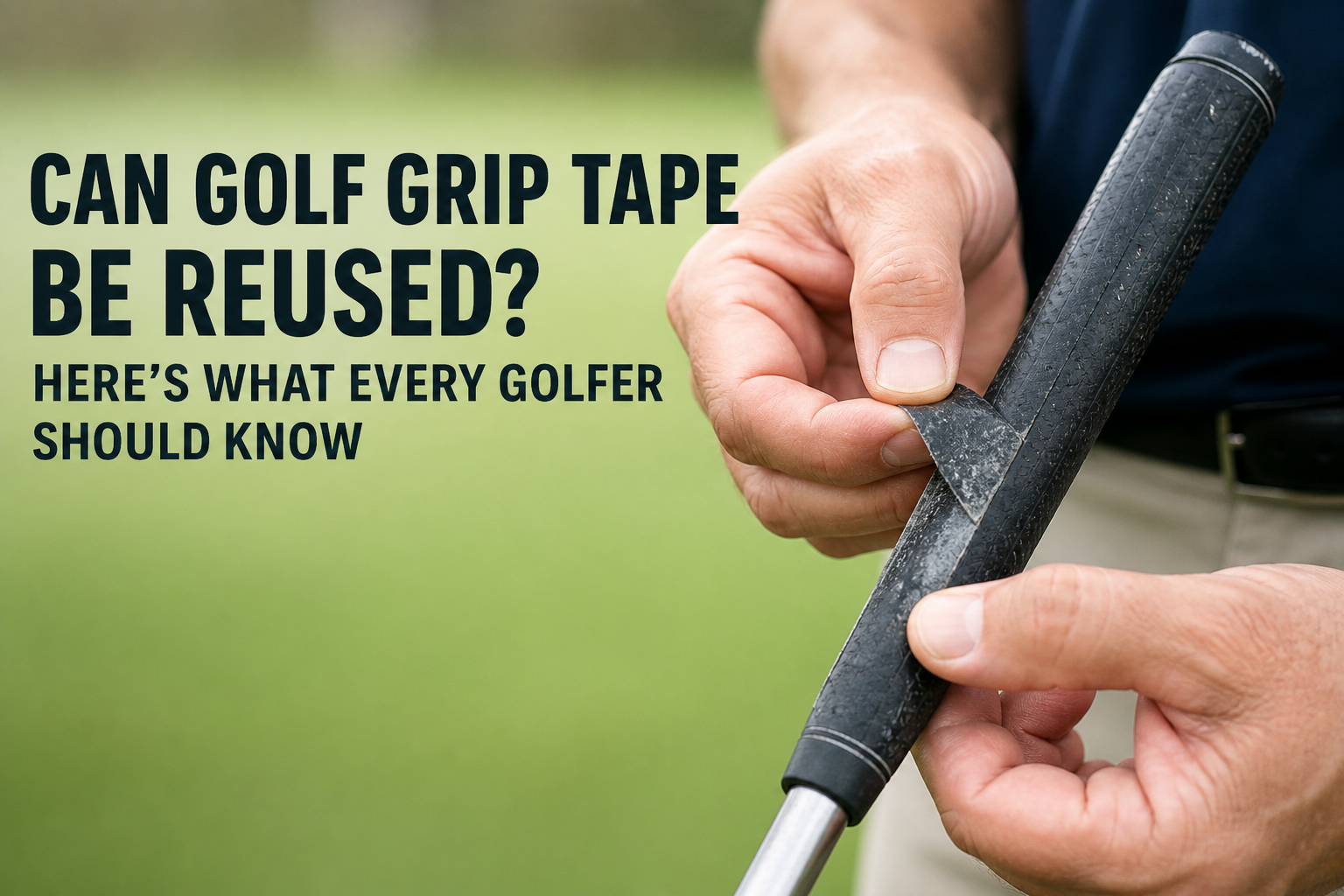
So, can golf grip tape be reused? The short answer is: almost never, and almost always not worth the risk. In this guide, I’ll walk you through exactly why grip tape fails when reused, the rare exceptions where it might hold temporarily, how to remove it properly, and what to use to get a perfect regrip every single time.
Can Golf Grip Tape Be Reused?
In most cases, golf grip tape cannot be reliably reused. Once removed, the adhesive loses its stickiness and will not hold a new grip securely in place. Most golf professionals recommend using fresh tape every time you regrip your clubs.
Here’s the core problem: golf grip tape is a double-sided adhesive tape that is activated by grip solvent during installation. The solvent temporarily liquefies the adhesive, allowing the grip to slide on. As the solvent evaporates, the adhesive bonds firmly, creating a near-permanent hold between the shaft and the grip’s inner layer.
Once that bond is broken and the tape is peeled away, the adhesive surface is compromised. It picks up dust, shaft residue, and micro-debris from the air. Even if the tape looks perfectly clean, the molecular structure of the adhesive has already been disturbed. Pressing a new grip over it will feel fine at first, but under the rotational torque of a real swing, often exceeding 100 mph of clubhead speed, the grip will move. And a moving grip is not just an annoyance; it’s a swing-wrecking, injury-risking problem.
A roll of fresh double-sided grip tape costs around $5–$8 and contains enough strips for 12–15 clubs. The cost of trying to save that tape? Potentially a ruined round, a lost grip mid-swing, or grooves in your game that take weeks to undo. It’s simply not worth it.
Why Golf Grip Tape Loses Its Adhesive
To understand why reuse fails, it helps to understand how grip tape works in the first place.
Standard golf grip tape is a double-sided, pressure-sensitive adhesive tape. The adhesive on both sides is solvent-activated, meaning it becomes temporarily fluid when you apply grip solvent (or even paint thinner) during installation. This allows the grip to glide onto the shaft smoothly before everything sets firm as the solvent evaporates, usually within 20–30 minutes.
Several factors break down the adhesive over time and make reuse impossible:
Heat and UV exposure. Golf bags spend hours in hot car trunks, on sunny courses, and in garages with fluctuating temperatures. Heat causes the adhesive polymers to break down, reducing their bonding strength even while the grip is still installed.
Moisture and sweat. Particularly in humid climates, moisture seeps under the grip over time. This slowly attacks the adhesive interface from the inside, creating micro-pockets of weakened bond, invisible until you pull the grip off and find the tape peeling in sections.
Compression over time. Every time you grip a club, you’re applying pressure to the grip and, by extension, the tape underneath. Over months and years, this compression permanently flattens and fatigues the adhesive, leaving it unable to spring back and create a strong bond again.
Solvent residue. When you remove a grip using solvent, the tape absorbs some of that solvent. This further breaks down whatever adhesive remains, often leaving the tape surface tacky but non-functional, the difference between a Post-it note and duct tape.
The result is tape that may feel slightly sticky to the touch but delivers a fraction of its original bonding strength. Under the demands of a real golf swing, that’s not good enough.
When You Might Get Away With Reusing Grip Tape
want to be honest here, because there is a narrow set of circumstances where reusing grip tape might hold temporarily.
If a grip slid off your club accidentally without any cutting, pulling, or solvent being applied, and the tape underneath is completely intact, no lifted edges, no exposed adhesive, no contamination, there is a chance the tape still has enough bonding strength to hold a new grip for a short period.
Use this checklist to assess:
- The tape was never cut, scored, or deliberately removed
- The entire tape surface is smooth, flat, and fully adhered to the shaft
- There are no air bubbles, lifted corners, or visible residue
- The tape surface feels uniformly tacky, not patchy or dry
- The club has not been stored in extreme heat or humidity
Even if all five boxes are checked, treat this as a temporary fix only, not a permanent solution. Test the grip vigorously by twisting it on the shaft before taking it to the course. If it moves even slightly, pull it off and apply fresh tape.
My honest recommendation: this scenario is rare enough that it’s almost always faster and cheaper to just use a new strip of tape.
How to Properly Remove Golf Grip Tape
One of the most important parts of a clean regrip is removing all the old tape completely. Leftover tape buildup changes the grip diameter, creates lumps under the new grip, and prevents proper adhesion. Here’s how to do it right:
- Remove the old grip first. Cut along the length of the grip with a utility knife or hook blade, being careful not to score the shaft, especially on graphite shafts. Peel the grip away.
- Score the tape lengthwise. Use your hook blade or a razor scraper to lightly score the tape along the shaft. This gives you an edge to peel from without gouging the shaft.
- Peel the tape away. Work slowly from the scored edge, pulling the tape back at a low angle (almost parallel to the shaft) to avoid tearing it into small pieces that are harder to remove.
- Apply grip solvent or lighter fluid. Soak a cloth or paper towel with grip solvent, lighter fluid, or mineral spirits. Wrap it around the shaft where residue remains and let it sit for 30–60 seconds to dissolve the leftover adhesive.
- Scrub and wipe clean. Use the solvent-soaked cloth to scrub away any remaining adhesive residue. You should be left with a clean, bare shaft surface.
- Let the shaft dry completely. Wait at least 5–10 minutes before applying new tape. Applying tape over a wet or solvent-damp shaft will compromise the new tape’s adhesion right from the start.
Pro Tip: On graphite shafts, use extra care with the blade, any nicks or scratches in the graphite can become weak points that crack under the stress of regular play. A plastic scraper is a safer choice than a metal blade for graphite.
Golf Grip Tape Alternatives
Standard double-sided grip tape is the go-to for a reason, it’s reliable, affordable, and widely available. But there are a few legitimate alternatives worth knowing about.
Double-Sided Grip Tape (Standard) This is what virtually every golf shop uses. Available in 2-inch width strips or rolls, it’s purpose-made for golf club regripping, activates cleanly with solvent, and provides a strong, lasting bond. This should always be your first choice.
Masking Tape + Solvent Method Some golfers use several layers of regular masking tape as a substitute. It works reasonably well in a pinch and can be used to build up grip size intentionally. The downside is it’s not as strong a bond as double-sided tape, and you need 2–3 layers to match the thickness, which can slightly alter feel.
Air Compressor Method (No Tape) For golfers with access to a compressor, grips can be installed using only compressed air, no tape, no solvent. A nozzle is placed at the grip opening, and the air pressure inflates the grip enough to slide it onto the shaft. The rubber then contracts around the shaft creating a friction hold. This method is popular among club fitters for quick grip swaps, but it’s not ideal for permanent installations as the grip can loosen over time without any adhesive layer.
Plugin Grip Inserts Some newer grip systems (like Golf Pride’s MCC Plus4 or certain Winn designs) use a proprietary install method. Always check the manufacturer’s recommendation before experimenting with alternatives.
How to Regrip a Golf Club the Right Way
Now that the shaft is clean and dry, here’s a quick rundown of a proper regrip from start to finish.
What you’ll need: Fresh double-sided grip tape, grip solvent, a vice with rubber vice clamps, a utility knife, and your new grips.
- Secure the club in the vice with the clubhead down and shaft pointing upward.
- Apply a strip of double-sided tape lengthwise down the shaft, starting just below the top of the shaft and extending to the full length of the grip. Fold any excess tape down into the open end of the shaft.
- Pour a small amount of grip solvent inside the new grip, covering the inner channel. Then pour a bit more over the tape on the shaft.
- Quickly slide the grip onto the shaft in one smooth motion, aligning any logos or patterns with the clubface.
- Check alignment immediately, you have about 30–60 seconds before the solvent begins to set.
- Set the club aside horizontally for at least 30 minutes before use.
Regripping a full set of 14 clubs takes most golfers 45–60 minutes once you get the hang of it. And if you’re looking to improve your swing mechanics while you’re at it, understanding your proper golf grip technique is just as important as the installation itself.
How Often Should You Replace Golf Grip Tape?
You should replace your golf grip tape every time you install a new grip, without exception. As for how often to replace the grips themselves (and therefore the tape), the general rule is every 40 rounds of play or once per year, whichever comes first.
Several factors can accelerate this timeline:
- Hot, humid climates break down adhesive faster and cause grips to harden or crack sooner
- Frequent play (more than 3 rounds per week) means faster grip wear and more sweat exposure
- Improper storage (leaving clubs in a hot car, storing in a damp garage) degrades both grips and tape significantly faster
- Grip cleaning habits, or lack thereof. Grips that are never cleaned accumulate oils and grime that seep through to the tape over time
A good rule of thumb: if your grips feel slick, shiny, or hard, they need replacing. And when the grips go, fresh tape always goes with them.
FAQs
Can you reuse golf grips without replacing the tape? Yes, technically, golf grips themselves can sometimes be reused if they were removed carefully and are still in good condition. However, even if you reuse the grip, you should always replace the tape underneath. Reusing the grip without fresh tape is one of the most common causes of grip slippage during a swing.
What solvent is best for removing golf grip tape? Standard golf grip solvent is the safest and most effective option. Mineral spirits, lighter fluid (naphtha), and even WD-40 work as substitutes. Avoid acetone or paint thinner on graphite shafts, as these can damage the finish and potentially weaken the shaft material.
How long does it take to regrip a golf club? A single club takes about 5–10 minutes once you’re set up. A full bag of 14 clubs can be completed in under an hour. The tape and solvent need 20–30 minutes to cure fully before you take the club out, so factor in drying time.
Is regripping golf clubs worth it? Absolutely. Fresh grips are one of the highest-return investments in golf. Worn grips cause golfers to squeeze harder to maintain control, which creates tension throughout the hands, wrists, and forearms, directly hurting swing speed and accuracy. A fresh set of grips, installed with new tape, can genuinely feel like a new set of clubs.
Conclusion
The verdict is clear: golf grip tape should not be reused. The adhesive simply cannot deliver the bond strength needed to withstand the forces of a real golf swing after it’s been removed and exposed. A fresh strip of tape costs pennies per club, the cost of a failed grip during a round, or worse, during a swing that matters, is far higher.
Regripping your own clubs is one of the most practical and rewarding DIY skills a golfer can develop. Once you know how to remove old tape cleanly, apply fresh tape properly, and slide a grip on with solvent, you’ll never pay a pro shop $5 per grip again.
If you want to go deeper on grip fundamentals, explore how proper hand placement and grip pressure directly impact your ball flight and consistency. And if you’re working on your swing mechanics more broadly, understanding weight shift in the downswing is the next logical step once your grip is dialed in.
Regripping Supplies
Affiliate links – we may earn a small commission at no extra cost to you, and it never changes what we recommend.
- Double-sided grip tape – the whole reason not to reuse the old stuff.
- Grip solvent – purpose-made solvent is cheap and far less messy than substitutes.
- Rubber vice clamps – protects the shaft, especially important on graphite.
- Hook blades – cuts old grips off safely without scoring the shaft.
- Complete regripping kits – cheaper than buying the pieces separately.